
Social media advertising strategy is no longer a side budget — it is the growth engine behind most brands winning online in 2026. Organic reach keeps shrinking, ad costs keep climbing, and the brands that scale are the ones with a disciplined social media advertising strategy built around creative testing, full-funnel retargeting, and ruthless measurement. In this guide, we break down 9 proven tactics to cut your cost per acquisition, scale return on ad spend (ROAS), and win on Meta, TikTok, and LinkedIn this year.
📌 Key Takeaways
- A winning social media advertising strategy starts with ROAS targets, not vanity metrics like clicks and impressions.
- Creative is the new targeting: 60–70% of paid social performance now comes from the ad itself.
- Retargeting warm audiences typically delivers 2–3x the ROAS of cold prospecting campaigns.
- Test weekly, kill losers fast, and scale winners in small, controlled budget steps.
- Pair every campaign with a fast, message-matched landing page — or your ad spend leaks.
📑 Table of Contents
- Why a Social Media Advertising Strategy Wins in 2026
- 1. Set ROAS-First Budgets, Not Spend-First Budgets
- 2. Match Creative to Every Funnel Stage
- 3. Run a Weekly Creative Testing Engine
- 4. Build a Full-Funnel Retargeting Engine
- 5. Split Spend Across Meta, TikTok & LinkedIn
- 6. Go Broad — and Let the Algorithm Work
- 7. Scale UGC and Creator Whitelisting
- 8. Fix the Landing Page Before You Scale Ads
- 9. Measure, Scale Winners, Kill Losers Fast
- FAQs
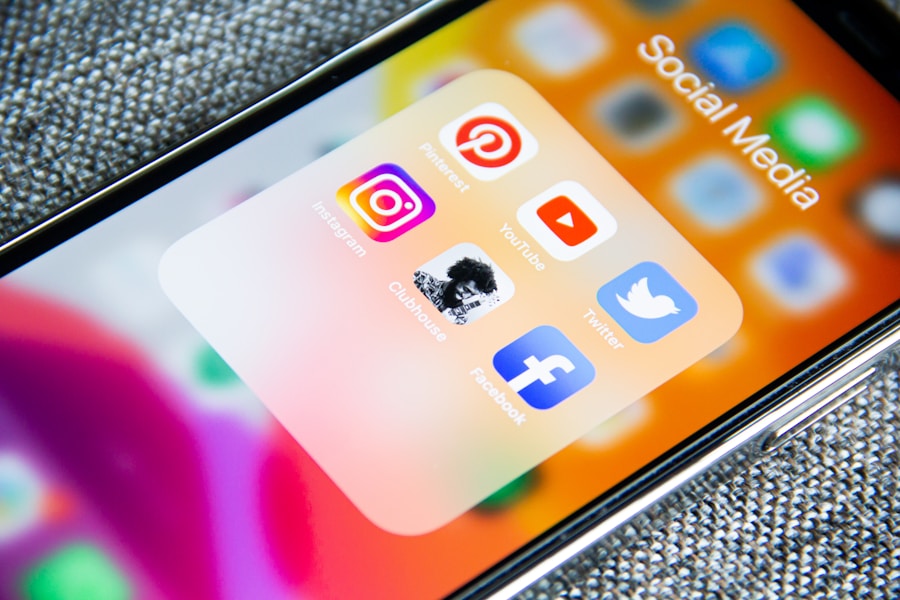
A strong social media advertising strategy aligns budget, creative, and measurement before a single dollar is spent.
Why a Social Media Advertising Strategy Wins in 2026 📈
Paid social is now the largest performance channel for most consumer and B2B brands — and the most competitive. Global social ad spend passed $230 billion in 2025 and keeps growing, while average click costs on Meta and LinkedIn rose year over year. That means a casual, boost-and-pray approach to a social media advertising strategy no longer breaks even.
What changed? Three things. First, privacy changes (iOS tracking limits, cookie deprecation) made precise interest targeting weaker — so creative quality and first-party data now decide winners. Second, short-form video dominates every feed, so static image ads that worked in 2022 now underperform video and creator-led formats. Third, platforms reward advertisers who feed their algorithms clean conversion data, which is why a disciplined social media advertising strategy with proper pixel, Conversions API, and event setup outperforms a bigger budget with sloppy tracking.
The good news: brands that treat paid social as a system — budget rules, testing cadence, retargeting, and landing-page discipline — still see strong returns. Our own Meta ads creative testing guide shows how structured testing alone can lift ROAS by 30–50% in a single quarter.
1. 💰 Set ROAS-First Budgets, Not Spend-First Budgets
Every social media advertising strategy should start with one number: your target ROAS or maximum allowable cost per acquisition (CPA). Work backwards from your margins. If your average order value is $80 and your gross margin is 50%, you can afford a $40 CPA at breakeven — and a healthy target is closer to $25–30.
- Define the target first: write down target CPA and target ROAS before launching anything.
- Split the budget 70/20/10: 70% to proven winners, 20% to promising tests, 10% to bold experiments.
- Set daily guardrails: cap any single ad set at 20–25% of daily spend until it proves itself.
- Review weekly, not hourly: daily noise causes premature kills; judge tests on 3–4 days of data or 1,000+ impressions.
Budget discipline is the unglamorous foundation of any social media advertising strategy that scales without burning cash.
2. 🎯 Match Creative to Every Funnel Stage
One ad cannot do every job. A cold prospect needs a hook and a reason to care; a warm visitor needs proof and urgency. Map your social media advertising strategy to three stages:
- Cold (awareness): short, entertaining video hooks — problem-first, brand-second, under 15 seconds.
- Warm (consideration): product demos, comparison content, testimonials, and “how it works” explainers.
- Hot (conversion): offers, guarantees, limited-time deals, and retargeting with social proof.
Brands that run only conversion ads to cold audiences pay the highest CPAs in the auction. Warm the audience first, then convert — our Facebook marketing strategy guide breaks down the full-funnel content mix that makes this work.
3. 🧪 Run a Weekly Creative Testing Engine
Creative is now the biggest lever in any social media advertising strategy. Meta itself reports that creative quality drives the majority of campaign performance variance. The fix is a testing engine, not inspiration:
- Test 3–5 new creatives per week per winning ad set — new hooks, not just new images.
- Change one variable at a time: hook, headline, visual, or CTA — never all four at once.
- Score on thumb-stop ratio and hook rate (3-second video views ÷ impressions) before judging CPA.
- Recycle winners: turn a winning hook into 5 variations — new opening, new format, new creator.
Most advertisers test too little and too randomly. A weekly cadence compounds: after 8 weeks you own a library of proven hooks your competitors cannot copy overnight. For a deeper framework, see our Meta ads creative testing frameworks.

Creative testing only works when you read the right metrics: hook rate first, CPA second.
4. 🔁 Build a Full-Funnel Retargeting Engine
Retargeting is the highest-ROAS layer of any social media advertising strategy — and the most underbuilt. Most brands retarget only cart abandoners. Build all four layers:
- Video viewers: retarget anyone who watched 50%+ of your prospecting video with a product demo.
- Site visitors: retarget blog readers and product-page viewers with testimonials and comparisons.
- Cart abandoners: retarget with the exact product, a guarantee, and a time-limited incentive.
- Past buyers: cross-sell and upsell — existing customers convert 5–7x more cheaply than cold traffic.
Keep retargeting frequency under 3–4 impressions per week per user to avoid fatigue, and refresh creative every 2–3 weeks. Our retargeting ads strategy guide covers audience windows, exclusions, and frequency caps in detail.
5. 📱 Split Spend Across Meta, TikTok & LinkedIn
Platform diversification protects your social media advertising strategy from algorithm shocks and rising CPMs on any single channel. A practical starting split:
- Meta (Facebook + Instagram) — 50–60%: still the best broad-reach conversion engine for most B2C brands, with the deepest retargeting tools.
- TikTok — 20–30%: the cheapest CPMs and best organic-style creative reach for audiences under 40. Our TikTok ads strategy covers Spark Ads and creator-led formats.
- LinkedIn — 10–20% for B2B: expensive clicks, but unmatched job-title and company targeting — ideal when deal sizes justify $8–15 CPCs. See our LinkedIn ads strategy.
Test new platforms with 5–10% of budget — Pinterest for visual products, X for real-time niches, Snapchat for Gen Z — and only scale what beats your blended CPA target.
6. 🌐 Go Broad — and Let the Algorithm Work
The counterintuitive truth of 2026 paid social: broad targeting usually beats hyper-narrow interest stacks. With weaker third-party signals, platforms perform best when given a wide audience and strong creative plus clean conversion data. In practice, a modern social media advertising strategy uses:
- Broad prospecting: wide age/geo with only essential exclusions, letting the algorithm find buyers.
- Advantage+ / automated placements: automated campaign types consistently beat manual setups for most advertisers now.
- First-party audiences: customer lists, email subscribers, and site visitors as seed audiences for lookalikes.
- Exclusions that matter: exclude existing customers from prospecting, and exclude converters from retargeting pools.
Narrow targeting still has a place — niche B2B, local businesses, and regulated industries — but test broad first. The Meta Business Help Center documents how automated campaigns use conversion signals to optimize delivery.
7. 🎬 Scale UGC and Creator Whitelisting
Users trust users more than brands. Creator-style ads — unpolished, selfie-shot, benefit-first — routinely beat polished brand ads on hook rate and CPA. Build UGC into your social media advertising strategy:
- Brief creators on outcomes, not scripts: give the problem, the proof point, and the CTA; let them speak naturally.
- Whitelist winning creator posts: run paid spend behind a creator’s organic post via their handle — it carries social proof the brand account cannot.
- Repurpose everything: one creator video becomes a Meta ad, a TikTok Spark Ad, and a landing-page testimonial.
- Pay for usage rights upfront: 3–6 months of paid usage avoids takedowns mid-campaign.
AI-assisted creative tools are also speeding up ad production — if you want to explore them, these step-by-step AI tutorials walk through AI tools for ad creative, captions, and video editing in plain, practical steps.
8. 🚀 Fix the Landing Page Before You Scale Ads
The most expensive mistake in paid social is scaling ads to a slow, mismatched landing page. Before raising budgets, check your social media advertising strategy against this list:
- Message match: the landing page headline must echo the ad’s promise within 3 seconds.
- Speed: pages loading over 3 seconds lose up to half of paid clicks — compress images and cut scripts.
- One action: one page, one offer, one CTA. Navigation menus and competing links bleed conversions.
- Mobile-first: 80%+ of social traffic is mobile — design and test on a phone first.
A 20% conversion-rate lift on the landing page is worth more than a 20% CPA cut on the ad side — and it compounds across every campaign.

Scaling winners is a team discipline: weekly reviews, clear kill rules, and fast creative refreshes.
9. 📊 Measure, Scale Winners, Kill Losers Fast
The final discipline of a winning social media advertising strategy is measurement honesty. Platform-reported ROAS overstates results — blend it with your own numbers:
- Track blended ROAS: total revenue ÷ total ad spend across all platforms, not each platform’s self-reported figure.
- Use post-purchase surveys: “Where did you hear about us?” catches influence that pixels miss.
- Scale in steps: raise winning ad-set budgets 20–30% every 2–3 days, never 3x overnight — big jumps reset the learning phase.
- Kill rules: pause any ad set that spends 2x your target CPA without a conversion, unless it is a deliberate awareness test.
Industry benchmarks from Hootsuite’s social media research and Sprout Social’s insights help calibrate expectations — but your own CPA and ROAS targets are the only scoreboard that matters.
❓ Frequently Asked Questions
What is a social media advertising strategy?
A social media advertising strategy is a plan for spending paid budget across social platforms — covering goals, audiences, creative, budgets, retargeting, and measurement — so every dollar works toward measurable revenue, not just reach.
How much should a small business spend on social media ads?
Start with $500–$1,500/month for testing, then scale based on proven CPA. The right budget is whatever your ROAS target supports: if $1 of ads returns $3+ of gross profit, scaling is rational.
Which platform gives the best ROAS in 2026?
It depends on your audience: Meta usually wins for broad B2C, TikTok for younger audiences and low CPMs, and LinkedIn for high-ticket B2B. Test all three with small budgets and let your own CPA decide.
How long does it take for social media ads to work?
Expect 2–4 weeks of testing before stable CPA data emerges. Algorithms need 50+ conversions per ad set to exit the learning phase, so patience in week one is part of the strategy.
Do I need video ads, or do images still work?
Video wins most feed placements in 2026, but strong static images still convert for retargeting and offers. The best social media advertising strategy mixes both — video for prospecting, images and carousels for retargeting.
What is the biggest mistake in social media advertising?
Scaling before the funnel is proven: raising budgets on untested creative, or sending paid traffic to a slow, generic landing page. Fix creative and conversion first, then scale.
Final Thoughts
A winning social media advertising strategy in 2026 is a system, not a single campaign: ROAS-first budgets, full-funnel creative, weekly testing, layered retargeting, platform diversification, and honest measurement. Start with one platform, prove your CPA, then expand. The brands that treat paid social as a compounding engine — not a slot machine — are the ones still growing while ad costs rise for everyone else.
Need help building your paid social engine? Digital 365 Agency plans and manages performance social campaigns for growing brands — from creative testing to full-funnel retargeting.
Sources & further reading: Meta Business Help Center; Hootsuite Social Media Research; Sprout Social Insights; Digital 365 Agency guides on Facebook marketing, TikTok ads, LinkedIn ads, Meta creative testing, and retargeting strategy (linked above).