

Table of Contents
- Framework #1: Hook-Rate-First UGC Testing
- Framework #2: The 3-2-2 Ad Copy Matrix for Meta Ads Creative Testing
- Framework #3: Thumbstop-Rate Triage
- Framework #4: Advantage+ Creative Variations for Meta Ads Creative Testing
- Framework #5: Holdout Incrementality Tests
- Framework #6: Creative Fatigue Rotation Cadence for Meta Ads Creative Testing
- Framework #7: Landing-Page Congruent Testing
- Framework #8: CBO vs ABO Test Structures
- Framework #9: Post-ID Stacking for Social Proof
- Meta Ads Creative Testing FAQs
Meta ads creative testing is the single highest-leverage activity in paid social in 2026. Targeting options have narrowed, Advantage+ automation handles much of the media buying, and auction prices keep climbing — so the advertisers who win are the ones who systematically produce, test, and scale winning ad creatives. Your creative is your targeting now.
The problem: most brands test creatives haphazardly. A new ad here, a swapped headline there, no real process — and then they blame “ad fatigue” or “the algorithm” when ROAS slips. Structured meta ads creative testing replaces guesswork with frameworks: repeatable systems that turn every dollar of test spend into a reusable learning.
This guide gives you 9 frameworks covering hooks, UGC, copy, Advantage+, incrementality, fatigue rotation, landing pages, campaign structures, and social proof. Each is built for how the Meta auction works in 2026.
Key Takeaways
- Creative is the new targeting: in 2026, systematic meta ads creative testing beats clever audience segmentation — your ad creative decides who Meta shows it to.
- Test in tiers: hooks first (thumbstop rate), concepts second, polish last. Kill fast, scale what survives.
- Reserve 10–20% of ad spend for testing, and give every test enough budget (roughly $20–$50 per ad per day) to reach statistical confidence.
- Winning frameworks stack: post-ID scaling, Advantage+ variations, and incrementality holdouts together protect and prove your ROAS.

Structured meta ads creative testing turns dashboards like these into decision engines — every test produces a learning, not just a result.
🎯 Framework #1: Hook-Rate-First UGC Testing
If you only adopt one framework from this guide, make it this one. The hook rate — the percentage of impressions where someone watches at least 3 seconds of your video — is the earliest reliable signal of a winning ad. Industry benchmarks consistently show that ads with hook rates above 25–30% go on to deliver dramatically better thumbstop and conversion performance than ads below 15%.
Here is the process top advertisers use for UGC (user-generated content) testing:
- Commission 3–5 UGC creators per concept (typical pricing: $50–$200 per raw video asset in 2026, depending on creator size and usage rights). Brief them with one angle each — not scripts.
- Test 3 hooks per creator video: the first 1–3 seconds is where 70%+ of viewers decide to keep watching. Ship 3 opening variants (question, bold claim, visual demo) for every concept.
- Kill fast: run each variant at $20–$30/day. After ~3,000 impressions, cut anything with a hook rate under your account average.
- Double down on winners: move surviving hooks into concept testing with more polished edits and stronger CTAs.
This framework works because it treats the opening seconds as the product. On Instagram Reels and Facebook feeds, creative experimentation starts and ends with the hook — and UGC’s lo-fi authenticity reliably outperforms polished brand creative on thumbstop metrics.
Framework #2: The 3-2-2 Ad Copy Matrix for Meta Ads Creative Testing
Most advertisers test one ad copy per creative — which means one message per audience. The 3-2-2 matrix multiplies your creative output without multiplying production costs: 3 primary texts × 2 headlines × 2 descriptions, dynamically combined by Meta’s system.
Write the matrix around one creative concept:
- 3 primary texts: one emotional angle (“the feeling”), one logical angle (features, specs, proof), one social angle (reviews, popularity, community).
- 2 headlines: one benefit-led (“Sleep 2 hours deeper”), one offer-led (“20% off ends Sunday”).
- 2 descriptions: one trust signal (rating, guarantee), one urgency trigger (limited stock, deadline).
The magic of this Facebook ads testing framework is diagnostic: after a week, compare which primary texts survive across multiple creatives. If the emotional angle consistently wins, you have learned something about your market — a learning that transfers to every future campaign, landing page, and email. That is what separates testing from guessing.
📱 Framework #3: Thumbstop-Rate Triage
Not every creative deserves a full-funnel test. Thumbstop-rate triage is your emergency room: a cheap, fast screen that decides which concepts get real test budget within 48 hours.
The setup is deliberately simple:
- Launch new concepts in a dedicated low-budget CBO test campaign ($100–$150/day total), broad audience, same objective as your scale campaigns.
- Judge strictly on thumbstop rate (3-second video views ÷ impressions) and outbound CTR. Ignore purchases for now — the sample is too small.
- Triage rules: top quartile → promote to full creative test; second quartile → retest with new hooks; bottom half → archive and note why.
Advertisers commonly see 60–80% of new concepts fail triage — and that is the point. Creative diversity is one of the strongest predictors of account performance, but diversity only helps when the weak ideas die fast and the survivors get funded.
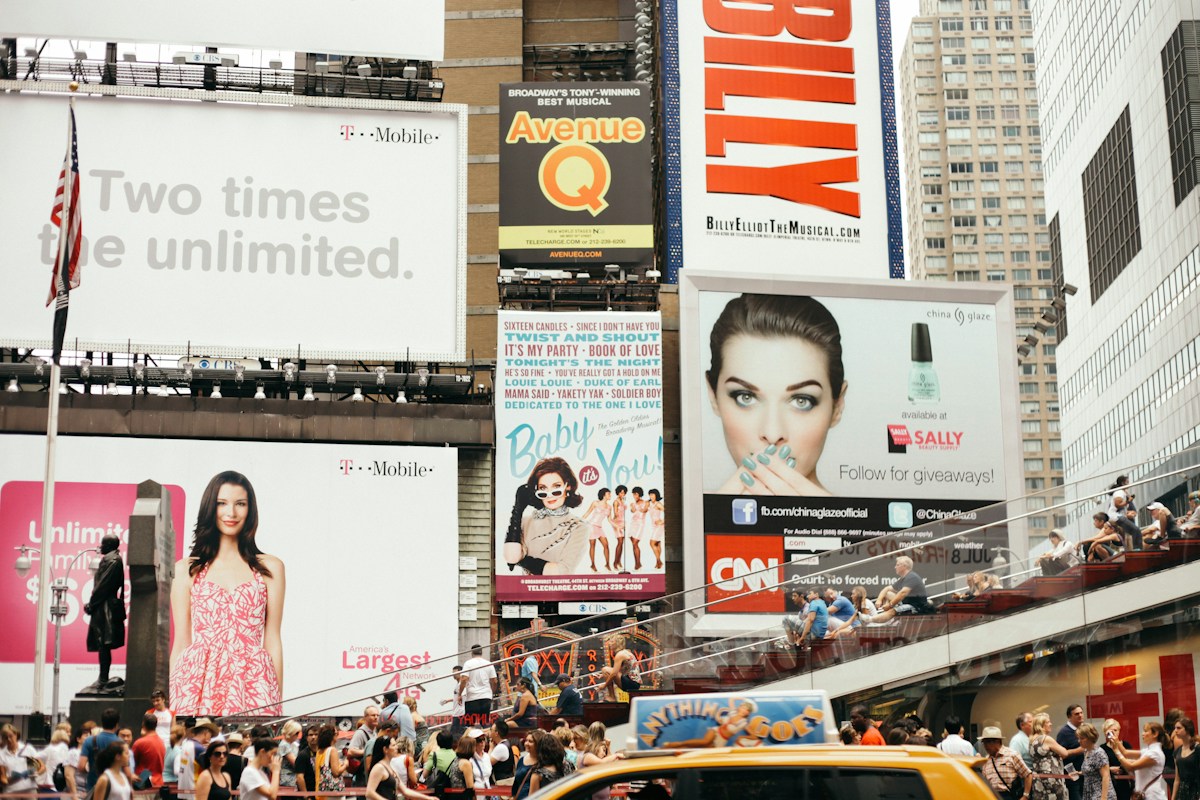
Every ad creative is fighting the same battle as these billboards: win attention in the first second, or disappear. Triage finds your winners before budgets do.
🤖 Framework #4: Advantage+ Creative Variations for Meta Ads Creative Testing
Advantage+ creative enhancements — automated background generation, text improvements, image expansion, music — can lift performance, but they should be tested, not blindly trusted. This framework turns Advantage+ into a disciplined part of your testing system.
- Baseline first: run your hero creatives with enhancements OFF for 2 weeks to establish true baseline ROAS.
- Toggle one enhancement at a time: enable image expansion, measure for 7 days, then test text improvements. Bundling everything makes learnings useless.
- Feed the machine: Advantage+ works best with 8–12 creative assets per ad set — it needs variety to optimize against.
Creative analytics tools like Motion (from ~$49/month) and Foreplay (from ~$49/month) plug directly into this workflow: they tag your creative by hook, format, and concept so you can see which variations Advantage+ actually prefers. As Meta’s Business Help Center notes, the system’s recommendations are only as good as the creative variety you feed it.
Framework #5: Holdout Incrementality Tests
Here is an uncomfortable truth: some of your “winning” ads would have converted anyway. Incrementality testing answers the only question that really matters — did this creative drive new demand, or just take credit for demand that already existed?
The framework:
- Geo holdouts: run your hero creative nationally but exclude 10–20% of regions (or DMAs). Compare lift in exposed vs. holdout markets over 2–4 weeks.
- Platform conversion lift studies: Meta’s built-in Conversion Lift tool randomizes audiences into test and control — the gold standard when your spend qualifies (typically $50k+/quarter for reliable reads).
- Creative-level read: hold out a proven winner for 2 weeks and measure the delta in total account revenue. If revenue barely moves, your “winner” was mostly harvesting — reallocate budget to prospecting creatives.
Advertisers running true holdouts commonly find that 10–30% of attributed revenue was not incremental. That finding alone can reshape a six-figure budget. Pair this framework with our retargeting ads strategy guide — retargeting is exactly where incrementality myths hide.
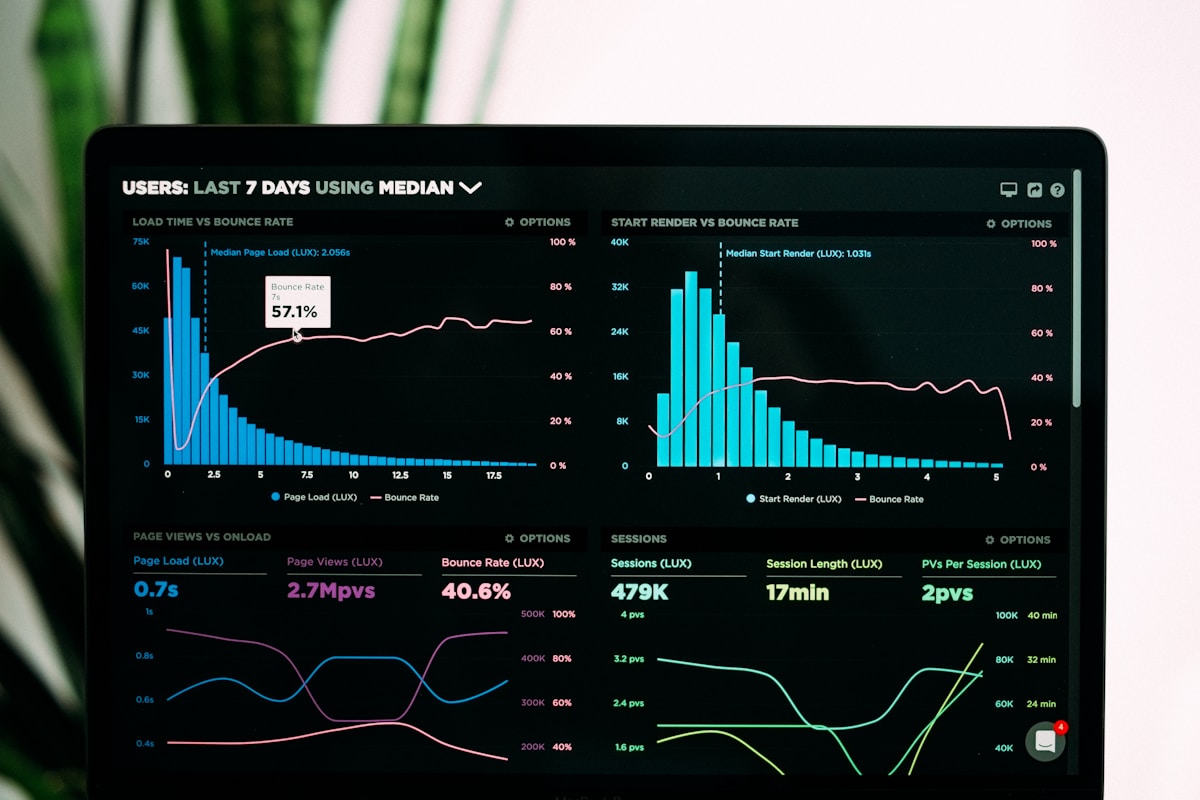
Incrementality tests turn attributed metrics into proven revenue — the difference between a dashboard that flatters and a dashboard you can trust.
🔄 Framework #6: Creative Fatigue Rotation Cadence for Meta Ads Creative Testing
Creative fatigue — when frequency rises, CTR falls, and CPMs climb — is the silent ROAS killer. The rotation framework prevents it with rules instead of reactions:
- Monitor the fatigue dashboard weekly: flag any hero creative whose frequency exceeds 3.0 in 7 days or whose CTR drops 20%+ from its peak.
- Maintain a creative bench: always have 2–3 tested-but-unscaled concepts ready. Fatigue is predictable; being caught without replacements is a choice.
- Refresh, don’t replace: new hooks on proven concepts (Framework #1) revive fatigued winners at a fraction of full-production cost.
WordStream’s industry reporting has long shown that ad fatigue sets in faster on Meta than on search — your audience sees the same face in the same feed repeatedly. A rotation cadence turns fatigue from a crisis into a calendar event.
Framework #7: Landing-Page Congruent Testing
The most underrated ad creative testing framework does not touch the ad at all. Message congruence — matching the ad’s promise to the landing page’s first screen — routinely lifts conversion rates more than any creative swap.
Test congruence in three layers:
- Layer 1 — headline match: the landing page H1 should echo the ad’s headline almost word for word. Mismatches (“50% off” ad → “Welcome to our store” page) bleed conversions.
- Layer 2 — visual continuity: the hero image or video thumbnail on the page should be the same creative (or same shoot) as the ad. Familiarity reduces bounce.
- Layer 3 — offer continuity: if the ad promises a specific bundle, discount, or guarantee, it must appear above the fold — not three scrolls down.
Run this as an A/B test against your control page with tools like VWO or Optimizely (plans typically start around $200–$400/month for meaningful traffic tiers). Advertisers commonly see 15–40% conversion-rate lifts from congruence fixes alone — often larger than any single creative iteration delivered.
📊 Framework #8: CBO vs ABO Structures for Meta Ads Creative Testing
Where you test matters as much as what you test. Campaign Budget Optimization (CBO) and Ad Set Budget Optimization (ABO) create very different testing environments, and smart advertisers use both:
- ABO for discovery: give each creative concept its own ad set with equal daily budgets ($20–$50). Every concept gets a fair trial — no early winners starving late bloomers of impressions. This is your creative experimentation lab.
- CBO for validation: once concepts survive ABO, move winners into a CBO campaign and let Meta’s delivery find the best performers at scale. This is where efficiency compounds.
- The hybrid rule: never test raw concepts in CBO (the algorithm will pick a premature winner within hours); never scale in ABO (you will cap your winners’ reach). Discovery in ABO, scaling in CBO.
- Consolidate aggressively: Meta’s auction rewards fewer, stronger ad sets. Graduate 3–5 proven creatives into one CBO rather than nursing a dozen micro ad sets.
This two-stage structure is also the foundation of broader programmatic advertising strategies thinking: isolate variables in testing, then consolidate for efficiency at scale.
Framework #9: Post-ID Stacking for Social Proof
Social proof — likes, comments, shares accumulated on an ad — is a real performance lever on Meta. A fresh duplicate of a winning ad starts at zero; the same creative run under its existing post ID carries all its engagement into every new campaign. Framework #9 protects that equity.
- Always use “Use Existing Post”: when moving a winner from test to scale, select the original post instead of creating a new ad — the post ID and its social proof travel with it.
- Stack proof deliberately: run engagement-friendly versions early so the post accumulates proof before it carries serious budget.
- One hero, one post ID: resist duplicating winners as new posts. Centralize each hero under a single post ID and scale budgets around it.
- Protect the post: never edit a hero post’s creative — editing resets or fragments engagement. A change is a new test with a new post ID.
Advertisers commonly report 5–15% lower CPCs on high-social-proof posts versus identical fresh duplicates — a free efficiency gain that compounds as the proof grows. In HubSpot’s social media research, ads with visible engagement consistently outperform identical ads without it on click-through metrics.
❓ Meta Ads Creative Testing FAQs
How much budget do I need for meta ads creative testing?
Plan for 10–20% of total Meta spend dedicated to testing. Per ad, aim for roughly $20–$50/day minimum — below that, you will not reach statistical confidence in a reasonable window. A $3k/month account should test with $300–$600/month across 5–10 concepts.
How many creatives should I test per month?
Small accounts (under $5k/month): 5–10 new concepts monthly. Mid-size ($20k–$100k/month): 20–40. Enterprise spenders routinely test 100+. Quality beats quantity — one framework-run concept teaches more than five random ads.
How long should a creative test run before I judge it?
3–7 days for hook/thumbstop triage (Framework #3), 7–14 days for full-funnel creative tests at proper budgets. Judge on the right metric for the stage: thumbstop rate early, CTR mid-funnel, and CPA/ROAS only once you have 30–50+ conversions per variant.
Does Advantage+ replace the need for creative testing?
No — it raises the stakes. Advantage+ automates delivery and variation, but it cannot invent new concepts, angles, or hooks. Accounts feeding Advantage+ 10+ diverse, tested creatives consistently outperform accounts feeding it 2–3. Think of it as a multiplier on your testing, not a substitute.
What is the biggest creative testing mistake in 2026?
Testing in CBO with tiny budgets. The algorithm picks a premature winner within hours, starves the other concepts, and you conclude “only one creative works” — when the test was rigged from the start. Discovery belongs in ABO with equal budgets (Framework #8).
How do I know if my ROAS gains are real or just attribution noise?
Run holdout incrementality tests (Framework #5): geo holdouts or Meta’s Conversion Lift studies. If exposed regions do not meaningfully outperform controls, your “winning” creative is taking credit for existing demand — move budget to true prospecting concepts.
Sources & further reading: creative best practices and testing guidance from the Meta Business Help Center; ad performance benchmarks from WordStream industry reports; social ad engagement research via HubSpot and Marketing Brew. Pricing figures cited reflect typical 2026 US market ranges for UGC creators and creative-analytics tools and may vary by region and vendor.