
Introduction: Influence Is the New Advertising
Influencer marketing strategy is no longer a side experiment — it is one of the highest-performing channels in modern digital marketing. In 2026, consumers trust creators they follow far more than traditional ads, and brands that treat creator partnerships as a disciplined, measurable channel are winning attention, trust, and sales.
But simply paying a popular creator to mention your product is not an influencer marketing strategy. Without clear goals, the right creators, fair contracts, and honest measurement, campaigns burn money. This guide gives you a complete influencer marketing strategy for 2026 — nine proven tactics that turn creator partnerships into a repeatable growth engine.
Table of Contents
- What Is an Influencer Marketing Strategy?
- Why Influencer Marketing Strategy Matters More in 2026
- Tactic 1: Set One Clear Goal Per Campaign
- Tactic 2: Choose Creators for Audience Fit, Not Follower Count
- Tactic 3: Build a Creator Mix — Nano, Micro, and Macro
- Tactic 4: Negotiate Fair Rates With Usage Rights Built In
- Tactic 5: Give Creators a Brief, Not a Script
- Tactic 6: Turn Every Partnership Into Measurable Sales
- Tactic 7: Repurpose Creator Content Across Every Channel
- Tactic 8: Build Long-Term Ambassador Relationships
- Tactic 9: Stay Compliant and Protect Your Brand
- How Much Should You Budget for Influencer Marketing?
- Common Influencer Marketing Mistakes to Avoid
- Key Takeaways
- Frequently Asked Questions
What Is an Influencer Marketing Strategy? 🤝
An influencer marketing strategy is a structured plan for partnering with content creators to promote your brand, products, or services to their engaged audiences. It covers who you work with, what you want each campaign to achieve, how you compensate creators, what content they produce, and how you measure the results.
A strong influencer marketing strategy has five moving parts:
- Goals: awareness, traffic, leads, sales, or user-generated content — one primary goal per campaign.
- Creators: the right people, chosen for audience fit and trust, not just reach.
- Content: authentic posts, videos, and reviews that fit each creator’s style.
- Commercials: fair rates, deliverables, usage rights, and timelines in writing.
- Measurement: tracking links, codes, and dashboards that prove what each partnership earned.
Without all five, you do not have a strategy — you have a hope and an invoice. The brands that win in 2026 treat influencer marketing like paid media: planned, tested, and optimized, with the added power of human trust.
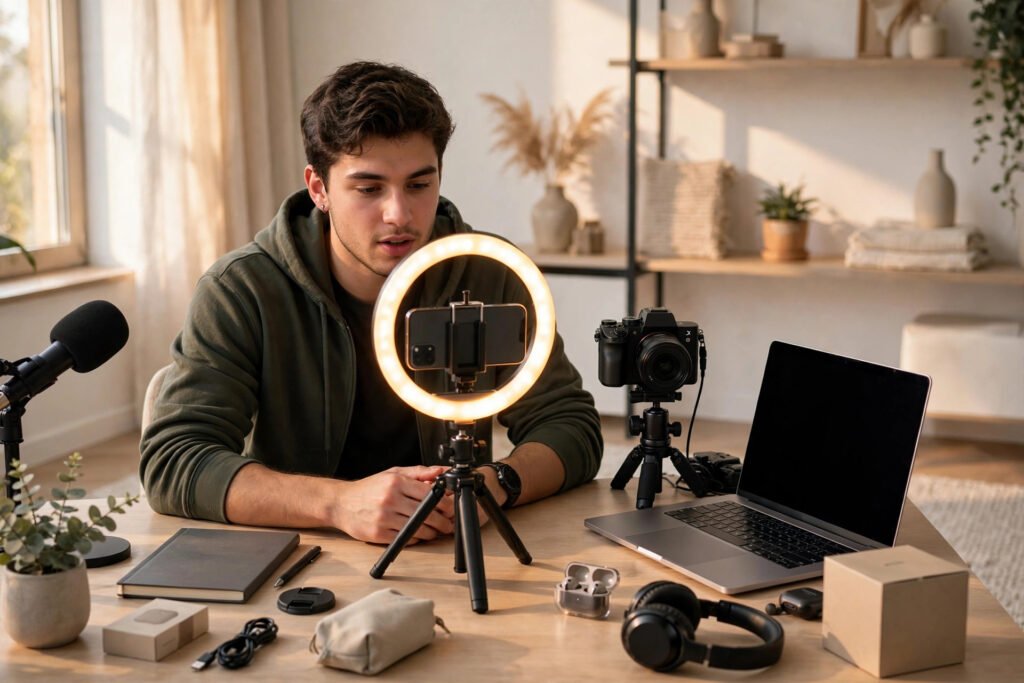
A winning influencer marketing strategy starts with creators whose audience already trusts them.
Why Influencer Marketing Strategy Matters More in 2026 📈
Several forces have made a disciplined influencer marketing strategy essential:
- Ad fatigue is real: consumers scroll past polished ads in milliseconds, but they stop for a creator they follow and trust. Creator content earns attention that paid ads increasingly cannot buy.
- Short-form video dominates: TikTok, Instagram Reels, and YouTube Shorts are where product discovery happens. Creators are the native storytellers of these formats — brands that try to imitate them usually look like ads.
- Micro-creators outperform celebrities on engagement: smaller creators routinely post higher engagement rates than mega-influencers, at a fraction of the cost — which is why smart brands now build portfolios of micro-partners instead of betting everything on one star.
Creator partnerships also amplify your other channels — one shoot feeds your TikTok marketing strategy, Instagram marketing strategy, and content distribution strategy at once.
Tactic 1: Set One Clear Goal Per Campaign 🎯
Every effective influencer marketing strategy starts with a single, measurable goal per campaign. “Raise awareness” is not a goal. “Drive 2,000 qualified landing-page visits from creator content in 30 days” is.
- Awareness: reach, views, saves, branded-search lift.
- Consideration: clicks, landing-page visits, email signups, watch time.
- Conversion: tracked sales, code redemptions, cost per acquisition.
- Content: usable assets delivered — photos, videos, testimonials.
One goal per campaign keeps creator selection, creative direction, and measurement honest. A campaign designed to sell needs creators with buyer-intent audiences and trackable links; an awareness campaign needs broad reach and shareable formats. Mixing both in one brief usually delivers neither.
Tactic 2: Choose Creators for Audience Fit, Not Follower Count 🔍
The biggest mistake in any influencer marketing strategy is buying followers instead of buyers. A creator with 20,000 followers in your exact niche will outperform a generalist with 500,000 followers almost every time.
Vet creators on four signals:
- Audience demographics: age, location, and interests must match your buyer. Ask for audience screenshots — reputable creators share them gladly.
- Engagement quality: look for thoughtful comments and saves, not just likes. Real conversation beats inflated likes.
- Content-brand fit: would your product appear naturally in their feed? A surprising partnership underperforms and damages both reputations.
- Professionalism: check posting cadence, past brand work, and disclosure habits. A creator who promoted ten competing products this month is not credible.
Tactic 3: Build a Creator Mix — Nano, Micro, and Macro 🌐
A resilient influencer marketing strategy uses a portfolio of creator sizes:
- Nano-creators (1k–10k followers): often real customers and community members. Low cost or product-only deals, very high trust, great for testimonials and user-generated content.
- Micro-creators (10k–100k followers): the workhorses of most programs. Niche authority, strong engagement, affordable rates, and audiences that genuinely listen.
- Macro-creators and celebrities (100k+ followers): reach and prestige for launches. Use selectively, paired with micro-creators who convert the attention they generate.
Tactic 4: Negotiate Fair Rates With Usage Rights Built In 💰
Rates in influencer marketing vary enormously by niche, platform, and deliverable — which is why your influencer marketing strategy needs a clear rate framework before you start negotiating.
- Price the deliverable, not the follower: a YouTube review, three TikToks, and one Story are different products with different prices. Get itemized quotes.
- Pay for performance where it fits: hybrid deals — base fee plus commission on tracked sales — align incentives and protect your downside.
- Negotiate usage rights upfront: if you want to run creator content as ads, use it on your website, or repurpose it in email, agree scope and duration now. Retroactive rights cost far more.
- Agree exclusivity carefully: exclusivity from direct competitors for a defined period is reasonable. Blanket category exclusivity is expensive and usually unnecessary.
- Put everything in writing: deliverables, deadlines, revisions, payment terms, disclosure, approval rights. A one-page agreement prevents most disputes.

Fair rates, clear contracts, and usage rights agreed upfront keep an influencer marketing strategy profitable.
Tactic 5: Give Creators a Brief, Not a Script ✍️
The fastest way to kill a creator partnership is to hand a talented storyteller a word-for-word script. Audiences can smell scripted ads instantly, and engagement collapses.
A great brief for your influencer marketing strategy includes:
- The goal and the audience: what this campaign must achieve and who it must reach.
- Three non-negotiable messages: the product name, the key benefit, and the call to action — nothing more.
- What to avoid: claims you cannot support, competitor names, sensitive topics.
- Creative freedom: let the creator choose the hook, format, and storytelling style. That is what you are paying for.
- Disclosure rules: require clear #ad or “paid partnership” labelling.
Review drafts for factual accuracy and compliance, not for personal taste. If you would not let the creator’s authentic voice through, you should have bought a traditional ad instead.
Tactic 6: Turn Every Partnership Into Measurable Sales 📊
“It felt like it worked” is not measurement. A serious influencer marketing strategy tracks every partnership to revenue or to a hard leading metric.
- Unique tracking links: give every creator their own UTM-tagged link to attribute traffic and conversions precisely.
- Unique discount codes: creator-specific codes simplify attribution even when buyers switch devices — and give audiences a reason to act.
- Cost per result: track cost per click, lead, and acquisition per creator. Cut bottom performers, double down on top ones.
- View-through and brand lift: for awareness campaigns, track branded search volume, direct traffic, and follower growth during and after the campaign.
- Content value: count the usable assets each partnership produces. Creator content you can run as ads for months is worth far more than the original post.
Tactic 7: Repurpose Creator Content Across Every Channel ♻️
The post itself is only the beginning. A smart influencer marketing strategy squeezes maximum value from every asset:
- Whitelisted ads: run the creator’s best content as paid ads from their handle (with permission). Creator ads routinely beat brand ads on click-through rate.
- Website and landing pages: add creator testimonials and demo videos to product pages — social proof at the point of purchase.
- Email and retargeting: feature creator content in newsletters and retargeting ads to warm audiences.
- Organic social: reshare creator posts to your own channels, with credit. It extends reach and shows real customers using your product.
Our guide to Meta ads creative testing shows how to test creator content against brand creative and scale the winners. Just remember: repurposing only works if usage rights were agreed in Tactic 4 — never reuse creator content without permission.
Tactic 8: Build Long-Term Ambassador Relationships 🤝
One-off posts are forgettable; long-term partnerships are believable. The most profitable influencer marketing strategy converts its best one-off creators into ambassadors.
- Start with a trial, then extend: run one campaign, measure it, then offer your top 20% a quarterly or annual ambassador deal.
- Give ambassadors real involvement: early product access, input on features, affiliate commissions, co-created products. The deeper the relationship, the more authentic the advocacy.
- Keep the relationship human: celebrate their milestones, share their wins, pay on time. Ambassadors who feel valued stay loyal — and their audiences notice.
- Let them grow with you: as an ambassador’s audience grows, raise their rates. Nothing kills a partnership faster than profiting from a creator’s growth while paying old rates.
Tactic 9: Stay Compliant and Protect Your Brand 🛡️
The final pillar of a durable influencer marketing strategy is compliance. One undisclosed ad or false claim can cost fines, platform penalties, and the trust you spent years building.
- Require clear disclosure: #ad, “paid partnership,” or platform branded-content tools — visible without clicking “more.” Disclosure is legally required in most markets and, done well, does not hurt performance.
- Ban claims you cannot prove: no guaranteed results, no unverified medical or financial claims, no competitor disparagement. Give creators an approved-claims list.
- Vet creators’ history: check past controversies and fake-follower signals before signing. A creator scandal becomes your scandal once you pay them.
- Monitor live campaigns: watch comments during the campaign window and pause anything that attracts misleading claims.

Measure every partnership in your influencer marketing strategy — cost per result, not vanity metrics.
How Much Should You Budget for Influencer Marketing? 💵
Allocate 10–20% of your social media budget to creator partnerships in year one, then scale on measured cost per acquisition — and reserve 10% for experiments. If a creator delivers customers cheaper than your paid social campaigns, they deserve more budget.
Common Influencer Marketing Mistakes to Avoid ⚠️
- Chasing follower counts: audience fit beats reach. Always.
- Over-scripting creators: if the content sounds like your ad copy, it will perform like your ad copy — badly.
- Skipping tracking: no UTM links, no codes, no attribution — then wondering whether influencer marketing “works.”
- Ignoring usage rights: discovering you cannot reuse great content is an expensive, avoidable lesson.
Key Takeaways ✅
- An influencer marketing strategy is a planned, measured channel — not a one-off shoutout.
- Set one clear, measurable goal per campaign before choosing creators.
- Choose creators for audience fit and engagement quality — not follower count.
- Build a portfolio: mostly micro- and nano-creators, with macro-creators for reach.
- Negotiate fair rates and usage rights upfront, in writing.
- Brief creators, never script them.
- Track every partnership with UTM links, codes, and cost-per-result metrics.
- Repurpose creator content across ads, website, email, and social.
- Convert top performers into long-term ambassadors.
- Require disclosure and honest claims — compliance protects the trust that makes it all work.
Frequently Asked Questions ❓
What is an influencer marketing strategy?
An influencer marketing strategy is a structured plan for partnering with creators to promote your brand — covering goals, creator selection, compensation, content, disclosure, and measurement — so partnerships deliver repeatable, trackable results.
How much does influencer marketing cost in 2026?
Costs vary widely: nano-creators may accept product-only deals, micro-creators typically charge hundreds to a few thousand dollars per post, and macro-creators charge far more. Start with 10–20% of your social budget and scale on measured cost per acquisition.
Are micro-influencers better than celebrities?
For most brands, yes. Micro-influencers usually deliver higher engagement, more targeted audiences, and far lower cost per result than celebrities. Celebrities suit awareness launches; micro-creators suit sustained conversions.
How do I measure influencer marketing ROI?
Use unique UTM links and discount codes per creator, track cost per click, lead, and acquisition, and count the reusable content assets each partnership produces. Compare cost per acquisition against paid social and search.
Do influencers have to disclose paid partnerships?
Yes. In most markets, creators must clearly disclose paid partnerships with #ad, “paid partnership,” or platform branded-content labels. Disclosure is legally required and does not hurt performance when the content is genuinely good.
How long should an influencer campaign run?
A single campaign typically runs 2–4 weeks, but the best results come from ambassador relationships lasting a quarter or longer, where audiences see repeated, genuine use of your product.
Sources and further reading: Influencer Marketing Hub, HubSpot Blog, Sprout Social Insights.