

Connected TV advertising is no longer a side experiment for media buyers — it is one of the fastest-growing channels in digital advertising. As audiences abandon traditional cable for streaming, advertisers are following them to the biggest screen in the house. In 2026, CTV combines the emotional impact of television with the precision of digital targeting, and brands that master it are seeing stronger reach, better return on ad spend (ROAS), and far less wasted budget.
In this guide, you will learn what connected TV advertising is, why it matters now, how it compares to linear TV, and nine proven strategies you can apply to your next campaign. Whether you run a local business or manage a national media budget, these tactics will help you reach cord-cutters, measure real outcomes, and scale what works.
Key Takeaways
- Connected TV advertising delivers TV-scale storytelling with digital-grade targeting and measurement.
- CTV viewers are engaged, hard to reach elsewhere, and increasingly willing to act on relevant ads.
- Success in 2026 requires audience-first planning, creative built for streaming, and frequency control.
- Pair CTV with retargeting, search, and social to turn awareness into conversions.
- Test, measure, and reallocate budget toward the placements and audiences with the best ROAS.
Table of Contents
- What Is Connected TV Advertising?
- Why Connected TV Advertising Matters in 2026
- CTV vs. Linear TV
- 1. Start With Audience-First Targeting
- 2. Build Creative Made for Streaming
- 3. Use Data-Driven Programmatic Buying
- 4. Control Frequency and Avoid Ad Fatigue
- 5. Pair CTV With Retargeting and Search
- 6. Localize and Personalize Your Message
- 7. Measure Outcomes, Not Just Impressions
- 8. Test Interactive and Shoppable Formats
- 9. Optimize Budget Continuously Toward ROAS
- How Much Does Connected TV Advertising Cost?
- Frequently Asked Questions
- Conclusion
What Is Connected TV Advertising?
Connected TV advertising — often shortened to CTV advertising — refers to video ads delivered through internet-connected television devices. That includes smart TVs, streaming sticks and boxes such as Roku, Amazon Fire TV, and Apple TV, gaming consoles, and apps on connected devices that stream content from platforms like Hulu, Peacock, Paramount+, Pluto TV, Tubi, and YouTube TV.
Unlike a traditional TV commercial bought against a broadcast schedule, a connected TV advertising campaign is delivered digitally. Advertisers can target households by demographics, interests, geography, viewing behaviour, and even purchase intent, then measure delivery, reach, and downstream actions with far more precision than linear television ever allowed. It keeps the lean-back, full-screen, sound-on experience of television while borrowing the accountability of digital marketing: audience targeting, frequency management, real-time reporting, and optimisation against business outcomes.
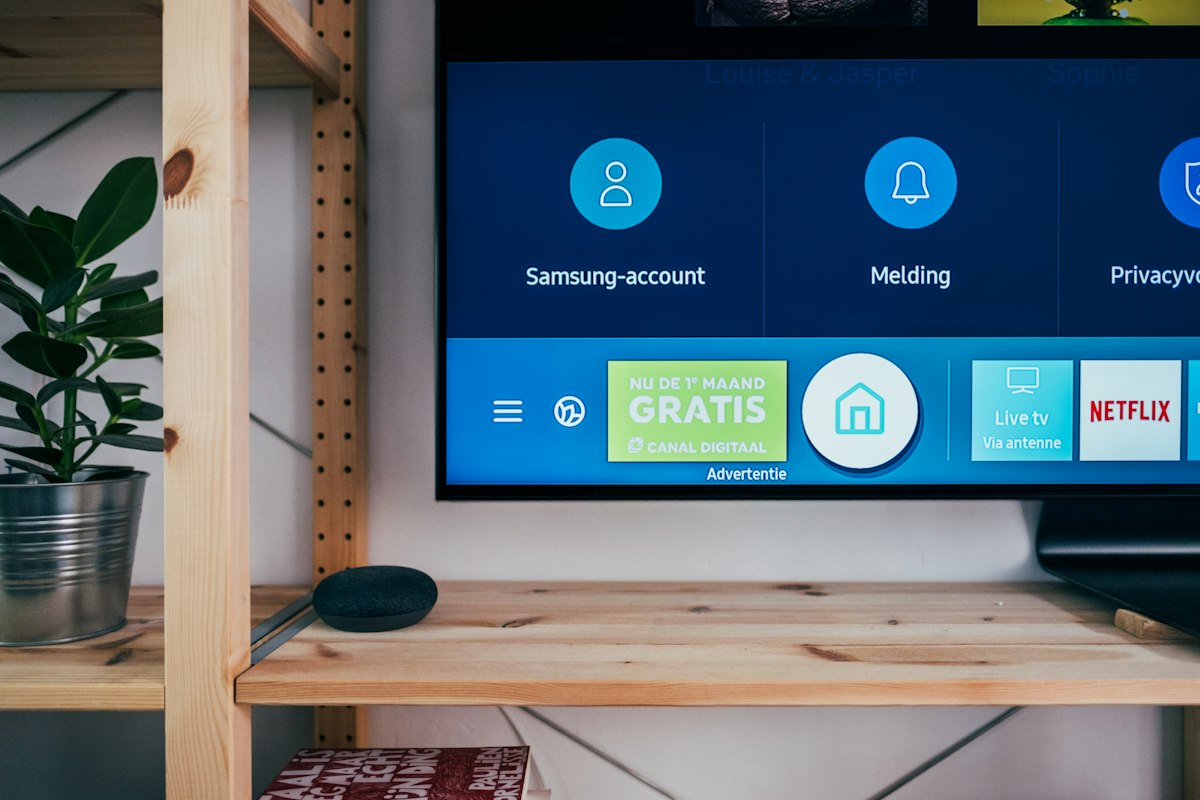
Why Connected TV Advertising Matters in 2026
The shift from cable to streaming has been building for years, and in 2026 it is decisive. Millions of households have cut the cord or never subscribed to cable at all, which means a growing share of premium video viewing happens outside linear TV. Connected TV advertising is how brands reach those viewers without paying for audiences who will never see the ad.
Several forces make connected TV advertising especially powerful right now:
- Scale: Streaming platforms now command a large and growing share of total TV viewing time, with ad-supported tiers expanding rapidly.
- Attention: CTV ads are typically non-skippable, full-screen, and sound-on, which drives higher completion rates than many mobile and desktop video formats.
- Targeting: Household-level targeting lets advertisers focus spend on the people most likely to buy.
- Measurement: Advertisers can connect CTV exposure to website visits, app installs, store visits, and sales — not just estimated reach.
- Flexibility: Campaigns can launch with modest budgets, test multiple creatives, and scale winners quickly.
Industry forecasts consistently project strong growth in CTV ad spend, driven by more ad-supported streaming inventory and better measurement (IAB).
Connected TV Advertising vs. Linear TV
Linear TV buys reach broad audiences against programmes and dayparts. CTV buys reach specific audiences wherever they stream. The two channels are complementary: linear still delivers mass reach for major events, while CTV adds precision, measurability, and efficiency.
| Factor | Linear TV | Connected TV Advertising |
|---|---|---|
| Targeting | Broad demographics, dayparts | Audience, geography, behaviour, intent |
| Measurement | Panel-based estimates | Household delivery, visits, conversions |
| Minimum budget | High, often market-wide | Accessible for local and mid-size brands |
| Optimisation | Slow, schedule-based | Real-time creative and audience shifts |
| Frequency control | Limited | Precise caps across devices and apps |
1. Start With Audience-First Targeting in Connected TV Advertising
The biggest advantage of connected TV advertising is that you do not buy audiences by the programme — you buy them by who they are. Start every campaign by defining the audience you want to reach, not the shows you want to appear in. Effective approaches include demographic and interest targeting, behavioural and intent signals, first-party data matching from your CRM or customer list, lookalike audiences built from your best customers, and geographic targeting down to city or ZIP code.
2. Build Creative Made for Streaming
Connected TV advertising creative must earn attention on the biggest screen in the house. Viewers are relaxed, the sound is on, and the ad usually cannot be skipped — but that attention disappears fast if the creative feels like a repurposed desktop video. Hook viewers in the first three seconds with the benefit or a striking visual, design for the big screen with large legible text and simple compositions, and mix sound for living-room speakers. Keep spots to fifteen or thirty seconds, test six-second bumpers for reach support, and end with one clear call to action. Plan at least two to three creative variations per campaign and rotate them before fatigue sets in. For deeper creative frameworks, see our guide on Meta Ads creative testing, where many of the same testing principles apply.

3. Use Data-Driven Programmatic Buying
Most connected TV advertising today is bought programmatically — through demand-side platforms (DSPs) or platform-direct deals that automate bidding, targeting, and delivery. Programmatic buying gives advertisers more control, transparency, and efficiency than traditional insertion orders. Options include open auction for flexible scale, private marketplace (PMP) deals for premium inventory at agreed prices, programmatic guaranteed for reserved premium inventory, and platform-direct buys for exclusive placements and first-party data. Whichever route you choose, insist on transparency: know which apps delivered your impressions, what you paid, and how viewability was measured. For a broader look at automated media buying, read our guide to programmatic advertising strategies.
4. Control Frequency and Avoid Ad Fatigue
Frequency management is one of the most underrated levers in CTV. Because households can be reached across many apps and devices, the same viewer can see your ad far more often than intended — and excessive repetition wastes budget and annoys potential customers. Set a sensible cap, typically 3–5 exposures per household per week for prospecting, use cross-device frequency management where your DSP supports it, rotate multiple creatives so repeats feel fresh, and suppress recent converters so you stop paying to reach people who already bought. Monitor reach and frequency together: rising frequency with flat reach means you are over-serving the same households.
5. Pair CTV With Retargeting and Search
Connected TV advertising is a powerful awareness channel, but its full value appears when you connect it to lower-funnel tactics. A viewer who sees your CTV ad and later searches for your brand is far more valuable than a viewer who sees the ad alone. Retarget CTV-exposed households with display, social, or video ads to lift recall and conversions. Expect branded search volume to rise during CTV flights, so make sure search campaigns are funded and landing pages are ready. You can also retarget site visitors on CTV with a stronger offer, and sequence the message: CTV tells the story, then a direct-response format carries the offer. For the retargeting layer, our guide to retargeting ads strategy covers audience windows and sequencing that pair perfectly with CTV.
6. Localize and Personalize Your Message
One of the most exciting capabilities of CTV is localization at scale. A national brand can run one campaign with dozens of local variations — different offers, store locations, languages, or seasonal messages — all delivered to the right households automatically. Tactics include dynamic end cards with the nearest store or regional offer, geo-targeted promotions tied to local events or store openings, language variations for diverse markets, and seasonal creative swaps that match local buying cycles. Even small businesses benefit: a local dealership, clinic, or restaurant can run CTV only in its own city or ZIP codes, with a message that feels made for that community — something linear TV could never deliver at an affordable price.

7. Measure Outcomes, Not Just Impressions
Connected TV advertising measurement goes far beyond impressions and completion rates. In 2026, the advertisers who win tie CTV exposure to business outcomes: website visits, leads, app installs, store visits, and revenue. Track reach and frequency, video completion rate (VCR), cost per completed view (CPCV), website and branded-search lift during the flight, and — most importantly — ROAS and cost per acquisition. Use household-level attribution, incrementality tests, or marketing-mix modelling to isolate CTV’s contribution.
8. Test Interactive and Shoppable Formats
Connected TV advertising is becoming more interactive. QR codes, shoppable overlays, and interactive formats let viewers move from passive watching to direct action without leaving the couch. Start with QR code end cards: keep the code on screen for at least five seconds, make the value proposition obvious, and track scans separately from site visits so you can see exactly how much direct response your campaign generates.
9. Optimize Budget Continuously Toward ROAS
Connected TV advertising rewards advertisers who optimize continuously. Do not set a campaign and forget it for a month. Review performance weekly — or daily during a launch — and shift budget toward the audiences, publishers, creatives, and dayparts that deliver the best ROAS. Each week, compare audiences, creatives, and publishers on CPCV, VCR, and early conversion signals, pause the weakest 20%, and reallocate to winners. Every two weeks, review frequency and creative fatigue. Monthly, run an incrementality or geo-holdout test to confirm CTV’s true lift, and keep 10–15% of spend as a test budget for new audiences or formats. Combine CTV optimisation with your broader paid-media routine — our guides to Google Ads bidding strategies and Performance Max campaigns cover the same test-and-scale discipline for search and shopping.
How Much Does Connected TV Advertising Cost?
Connected TV advertising pricing is usually quoted as CPM — cost per thousand impressions. In 2026, CTV CPMs typically range from roughly $15 to $65 depending on targeting precision, publisher quality, seasonality, and inventory scarcity. Broad prospecting on ad-supported streaming apps sits at the lower end, while highly targeted or premium publisher inventory sits higher. Targeting narrowness, inventory quality, seasonality (CPMs rise during holidays and major sports events), and creative quality all influence cost. Most advertisers can start testing with a few thousand dollars per month: begin with a focused audience and two or three creatives, prove the economics, then scale.
Frequently Asked Questions About Connected TV Advertising
What is the difference between CTV and OTT advertising?
CTV refers to the device — a television connected to the internet. OTT refers to content delivered over the internet, bypassing cable. In practice, the terms are used interchangeably.
Is connected TV advertising good for small businesses?
Yes. It is one of the most accessible TV formats for small businesses because you can target a single city or ZIP code, set a modest budget, and measure results. Local advertisers often see strong performance by pairing geo-targeted CTV with retargeting and search.
How do you measure CTV ROI?
Measure ROI by connecting exposure to outcomes: website visits, branded search lift, leads, app installs, store visits, and revenue. Use attribution modelling or incrementality tests to isolate CTV’s contribution, and evaluate ROAS rather than impressions alone.
What is a good video completion rate for CTV?
CTV video completion rates are typically high — often 90% or above — because ads are usually non-skippable and full-screen. If your completion rate is significantly lower, check creative quality, frequency, and inventory sources.
Do viewers actually act on CTV ads?
Yes — CTV builds awareness and trust on the big screen, and follow-up formats plus QR codes capture the action.
How long should a CTV ad be?
Fifteen- and thirty-second spots are the standard. Fifteen seconds works well for a single message and high frequency, while thirty seconds suits storytelling and new-product launches. Test both and let performance decide.
Conclusion
Connected TV advertising has moved from emerging channel to essential media. Brands that invest now — with audience-first planning, streaming-native creative, disciplined frequency control, and outcome-based measurement — will build a lasting advantage.
Start with one focused audience, two or three strong creatives, and a clear KPI. Prove the economics, then scale what works. If you want help planning, launching, or optimising a CTV campaign, contact Digital 365 Agency — our team builds full-funnel paid media programmes that turn streaming attention into measurable growth.
Sources: Interactive Advertising Bureau (IAB) CTV research; Nielsen audience measurement reports; eMarketer / Insider Intelligence CTV ad spend forecasts; Roku and Google TV advertiser resources. Figures cited are industry estimates and vary by market, publisher, and targeting.