

A five-person company can now run marketing, sales, and customer support like a 50-person team. The reason is simple: AI tools for small business have become so affordable and easy to use that you no longer need a big budget or a technical team to compete with larger rivals. In this guide, you’ll discover 9 proven ways small businesses are using AI in 2026 to save time, cut costs, and grow revenue — plus the best AI tools, real pricing, and ROI tips to get started this week.
According to industry research, AI adoption among small and mid-sized businesses has roughly doubled over the past two years, and the businesses seeing the biggest returns are the ones that start with one clear workflow — not a dozen tools at once. By the end of this article, you’ll know exactly which workflows to automate first, which AI tools for small business are worth paying for, and how to measure the return.
Key Takeaways
- AI tools for small business now start free or under $20/month — cost is no longer the barrier.
- The highest-ROI wins: AI chatbots for support, AI writing for content, and AI email follow-ups for sales.
- Start with ONE workflow, measure time saved weekly, then expand.
- Expect 5–10 hours saved per employee per week from the three core automations.
- Always keep a human in the loop for customer-facing content — AI drafts, you approve.
Table of Contents
- 📊 Why AI Tools for Small Business Matter More in 2026
- 🤖 1. AI-Powered Content Marketing & Blogging
- 💬 2. AI Chatbots That Handle Customer Support 24/7
- 📈 3. AI Sales Assistants & Email Follow-Ups
- 📱 4. Social Media Automation with AI
- 💰 5. AI Bookkeeping & Expense Management
- 🗓️ 6. AI Scheduling, Meetings & Admin Automation
- 🎯 7. AI Product Recommendations & Personalization
- 🎨 8. AI Design Tools for Brand Assets
- 📉 9. AI Analytics & Smarter Business Decisions
- 🛠️ The 10 Best AI Tools for Small Business Compared (2026)
- 💵 What Do AI Tools for Small Business Cost?
- ⚠️ 5 Mistakes to Avoid When Adopting AI
- 🗺️ Your 30-Day AI Adoption Plan
- ❓ AI Tools for Small Business FAQs
📊 Why AI Tools for Small Business Matter More in 2026
Small businesses have always competed on speed, personal service, and hustle — but they’ve been outgunned on resources. AI tools for small business finally change that equation. Here’s what’s different in 2026:
- Prices collapsed. Enterprise-grade AI features that cost hundreds per month in 2023 now come bundled into $15–30/month plans or free tiers.
- No-code setup. Modern AI tools for small business connect to your website, inbox, and CRM in minutes — no developer required.
- Agents do the work. Beyond chatbots, agentic AI tools can now complete multi-step tasks like qualifying leads and booking appointments on their own.
- Customers expect it. Buyers now expect instant answers at any hour. A small business with an AI chatbot answers faster than a big company with a slow ticket queue.
The result: a lean team using the right AI stack can out-respond, out-publish, and out-follow-up competitors ten times its size. Let’s break down exactly how.
🤖 1. AI-Powered Content Marketing & Blogging
Content is still king, but consistent publishing is the hardest part for a small team. AI writing assistants now draft blog posts, product descriptions, and email campaigns in minutes — and the best AI tools for small business learn your brand voice so drafts sound like you, not a robot.
Here’s the workflow that works: use AI to research and draft, then have a human editor refine and add real experience. This hybrid approach is exactly what we cover in our guide to AI content marketing tools.
- Blog posts & SEO articles: Draft 2,000-word articles from a single outline in under 15 minutes.
- Product descriptions: Generate unique, keyword-optimized descriptions for hundreds of SKUs.
- Email campaigns: Personalized subject lines and copy variants tested automatically.
Tools to try: ChatGPT and Claude for drafting, Jasper for brand-voice marketing copy, Surfer SEO for optimization. Typical cost: $20–50/month.
💬 2. AI Chatbots That Handle Customer Support 24/7
Missed messages are missed money. An AI chatbot on your website answers common questions instantly — pricing, hours, shipping, booking — even at 2 AM. For most small businesses, AI tools for small business in support resolve 60–80% of routine inquiries without human help, freeing your team for the conversations that actually need empathy.
- Lead capture: Chatbots qualify visitors and book calls while you sleep.
- Order tracking & FAQs: Connect to your store or booking system for real-time answers.
- Escalation: The bot hands tricky cases to a human with full context — no “start over” frustration.
Tools to try: Tidio, Intercom Fin, and ManyChat for social messaging. Typical cost: free–$40/month.
📈 3. AI Sales Assistants & Email Follow-Ups
Most small businesses lose deals not because their product is weak, but because follow-up is slow. AI sales assistants track every lead, draft personalized follow-up emails, and remind you exactly when to call. Our roundup of AI email tools shows how these systems push businesses toward inbox zero while replying faster.
- Lead scoring: AI ranks prospects so you call the hottest ones first.
- Personalized outreach: Draft emails referencing each prospect’s website, industry, or recent activity.
- Meeting booking: AI handles the back-and-forth of scheduling — see our guide to AI meeting assistants for the best options.
Pair this with a modern CRM — our CRM software for small business comparison covers the best AI-friendly picks — and your pipeline runs itself between calls.
Tools to try: HubSpot (free CRM with AI), Apollo for prospecting, Lavender for email coaching. Typical cost: free–$50/month.
📱 4. Social Media Automation with AI
Posting consistently on social media drives discovery, but it eats hours every week. AI social media tools generate captions, suggest hashtags, design visuals, and schedule posts across Instagram, TikTok, LinkedIn, and Facebook from one dashboard — making them some of the most popular AI tools for small business owners in 2026.
- Content calendars: Generate a month of post ideas from one product launch or offer.
- Repurposing: Turn one blog post into a week’s worth of short posts, reels scripts, and carousels.
- Best-time scheduling: AI picks posting times based on when your audience is actually online.
Tools to try: Buffer, Metricool, and Canva’s Magic Studio for visuals. Typical cost: free–$30/month.
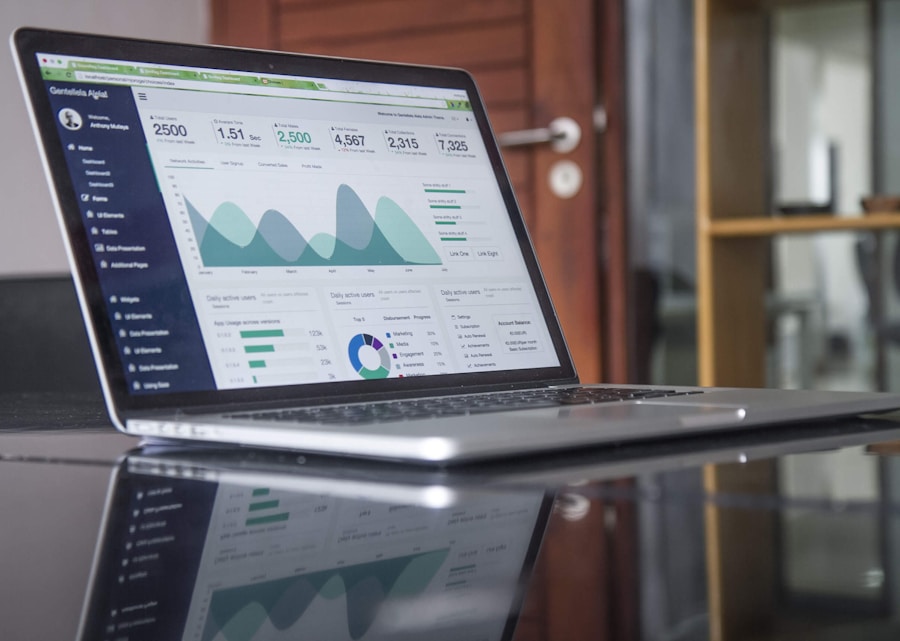
AI dashboards turn scattered data into decisions: marketing performance, sales trends, and customer insights in one view.
💰 5. AI Bookkeeping & Expense Management
Nobody starts a business to do bookkeeping — yet messy finances kill more small businesses than bad products. AI bookkeeping tools categorize expenses automatically, chase unpaid invoices, flag unusual spending, and generate tax-ready reports. These quiet workhorse AI tools for small business often pay for themselves in the first month.
- Auto-categorization: 90%+ of transactions sorted correctly without manual entry.
- Invoice chasing: Polite, automatic payment reminders that get you paid faster.
- Cash-flow forecasting: AI predicts shortfalls weeks ahead so you can plan.
Tools to try: QuickBooks with AI features, Xero, Dext for receipt scanning. Typical cost: $15–40/month.
🗓️ 6. AI Scheduling, Meetings & Admin Automation
Admin work is the silent killer of small-business productivity. AI assistants now transcribe meetings, extract action items, schedule appointments, and draft summaries automatically. For a team of five, these AI tools for small business commonly recover 5+ hours per person per week.
- Meeting notes: Full transcripts with action items and owners, delivered after every call.
- Smart scheduling: Booking links that find times across time zones with zero email ping-pong.
- Document drafting: Proposals, contracts, and SOPs generated from a few bullet points.
Tools to try: Otter.ai and Fireflies for meeting notes, Calendly for scheduling, Notion AI for documents. Typical cost: free–$25/month.
🎯 7. AI Product Recommendations & Personalization
Amazon-level personalization is no longer reserved for Amazon. Small e-commerce stores now use AI to show each visitor the right products, send abandoned-cart reminders, and tailor email offers — lifting conversion rates measurably. If you sell online, these AI tools for small business are among the fastest ways to grow revenue without more traffic.
- Smart recommendations: “Customers also bought” widgets tuned to your actual catalog.
- Abandoned cart recovery: Timed, personalized reminders that recover 10–15% of lost carts — see our cart abandonment tactics for the full playbook.
- Dynamic pricing & offers: Segment customers and show the right discount to the right person.
Tools to try: Klaviyo for email/SMS personalization, Nosto for on-site recommendations, Shopify Magic for store AI. Typical cost: free–$60/month.

AI amplifies small teams: a five-person team with the right AI stack can match the output of a much larger one.
🎨 8. AI Design Tools for Brand Assets
Hiring a designer for every social post, flyer, and ad isn’t realistic for a small budget. AI design tools generate on-brand graphics, product photos, and even short videos from text prompts — and modern AI tools for small business design keep your colors, fonts, and logo consistent automatically.
- Social creatives: Scroll-stopping posts generated from a headline in seconds.
- Product photography: Turn phone photos into studio-quality shots with AI backgrounds.
- Video ads: Text-to-video tools create short promos for TikTok, Reels, and YouTube Shorts.
Tools to try: Canva Magic Studio, Adobe Express with Firefly, Photoroom for product shots. Typical cost: free–$20/month.
📉 9. AI Analytics & Smarter Business Decisions
Data is useless if nobody has time to read it. AI analytics tools summarize your Google Analytics, ad accounts, and sales data into plain-English insights: what’s working, what’s wasting money, and what to try next.
- Plain-English summaries: “Your Instagram traffic converts 3x better than Google Ads this month — consider shifting $200.”
- Anomaly alerts: Get notified when sales, traffic, or ad costs move unexpectedly.
- Forecasting: Predict seasonal demand so you stock and staff correctly.
External research supports the trend: McKinsey’s State of AI reports and HubSpot’s research consistently find that organizations using AI in marketing, sales, and operations report the largest cost decreases and time savings.
Tools to try: Google Analytics 4 with AI insights, Pecan for predictive analytics, Databox for dashboards. Typical cost: free–$50/month.
🛠️ The 10 Best AI Tools for Small Business Compared (2026)
Here are the highest-value picks across the nine workflows above:
- ChatGPT / Claude — drafting, brainstorming, analysis. Free–$20/month.
- Canva Magic Studio — social posts, presentations, video. Free–$15/month.
- Tidio — AI chatbots for support & lead capture. Free–$40/month.
- HubSpot — free CRM with built-in AI. Free–$50/month.
- Jasper — marketing copy in your brand voice. From $39/month.
- QuickBooks — AI bookkeeping and invoicing. From $20/month.
- Otter.ai — meeting transcription with action items. Free–$17/month.
- Buffer / Metricool — AI social scheduling. Free–$30/month.
- Klaviyo — AI email & SMS for stores. Free–$60/month.
- Surfer SEO — AI content optimization. From $69/month.
Most small businesses need only 3–4 of these to cover 80% of the value. Start with a general assistant, one design tool, one support chatbot, and your CRM.
AI isn’t just for tech startups — local shops, agencies, and service businesses are adopting AI tools for small business at record rates.
💵 What Do AI Tools for Small Business Cost?
A realistic starter stack costs less than one part-time hire’s weekly wage:
- Minimum viable stack: free tiers of ChatGPT, Canva, HubSpot, and Tidio — $0/month.
- Recommended starter stack: ChatGPT Plus ($20) + Canva Pro ($15) + a chatbot plan ($30) — roughly $65/month total.
- Growth stack: add Jasper, QuickBooks AI, and Klaviyo — roughly $150–200/month total.
Compare that to the return: if the stack saves your team 20 hours a month and converts even a few extra leads, the ROI is typically 5–10x within the first quarter.
⚠️ 5 Mistakes to Avoid When Adopting AI
- Buying too many tools at once. Start with one workflow; master it before adding more.
- Publishing AI content unchecked. Always have a human review customer-facing content for accuracy and tone.
- Skipping training. A 30-minute team demo per tool multiplies adoption; without it, tools gather dust.
- Ignoring data privacy. Check where your data goes — avoid pasting sensitive customer data into free tools without reviewing their terms.
- No success metric. Define “hours saved per week” or “leads per month” before you start, so you can measure ROI honestly.
🗺️ Your 30-Day AI Adoption Plan
- Week 1: Pick ONE workflow (support chatbot or content drafting). Set up the tool and run it for 7 days.
- Week 2: Measure time saved and quality. Train your team with a 30-minute session.
- Week 3: Add a second workflow (email follow-ups or social scheduling). Connect it to your CRM.
- Week 4: Review metrics, calculate ROI, and decide which third tool earns a permanent spot in your stack.
Businesses that follow this measured approach report sticking with AI long-term; those that buy ten tools in a weekend usually abandon them by month two.
❓ AI Tools for Small Business FAQs
What is the best AI tool for a small business just starting out?
Start with a general AI assistant like ChatGPT or Claude (free–$20/month). It handles drafting, brainstorming, and analysis across every department, giving you the fastest taste of what’s possible before you invest in specialized tools.
How much do AI tools for small business cost?
You can start free using free tiers of ChatGPT, Canva, HubSpot, and Tidio. A solid starter stack costs around $65/month, and a growth stack runs $150–200/month — far less than one part-time hire.
Will AI replace my employees?
No — AI replaces tasks, not people. AI drafts and handles routine work; your team reviews, personalizes, and handles the human moments. Businesses typically redeploy saved hours into growth, not layoffs.
Are AI tools safe for customer data?
Stick to established vendors with clear privacy policies and never paste passwords or credentials into AI prompts. Check each tool’s data-retention settings before connecting your CRM.
How fast will I see results from AI tools?
Most small businesses see measurable time savings within two weeks — especially from chatbots and content drafting. Revenue impact typically shows within 30–90 days.
The Bottom Line
AI tools for small business are no longer a futuristic luxury — they’re the most cost-effective growth lever a small team can pull in 2026. Start with one workflow, measure the hours saved, and expand from there. The businesses winning with AI aren’t the ones with the biggest budgets; they’re the ones that started.
Sources: This article’s statistics reflect widely reported industry research on small-business AI adoption (including McKinsey’s State of AI reports and HubSpot’s marketing research) and vendor pricing pages as of 2026. Tool pricing changes frequently — verify current plans before publishing.