
A veterinary practice starts the day with a waiting room full of worried owners, a phone that never stops, and a diary that changed three times before the first appointment. One owner wants a vaccination slot for a new puppy, another is ringing about a cat that has not eaten in two days, a third is asking why the invoice for last month has not arrived, and the vet nurse is waiting to know which surgery comes first. The medicine itself is skilled and careful. The day around it is not. AI tools for veterinarians can take on much of that admin.
That is the week AI tools for veterinarians are built for. They take the call, book the slot, send the reminder, keep the record straight, and chase the payment, so the vet can spend the day with the animals instead of the telephone. The vet still examines the patient, still makes the diagnosis, and still makes the call when a case needs a referral instead of a routine visit. The tool just makes sure the appointment arrives, the reminder goes out, and the record is there when it is needed.
This guide covers seven picks. Each one does a different part of the job, each one can be tried without rebuilding the whole practice, and each one is judged the same way: what it does well, where it needs a human, and which kind of practice it suits best. If you want the wider comparison first, the best AI tools for small business guide covers fifteen categories in one place, and the best free AI tools for small business guide lists ten picks that cost nothing to start with. If you are new to all of this, start with how to use AI for small business before you buy anything.
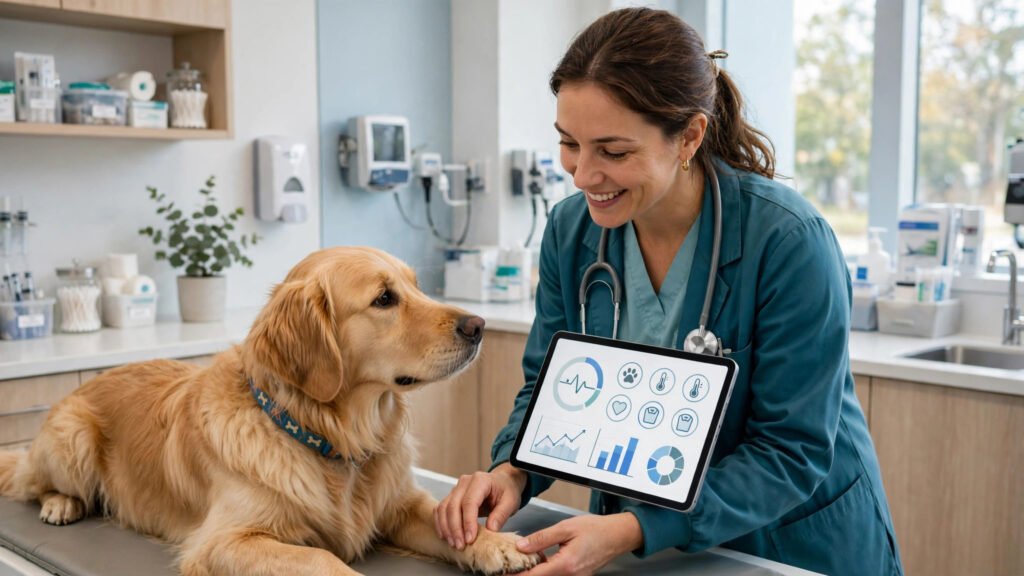
What AI tools for veterinarians should do
Before the tools, it helps to name the jobs. A veterinary practice is not one job. It is five small jobs that repeat for every single patient.
First, answering the call. An owner with a sick animal does not wait for a callback the next day. They ring the next practice on the list, and the patient is gone before the first practice has finished the consultation it is already in.
Second, booking the visit. A vaccination that is booked late is a vaccination that is missed, and a diary with double bookings is a waiting room full of unhappy owners and a vet who is running an hour behind by midday.
Third, reminding the owner. A booster, a dental check, and a flea treatment all have dates, and an owner who forgets is not an owner who does not care, just an owner who got busy. The reminder is the difference between a full diary and an empty one.
Fourth, keeping the record straight. The notes, the weight, the blood results, the x-ray, and the invoice all have to agree, because a record that disagrees with itself is a problem waiting for a bad day, and a patient whose history is missing is a patient the vet has to start from the beginning.
Fifth, getting paid. A treatment that is finished but not invoiced is money that is still sitting in the owner’s pocket, and an invoice that is sent late is an invoice that is paid late.
Seven tools cannot do all five jobs perfectly. But each tool below takes one job and makes it lighter, and together they cover the whole practice. Pick the job that hurts most, start there, and add the next tool only when the first one is part of your routine. That is the test every one of the AI tools for veterinarians in this guide had to pass.
1. ezyVet — the practice management tool that runs the day
ezyVet is the practice management tool on this list. It holds the diary, the patient record, the treatment plan, and the invoice in one place, so the whole day runs from one system instead of three notebooks and a whiteboard.
Its strength is that it keeps the patient and the job together. The vet can open the record, see the history, add the notes, and raise the invoice from the same screen, so nothing is retyped and nothing is forgotten. The follow-up matters most: a treatment plan that is waiting for an answer can be chased with a polite reminder, and an owner who has not replied is not an owner who has said no, just an owner who got busy. For a small practice that loses patients to slow replies, that is where AI tools for veterinarians earn their keep. The website side of this is covered in the AI website builder tools for small business guide.
Its weakness is that it is a system, not a member of staff. A diary with half the appointments in it is worse than a paper book, because it looks complete when it is not. The fix is simple: every appointment goes through it, every time, even the emergency walk-in taken at midnight, and the notes are finished before the vet leaves the room. The tool does the organizing. The human still has to enter the work.
Best for: small and growing veterinary practices that want appointments, records, and invoicing in one place, and owners who are tired of chasing paper.
2. Digitail — the cloud practice system that keeps the owner in the loop
Digitail is the cloud practice management tool on this list. It lets owners book online, see the pet record, and receive reminders, while the team keeps the diary, the notes, and the billing in one place.
Its strength is that it stops the phone from running the practice. The owner can book a slot, confirm it, and read the care instructions without a long phone call, and the vet can see the patient, the history, and the plan before the consultation starts. The missed call matters most: a call that goes unanswered is often an owner who simply rings the next practice, and a system that texts them back within minutes saves the booking. For a practice whose phone never stops, that is where AI tools for veterinarians pay for themselves. The sales side of this is covered in the AI sales tools for small business guide.
Its weakness is that it is a booking and records system, not a vet. A booking that goes in with the wrong pet, or a reminder that arrives with the wrong time, will worry the very owner it was meant to help. The fix is to check the booking form once, properly, and to let the team read the replies every morning before the first consultation. The tool does the booking. The human still reads the answer.
Best for: busy practices with a ringing phone, businesses that lose new patients to missed calls, and teams that want booking, reminders, and records in one place.
3. PetDesk — the reminder tool that fills the diary
PetDesk is the reminder and client communication tool on this list. It sends the appointment reminder, the vaccination due notice, and the follow-up message, so the diary stays full without the receptionist spending the day on the phone.
Its strength is that it turns a feeling into a picture. An owner who feels the practice is busy can see whether the diary is actually booked or whether the busy work is chasing owners who forgot, and a receptionist who feels the day is full can see whether the full day is consultations or call-backs. The reminder matters most: the booster that is due goes to the owner who needs it, and the empty slot is offered to the patient who is waiting. For a practice that lives on repeat visits, that is where AI tools for veterinarians build a steadier month. The automation side of this is covered in the AI automation tools for small business guide.
Its weakness is that a system this connected needs the whole team to work inside it. A reminder that is sent from outside the system is invisible to the receptionist, and a team that only half uses it will blame the tool for a diary that was never complete. The fix is to make it the only reminder system, from the first day, and to train the new receptionist on it the same week they learn the phones. The platform does the reminding. The human still decides what to say.
Best for: practices that live on repeat visits, teams with a diary full of boosters and check-ups, and owners who want reminders, messaging, and loyalty in one system.
4. Vetstoria — the online booking tool that answers at midnight
Vetstoria is the online booking tool on this list. It takes the booking from the practice website, checks it against the real diary, and puts it in the right slot, so an owner who is worried at midnight can book without waiting for the morning.
Its strength is that it makes a small practice look like a big one. The owner who books at midnight gets a confirmed slot and a clear message about what to bring, instead of a voicemail that may not be heard until lunch. The history matters most: an owner who is quoted for work that was already done last year will lose trust in a moment, and a practice that remembers the patient wins the repeat visit without competing on the fee. For a small team that lives on trust, that is where AI tools for veterinarians build loyalty without a marketing budget. The email side of this is covered in the AI email marketing tools for small business guide.
Its weakness is that it only knows what the team tells it. A diary that is not kept up to date will offer a slot that is already taken, and a booking that arrives with no notes will leave the vet guessing. The fix is to finish the diary every evening, while the day is still fresh, and to read the online bookings first thing every morning. The tool does the booking. The human still has to keep the diary honest.
Best for: small veterinary teams, practices built on repeat and referral work, and owners who want the booking to happen even when the phones are closed.
5. Weave — the phone and messaging tool that keeps every owner answered
Weave is the communication tool on this list. It brings the phone, the text message, and the payment request into one thread, so a worried owner who rings while the team is in surgery still gets an answer.
Its strength is that it closes the loop. The call is answered or texted back, the appointment is confirmed, the reminder goes out, and the payment link arrives after the visit, all in one place. The same-day message matters most: an owner who receives the aftercare note while the visit is still fresh follows it, and an owner who has to ring three times to ask about a bill will not come back. For a practice that is always busy but always short of time, that is where AI tools for veterinarians fix the real problem. The social side of staying visible is covered in the AI social media content tools for small business guide.
Its weakness is that it is a communication system, not a clinician. A message that is sent to the wrong owner, or a reminder that arrives with the wrong pet name, will worry the very person it was meant to reassure. The fix is to check the contact details once, properly, and to let the team read the replies every morning before the first consultation. The tool does the messaging. The human still reads the answer.
Best for: busy practices, teams that lose new patients to missed calls, and owners who want calls, texts, and payments in one place.
6. Covetrus Avimark — the records tool for practices with long histories
Covetrus Avimark is the patient records tool on this list. It holds years of notes, results, and invoices for every patient, so the vet who sees a patient for the first time already knows what was treated last year and what was planned and never done.
Its strength is that it remembers what a busy team forgets. The vet can see the weight trend, the last blood results, and the medicines that were tried, instead of starting from the beginning with a worried owner. The record matters most: a patient whose allergy is written down is a patient who is safe, and a practice that can find the record in seconds is a practice the owner trusts. For a practice with a long history, that is where AI tools for veterinarians protect the patient and the practice at the same time. The productivity habits around this are covered in the AI productivity tools for small business guide.
Its weakness is that a records system is only as good as the notes inside it. A consultation finished without a note, a result never filed, and a plan never recorded will leave the next vet guessing. The fix is to finish the note in the room, while the case is still fresh, and to file the result before the next patient comes in. The tool does the remembering. The human still has to write it down.
Best for: established practices with long patient histories, multi-vet teams, and owners who want the record to survive a busy day.
7. Xero — the bookkeeping tool that turns finished treatments into paid invoices
Xero is the bookkeeping tool on this list. It takes the finished treatment, turns it into an invoice, and shows the practice whether the month is actually making money, so the owner is not guessing at the end of the month.
Its strength is that it closes the loop. The treatment is done, the invoice goes out the same day, the owner pays from the link, and the books show the payment without anyone retyping the numbers. The same-day invoice matters most: an owner who receives the invoice while the visit is still fresh pays sooner than an owner who receives it three weeks later and has to remember what was done. For a practice that is always busy but always short of cash, that is where AI tools for veterinarians fix the real problem. The notes habit for a busy practice is covered in the AI meeting notes tools for small business guide.
Its weakness is that it is a bookkeeping system, not an accountant. A book that is half kept is worse than a paper ledger, because it looks complete when it is not. The fix is to reconcile every week, without fail, and to ask the accountant about anything that looks odd before the month ends. The tool does the counting. The human still decides what the numbers mean.
Best for: owners who want to see the money clearly, practices that invoice late, and teams that want the books to match the diary.
AI tools for veterinarians compared
| Tool | Best for | Watch out |
|---|---|---|
| ezyVet | Appointments, records, and invoicing in one place | Needs every appointment entered, every time |
| Digitail | Online booking and owner communication | Booking form must be checked carefully |
| PetDesk | Reminders and repeat visits | Only works if it is the only reminder system |
| Vetstoria | Bookings when the phones are closed | Diary must be kept up to date every evening |
| Weave | Calls, texts, and payments in one thread | Contact details must be right, or messages go wrong |
| Covetrus Avimark | Long patient histories and multi-vet teams | Notes must be finished in the room, not later |
| Xero | Same-day invoicing and clear books | Needs a weekly reconciliation, without fail |
How to choose the right tool
Start with the lost patient problem. Count the calls that went unanswered last month, the reminders that were never sent, and the treatments that were finished but never invoiced. If the number is high, the booking or invoicing tool comes first, because every other tool feeds on patients that actually arrive and get paid. Fix the diary and the invoice before buying a bigger system. The research behind a good choice is covered in the AI research tools for small business guide.
Match the tool to the size of the practice. A one-vet practice does not need the system a five-vet practice needs, and a five-vet practice will outgrow a tool built for one vet in a year. Ask how many vets, nurses, and receptionists will use it every day, and buy for that number, not for the number you hope to reach one day.
Check the human handoff. Every tool on this list needs a moment when the person takes over. Ask where that moment is before buying: who answers the owner who is not happy, who explains the treatment plan to the owner who does not understand it, who signs off the record. If the answer is unclear, the tool will quietly drop the cases that matter most.
Try one tool for a month. A trial that runs for a week tells you nothing, because a week is not long enough for the diary to fill and the reminders to work. Give it a full month, judge it by the appointments that were booked, the reminders that were answered, and the invoices that were paid, and then decide.
Mistakes to avoid with AI tools for veterinarians
A first mistake is buying seven tools at once. A practice that buys everything in a week will use nothing properly, and the team will go back to the paper book within a month. One tool, used every day, does more than seven tools bought and forgotten.
A second mistake is letting the tool send messages nobody has read. A reminder with the wrong pet name, a booking confirmation with the wrong time, and an aftercare note sent to the wrong owner all cost trust, and trust is the whole business. Read the message before it goes out, every time, until the system has earned it.
A third mistake is keeping the diary in two places. A diary that lives half in the tool and half on paper is a diary that double-books, and a double booking is a waiting room full of unhappy owners. One diary, one system, every appointment through it.
A fourth mistake is invoicing late. The treatment that is finished but not invoiced is money that is still in the owner’s pocket. Send the invoice the same day, and chase it politely if it is not paid.
Frequently asked questions
Do AI tools for veterinarians replace the vet?
No. They replace the chasing, the retyping, and the missed call on a busy day. The examination, the diagnosis, and the treatment still belong to the vet, and those are the parts the owner remembers.
Which tool should a practice try first?
The one that fixes the biggest leak. For most practices that is the diary or the invoice: a system that books, reminds, and sends the invoice the same day without errors. If the diary is already solid, the next pick is the one that matches the practice, a reminder tool for a diary full of boosters and a records tool for a long patient history. If you are still torn between two systems, the which AI tool is best for small business guide walks through the choice.
Can a small practice afford these tools?
Start with one tool, not seven. Pick the job that loses the most money, use the tool for a month, and judge it by the appointments that were booked, the reminders that were answered, and the invoices that were paid. A tool that pays for itself in one filled week has earned its place.
Will owners mind booking through a tool?
Most owners mind being ignored, not the booking page. A clear slot, a reminder with the right time, and a message when the vet is ready feel like care, not automation. The vet should still be the person who examines, explains, and follows up.
How do I keep the practice personal when a tool does the admin?
Let the tool do the admin and keep the personal parts for yourself. The tool books, reminds, and drafts. The vet explains, listens, and makes the call. A practice that is organized by a tool and led by a person is a practice owners return to.
Conclusion
The practice that wins is rarely the one with the most tools. It is the one whose diary is full, whose reminders go out on time, whose records are there when they are needed, and whose invoices are paid on time. One tool, used every day, does more than seven tools bought and forgotten.
Start with the leak. If the phone is missed, start with booking. If the reminder is late, start with reminders. If the money is late, start with invoicing. Use it for a month, judge it by the appointments that were booked and the invoices that were paid, and then add the next one. If you want one more place to compare tools before you choose, the AI Tool Steps site lists practical picks by job.