
A solar installer starts the day with a roof to survey, a phone full of messages, and a quote that changed three times before breakfast. One homeowner wants the panels moved to the other slope, another is asking why nobody replied to their message from last night, a third is wondering whether the install will be finished before the weekend, and the team is waiting to know which roof comes first. The installing itself is skilled and careful. The day around it is the reason AI tools for solar panel installers were built.
That is the week these tools are built for. They take the inquiry, survey the roof, design the system, write up the quote, and send the invoice, so the installer can spend the day with the customers instead of the telephone. The installer still climbs the roof, still checks the fixings, and still makes the call when a roof needs a careful word first. The tool just makes sure the survey arrives, the design is right, and the install is never missed for no reason.
This guide covers seven picks. Each one does a different part of the job, each one can be tried without rebuilding the whole business, and each one is judged the same way: what it does well, where it needs a human, and which kind of business it suits best. If you want the wider comparison first, the best AI tools for small business guide covers fifteen categories in one place, and the best free AI tools for small business guide lists ten picks that cost nothing to start with. If you are new to all of this, start with how to use AI for small business before you buy anything.
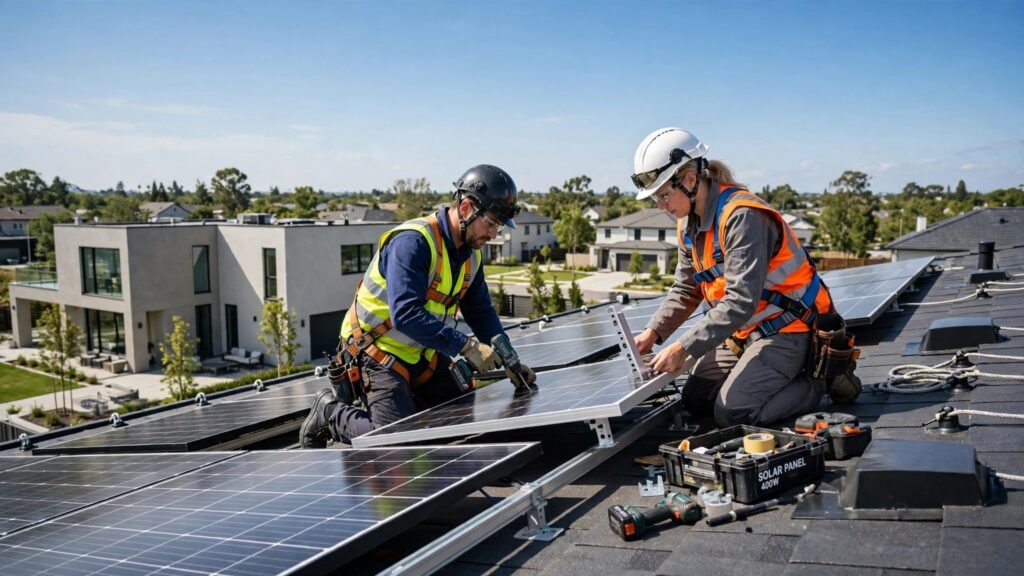
What AI tools for solar panel installers should do
Before the tools, it helps to name the jobs. A solar installer is not one job. It is five small jobs that repeat for every single roof.
First, answering the inquiry. A homeowner with a high bill does not wait for a callback the next day. They book with the next installer on the list, and the customer is gone before the first installer has finished the roof they are already working on.
Second, surveying the roof. A survey that takes three days to finish is a survey that loses to the one that was ready in an hour, and a measurement taken from memory is a measurement that forgets the shade, the angle, and the panel it belonged to.
Third, designing the system. The panels, the inverter, and the battery all have to fit the roof, and a design that lives in three different files is a design that runs out of the very detail a homeowner needs at the next review.
Fourth, quoting the job. The price, the savings, and the payback all need to reach the right homeowner, and a homeowner who hears nothing is a homeowner who worries all week.
Fifth, getting paid. A month of installs that is finished but not billed is money that is still sitting unpaid, and an invoice that is sent late is an invoice that is paid late.
Seven tools cannot do all five jobs perfectly. But each tool below takes one job and makes it lighter, and together they cover the whole business. Pick the job that hurts most, start there, and add the next tool only when the first one is part of your routine. That is the test every one of the AI tools for solar panel installers in this guide had to pass.
1. Aurora Solar — the design tool that turns a roof into a system
Aurora Solar is the solar design and sales tool on this list. It turns an address into a 3D roof model, a roof model into a panel layout, and a panel layout into a quote, so the whole business runs from one place instead of a ladder and a notebook.
Its strength is that it keeps the roof and the quote together. The installer can open the model, see the shade, check the output, and send the quote from the same screen, so nothing is retyped and nothing is forgotten. The shade analysis matters most: a panel in the shade is a panel that earns nothing, and a design that shows the shade honestly protects the very savings the homeowner is paying for. For a small business that loses customers to slow quotes, that is where AI tools for solar panel installers earn their keep. The website side of this is covered in the AI website builder tools for small business guide.
Its weakness is that it is a system, not a member of staff. A model with half the roof in it is worse than a sketch, because it looks complete when it is not. The fix is simple: every roof goes through it, every time, even the small extension agreed on site at the end of the day, and the quote is sent from the model, not from a separate sheet. The tool does the designing. The human still has to enter the work.
Best for: small and growing solar installers that want surveys, designs, and quotes in one place, and owners who are tired of climbing every roof twice.
2. OpenSolar — the quoting tool that lets the homeowner see the savings
OpenSolar is the solar design and quoting tool on this list. It lets the team see the roofs in progress, the designs waiting, and the quotes due, while the owner keeps the notes, the schedule, and the follow-ups in one place.
Its strength is that it stops the phone from running the business. The homeowner can see the design, check the savings, and receive a quote without a long phone call, and the owner can see the roof, the history, and the plan before the survey starts. The missed call matters most: a call that goes unanswered is often a homeowner who simply books with the next installer, and a system that replies within minutes saves the job. For a business whose phone never stops, that is where AI tools for solar panel installers pay for themselves. The sales side of this is covered in the AI sales tools for small business guide.
Its weakness is that it is a design and quoting system, not an installer. A quote that goes out with the wrong roof, or a design that arrives with the wrong panel count, will worry the very homeowner it was meant to help. The fix is to check the roof once, properly, and to let the team read the replies every morning before the first survey starts. The tool does the quoting. The human still reads the answer.
Best for: busy solar installers with a ringing phone, businesses that lose customers to missed calls, and teams that want designs, quotes, and follow-ups in one place.
3. Solargraf — the proposal tool that turns a survey into a signed job
Solargraf is the solar proposal and design tool on this list. It turns a roof survey into a clear proposal with the panels, the price, and the savings on one page, so the homeowner can say yes without waiting a week for the paperwork.
Its strength is that it fits the way a solar sale actually works. The installer can finish the survey, build the proposal, and send it the same day, so the homeowner decides while the visit is still fresh in mind. The same-day proposal matters most: a homeowner who waits a week for the price will have spoken to three other installers by then, and a system that sends the proposal at once wins the job that a slow quote would have lost. For a business built on fast decisions, that is where AI tools for solar panel installers earn their keep. The automation side of this is covered in the AI automation tools for small business guide.
Its weakness is that it is built for proposals first. A business that also needs deep operations, stock, and multi-team scheduling will find some jobs fit less neatly, and the team will need a second place for those. The fix is to use it for the survey and the proposal, where it shines, and keep the operations in the job tool. The tool does the proposal. The human still runs the install.
Best for: solar installers who win jobs with fast proposals, and owners who want the survey, the design, and the quote in one flow.
4. JobNimbus — the job tool that follows the install from survey to switch-on
JobNimbus is the job and customer management tool on this list. It shows every roof, every install, and every invoice on one screen, so the owner can see which jobs are due, fill the empty day, and see which systems are making money and which are not.
Its strength is that it turns a feeling into a picture. An owner who feels the month is busy can see whether the installs are actually being finished or whether the busy work is chasing quotes, and an owner who feels the week is full can see whether the full week is roof work or call-backs. The install diary matters most: the urgent roof is covered before the routine one, the follow-up leaves before the week ends, and the canceled job is replaced before the team ever stands idle. For a business with a busy diary, that is where AI tools for solar panel installers build a steadier month. The marketing side of this is covered in the AI social media content tools for small business guide.
Its weakness is that a system this connected needs the whole team to work inside it. A job that is done outside the system is invisible to the owner, and a team that only half uses it will blame the tool for a diary that was never complete. The fix is to make it the only diary, from the first day, and to train the team on it the same week they learn the roofs. The platform does the organizing. The human still decides which roof is covered first.
Best for: larger solar installers, teams with a busy diary and several crews, and owners who want jobs, crews, and invoices in one system.
5. JobProgress — the scheduling tool that keeps the whole crew in step
JobProgress is the job scheduling and customer tool on this list. It turns a survey, an install date, and a follow-up into one flow, so the homeowner can see the install coming and the owner can see the week already planned.
Its strength is that it closes the sale before the crew arrives. The homeowner who sees a clear install date, a fair price, and a message when the crew is on the way will stay loyal faster than a homeowner who receives a plain receipt. The first impression matters most: a schedule that looks careless suggests a business that will be careless, and a schedule that looks careful suggests a crew that will be careful. For a business that sells trust, that is where AI tools for solar panel installers earn their keep. The productivity side of this is covered in the AI productivity tools for small business guide.
Its weakness is that it is a scheduling tool, not an installer. A plan that promises what the crew cannot deliver will disappoint the homeowner on the day, and a plan that looks neat but hides the gaps will cost trust later. The fix is to plan only what the crew can actually install, and to let the schedule sit next to the promises. The tool does the scheduling. The human still sets the install plan.
Best for: installers who sell through service, businesses that win customers from reliable installs, and owners who want surveys, installs, and follow-ups in one place.
6. ServiceTitan — the operations tool that keeps every roof answered
ServiceTitan is the field service operations tool on this list. It holds the customer, the job, the install record, and the payment together, so the installer who visits a roof for the first time already knows what was surveyed last month and what was promised and never sent.
Its strength is that it makes a small business look like a big one. The homeowner who inquires gets a survey, a design, and an install date without waiting days, instead of a stranger who has to start from the beginning. The history matters most: a homeowner who is asked for details that were already given will lose trust in a moment, and a business that remembers the roof wins the loyalty without competing on price. For a small team that lives on long warranties, that is where AI tools for solar panel installers build loyalty without a marketing budget. The research side of this is covered in the AI research tools for small business guide.
Its weakness is that it only knows what the team tells it. A job done without a record, a panel never logged, and a payment never filed will leave the next installer guessing. The fix is to finish the record on the roof, while the install is still fresh in mind, and to file the job before the next roof comes in. The tool does the remembering. The human still has to write it down.
Best for: small solar teams, businesses built on long warranties and repeat customers, and owners who want the roof history in one place.
7. QuickBooks — the money tool that turns finished installs into clear numbers
QuickBooks is the billing and bookkeeping tool on this list. It takes the finished install, turns it into an invoice, and shows the owner whether the month is actually making money, so the owner is not guessing at the end of the month.
Its strength is that it closes the loop. The install is done, the invoice goes out the same day, the payment arrives, and the books show the payment without anyone retyping the numbers. The same-day invoice matters most: an invoice that is sent while the install is still fresh is paid sooner than an invoice that is sent three weeks later and has to be checked again. For a business that is always busy but always short of cash, that is where AI tools for solar panel installers fix the real problem. The email side of this is covered in the AI email marketing tools for small business guide.
Its weakness is that it is a billing system, not an accountant. A book that is half kept is worse than a paper ledger, because it looks complete when it is not. The fix is to reconcile every week, without fail, and to ask the accountant about anything that looks odd before the month ends. The tool does the counting. The human still decides what the numbers mean.
Best for: owners who want to see the money clearly, businesses that bill late, and teams that want the books to match the install diary.
AI tools for solar panel installers compared
Here is how the seven tools compare side by side.
| Tool | Best for | Main job it does | Watch out for |
|---|---|---|---|
| Aurora Solar | Small installers wanting one system | Roof models, designs, quotes | Needs every roof in the model |
| OpenSolar | Busy installers with a ringing phone | Designs, quotes, follow-ups | Wrong details worry homeowners |
| Solargraf | Installers winning with fast proposals | Surveys, proposals, quotes | Built for proposals first |
| JobNimbus | Larger teams with several crews | Jobs, crews, invoices | Only works if it is the only diary |
| JobProgress | Installers selling through service | Scheduling, installs, follow-ups | Plan only what the crew can install |
| ServiceTitan | Small teams on long warranties | Roof history and operations | Records must be finished on the roof |
| QuickBooks | Any business that bills daily | Billing and bookkeeping | Needs a weekly reconciliation |
How to choose the right AI tools for solar panel installers
Start with the job that hurts most. If the quote is always late, start with Aurora Solar, OpenSolar, or Solargraf. If the diary is a mess, start with JobNimbus or JobProgress. If the customer history is lost, start with ServiceTitan. If the money is late, start with QuickBooks. One tool, used every day for a month, beats seven tools tried for a week each.
Then check three things before you pay for anything. First, does it survey the way your team actually surveys, from the ladder or from the satellite image. Second, does it talk to the tool you already use for money, so the finished install becomes the invoice. Third, will your crew actually open it on a phone on a roof, or will it sit unused while they call the office. If the answer to any of those is no, keep looking. The guide to picking between tools, the which AI tool is best for small business comparison, walks through the same three checks for any category. And if your business takes notes at every customer meeting, the AI meeting notes tools for small business guide shows how to keep those notes in one place.
Try the free plan first where one exists, and put one real week of installs through it before you decide. A tool that survives a real week of rainy roofs, changed designs, and a crew member off sick is a tool worth keeping. A tool that only works on a quiet week is not.
Mistakes to avoid with AI tools for solar panel installers
The first mistake is buying the design tool before fixing the diary. A business with jobs in five places will still lose the latest survey, and the new tool will only make the mess faster.
The second mistake is letting half the jobs live outside the system. A diary that holds only some installs is worse than a paper book, because it looks complete when it is not, and the team will trust it until the day two crews arrive at one roof.
The third mistake is quoting from a model nobody checked. A design with the wrong shade is a promise the business will have to keep, and the homeowner will hold the business to the savings, not the drawing.
The fourth mistake is billing at the end of the month. A homeowner who gets the invoice four weeks after the install has already forgotten the roof, and the payment will wait while the memory fades.
The fifth mistake is training nobody. A tool that only the owner understands is a tool that stops working the day the owner is ill, and the team will go back to phone calls within a week.
FAQs
Common questions, answered plainly.
Do AI tools for solar panel installers replace the installer?
No. They replace the retyping, the chasing of quotes, and the evening of admin around the install. The installing itself still needs a person on the roof, checking the fixings and making the call when a roof needs a careful eye.
Which AI tools for solar panel installers should a small business start with?
Start with the design and quoting pair. A tool like Aurora Solar or OpenSolar holds the roof model and sends the quote, and that covers the two jobs that eat a small installer’s evenings. Add the job and money tools only when the diary runs smoothly.
Can homeowners really see their savings before the install?
Yes, when the proposal is clear. A design with the panels, the output, and the savings on one page is enough for most homeowners. A proposal full of jargon will confuse them, so keep it plain and show the roof the way it will actually look.
How do I keep the design and the install in step?
Use one model as the single source, and build every job from it. A change made in the model updates the quote, and a change made outside the model is a change that will be lost. Protect the model like the contract, because it is the contract in drawing form.
What if a homeowner keeps changing the design?
Record every change against the model and the quote. A revision log shows what moved, when it moved, and what it cost, and that record turns a row into a revised quote: agree the change, update the model, and note the extra work. A business with no record can only argue, and arguing loses customers.
Conclusion
A solar installer does not need seven new tools tomorrow. It needs one tool that takes the job hurting most, used every day until it is part of the routine, and then the next one. Start with the design or the quote, keep every job in the system, and let the diary tell you whether it stays. The tools in this guide all do one job well, and together they cover the whole business, from the first inquiry to the switched-on system.
If you want the next step after choosing a tool, the AI Tool Steps guide to Google AI Studio for beginners shows how a small team can test a new AI workflow hands-on before rolling it out to customers. Pick the tool, run one real week through it, and let the diary tell you whether it stays.