

AI Google Ads tools for small business have changed the math of paid search. Where a solo owner once burned hours tweaking bids and guessing at keywords, artificial intelligence now handles bid adjustments, finds wasted spend, and writes ad variations in seconds. The result is simple: lower cost-per-click (CPC), higher Quality Scores, and more customers from the same budget. In this guide, you will meet the 7 best tools in 2026, see a worked example of a real-world CPC cut, and get a step-by-step setup walkthrough you can finish in a weekend.
Table of Contents
- Why AI Google Ads Tools for Small Business Matter in 2026
- The 7 Best AI Google Ads Tools for Small Business
- Worked Example: How One Bakery Cut CPC 38%
- 7-Step Walkthrough: Setting Up AI for Your Campaigns
- 5 Costly Mistakes to Avoid
- Key Takeaways
- Frequently Asked Questions
💡 Why AI Google Ads Tools for Small Business Matter in 2026
Google Ads remains the highest-intent advertising channel on the planet — people literally type what they want to buy. But for small businesses, the platform has become brutally competitive. Average CPCs keep climbing, the interface grows more complex every quarter, and agencies charge retainers that small budgets cannot justify.
That is exactly the gap AI Google Ads tools for small business fill. According to Google’s official Ads & Commerce blog, Google’s own AI bidding strategies now adjust bids in real time using dozens of auction-time signals — device, location, time of day, and even browser language — far more signals than any human could weigh manually.
For a small business owner, three advantages matter most:
- Wasted-spend detection. AI audits search terms 24/7 and flags the queries quietly draining your budget.
- Smarter bidding. Machine-learning bid strategies like Target ROAS optimize every single auction instead of relying on one static manual bid.
- Faster creative testing. AI generates and tests dozens of headline and description combinations, learning which copy converts.
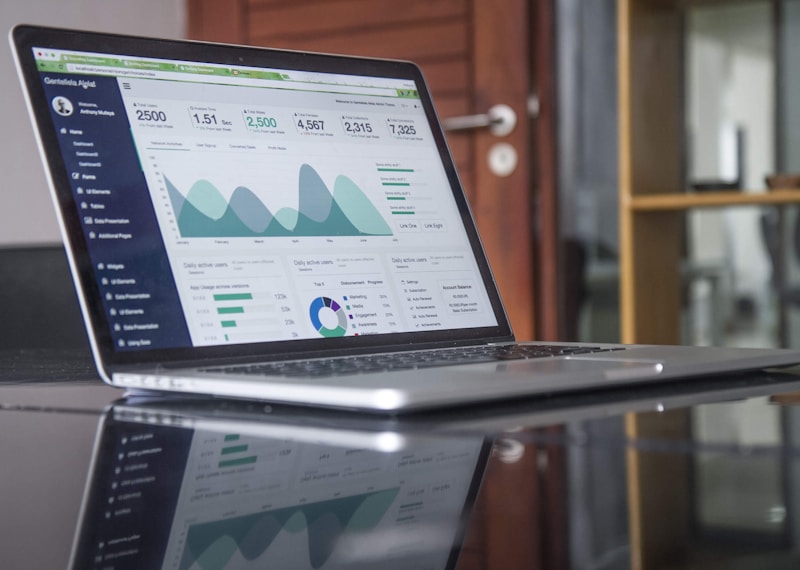
Caption: AI Google Ads tools for small business turn raw campaign data into decisions that lower CPC.
Google itself reports that advertisers typically earn about $2 in revenue for every $1 spent on Google Ads — but that average hides a wide spread. Businesses that manage campaigns actively (or with AI help) sit far above it; businesses that “set and forget” sit far below. That spread is why choosing the right AI Google Ads tools for small business budgets is less about features and more about fit. If you want the full picture of how AI fits into a small company’s marketing stack, start with our pillar guide, AI Tools for Small Business: The Complete 2026 Guide.
🛠️ The 7 Best AI Google Ads Tools for Small Business
Below is a comparison of the best AI Google Ads tools for small business advertisers in 2026 — chosen for SMB-friendly pricing, genuine AI capability, and a learning curve a non-specialist can survive. After the table, each tool gets a closer look, because each of these AI Google Ads tools for small business earns its place for a different reason.
| Tool | Best For | Key AI Feature | Starting Price |
|---|---|---|---|
| Google Ads Smart Bidding | Every advertiser | Real-time auction-time bidding | Free (built in) |
| Optmyzr | Hands-on optimizers | One-click AI optimizations | ~$208/mo |
| Adalysis | Automation on a budget | Ad testing + audit alerts | ~$99/mo |
| WordStream Advisor | Beginners | 20-minute weekly action plan | ~$49/mo |
| Revealbot | Rule-based automation | AI rules across Google + Meta | ~$99/mo |
| AdCreative.ai | Display & creative | Generative ad creatives | ~$39/mo |
| NEIL PATEL / Ubersuggest Ads AI | Keyword research | AI keyword + competitor insights | Free–$29/mo |
1. Google Ads Smart Bidding (Free, Built In)
The most powerful — and most overlooked — AI Google Ads tool for small business is already inside your account. Smart Bidding strategies like Maximize Conversions, Target CPA, and Target ROAS use Google’s machine learning to set a bid for every single auction. Google’s system evaluates signals such as the searcher’s device, location, time, and past behavior in milliseconds.
When to use it: Once a campaign has roughly 30 conversions in 30 days, switching from manual CPC to Target ROAS is the single highest-ROI move most small advertisers can make. Pair it with our AI ad budget optimization guide to keep daily spend disciplined while the algorithm learns.
2. Optmyzr
Optmyzr packages Google Ads management into one-click optimizations — AI-powered suggestions for budgets, bids, keywords, and ad copy that you approve with a single click. Its Rule Engine lets you build custom automations (“pause any keyword with CPA over $40 and zero conversions in 14 days”) without code. Best value for businesses spending $3,000+/month on ads.
3. Adalysis
Adalysis is the audit watchdog: it scans your account daily and alerts you to budget leaks, broken URLs, disapproved ads, and underperforming ad tests. Its AI ad-testing module automatically declares winners and losers across your responsive search ads, so you stop running losing copy for months unnoticed.
At ~$99/month, it is the best “insurance policy” of the bunch — it routinely finds 10–20% wasted spend in neglected accounts.
4. WordStream Advisor
Built for owners who can spare only 20 minutes a week, WordStream’s 20-Minute Work Week gives you a prioritized AI-generated checklist: which keywords to pause, which bids to raise, which negative keywords to add. WordStream’s Google Ads benchmarks also give you industry CPC and conversion-rate baselines to judge your own numbers against.
5. Revealbot
Revealbot automates with custom AI rules across Google and Meta Ads in one dashboard: scale budgets 20% when ROAS exceeds 4x, pause ad sets when frequency climbs, alert you on Slack when CPA spikes. For businesses running Google + Meta together, one automation layer beats juggling two native interfaces.
6. AdCreative.ai
Google’s Performance Max and Display campaigns live or die on creative volume. AdCreative.ai generates on-brand display banners and ad variations and scores them for predicted conversion rate before you spend a dollar. Feed it your logo and brand colors; it returns dozens of ready-to-upload assets in minutes.
7. Ubersuggest’s AI Keyword Insights
Every CPC battle starts with keyword selection. Ubersuggest’s AI surfaces long-tail keywords with lower competition and estimates their CPC, so small businesses can target “emergency plumber downtown Chicago” ($8 CPC) instead of “plumber” ($40+ CPC). The free tier is enough to research one campaign properly.
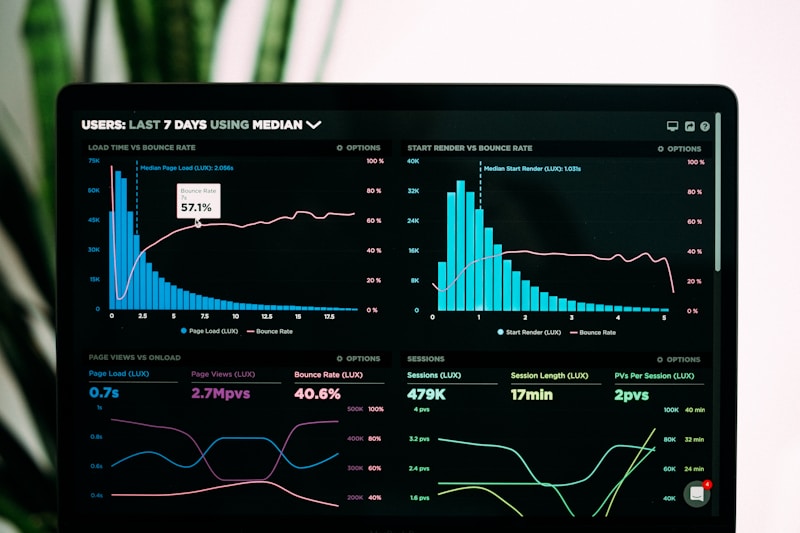
Caption: Compare CPC, Quality Score, and ROAS side by side before and after switching on AI bidding.
📊 Worked Example: How One Bakery Cut CPC 38% with AI Google Ads Tools
Numbers beat theory — and this is where AI Google Ads tools for small business prove their ROI. Here is an illustrative example based on the pattern we see repeatedly with small advertisers (figures rounded for clarity):
- Business: “Crumb & Craft,” a neighborhood bakery in Austin, Texas, selling custom birthday cakes.
- Starting point: $1,200/month budget, manual CPC bidding, average CPC of $3.42, ~350 clicks/month, 21 online orders (6% conversion rate).
- Month 1 — AI audit: They connected a $99/month audit tool, which flagged $310/month in wasted spend: broad-match keywords triggering for “cake recipes” and “free cake images,” plus two ad groups with Quality Scores of 3/10.
- Month 2 — AI fixes: They added 40 negative keywords the tool suggested, rewrote two ads using AI-generated headline variants, and switched the campaign to Target CPA bidding once it crossed 30 conversions.
- Month 3 — results: Average CPC fell to $2.12 (a 38% drop). The same $1,200 now bought ~565 clicks. With the better landing-page match, conversion rate rose to 8.1% — 46 orders instead of 21, more than doubling revenue from the same budget.
The lesson is not the bakery — it is the sequence: audit first, fix the leaks, then let AI bidding optimize clean traffic. Skipping straight to Smart Bidding on a messy account just teaches the algorithm to buy expensive, irrelevant clicks faster. For a deeper look at pairing paid search with follow-up campaigns, see our AI retargeting playbook for small business.
⚙️ 7-Step Walkthrough: Setting Up AI Google Ads Tools for Your Small Business
Follow these steps in order. Total time: one focused weekend.
Step 1 — Define one conversion
Pick a single primary conversion: a purchase, a booked call, or a quote request. AI bidding optimizes toward whatever you tell it matters — if you track five “conversions,” it optimizes toward none of them well.
Step 2 — Fix conversion tracking
Install the Google tag via Google Tag Manager and verify conversions firing in Tools → Conversions before you switch on any AI bidding.
Step 3 — Run an AI account audit
Connect an audit tool (Adalysis or WordStream’s free grader) and export its findings. Add every suggested negative keyword, fix disapproved ads, and pause keywords with zero conversions after meaningful spend.
Step 4 — Restructure into tight ad groups
Keep 5–15 closely related keywords per ad group, and write responsive search ads with 12–15 headlines and 4 descriptions.
Step 5 — Switch on Smart Bidding
Start with Maximize Conversions (no target) for 2–4 weeks to gather data, then graduate to Target CPA or Target ROAS once you have 30+ conversions in 30 days. Set the target 10–15% looser than your current CPA so the algorithm has room to learn.
Step 6 — Add AI automation rules
Create two simple rules in Revealbot or Google’s native automated rules: (1) email alert when daily spend exceeds 150% of average, and (2) pause any keyword with 100+ clicks and zero conversions. These guardrails catch disasters while you sleep.
Step 7 — Review weekly, not daily
AI needs stable data. Check the account once a week using a 20-minute checklist, and resist tweaking bids daily — constant manual overrides reset the learning period and raise your CPC. If you are new to AI marketing tools generally, the step-by-step AI tutorials at AIToolSteps walk through the exact clicks for setting up tags, audiences, and automations.
Caption: A one-weekend setup of AI Google Ads tools for small business beats a year of manual bid tweaking.
⚠️ 5 Costly Mistakes to Avoid with AI Google Ads Tools for Small Business
Even the best AI Google Ads tools for small business cannot save a campaign from these classic errors:
- Automating a broken account. AI amplifies whatever structure it inherits. Fix tracking, negatives, and ad-group structure first.
- Setting targets too tight. A Target CPA 50% below your current CPA starves the campaign of auctions. Loosen targets, then tighten 10% at a time.
- Ignoring Quality Score. AI bidding cannot fully compensate for a 3/10 Quality Score. Improve ad relevance and landing-page experience — it is the cheapest CPC cut available.
- Testing one ad at a time. Responsive search ads need volume: 12–15 headlines minimum, and let AI run the experiment for at least 2 weeks or 1,000 impressions before judging.
- Paying for tools before the free ones. Exhaust Google’s built-in Smart Bidding, automated rules, and free audit reports before adding a $99–$208/month subscription. Tool spend should never exceed 10% of ad spend for small budgets.
✅ Key Takeaways
- AI Google Ads tools for small business cut CPC by eliminating wasted spend, optimizing every auction with Smart Bidding, and testing ad copy at machine speed.
- Start free: Google’s built-in Smart Bidding + automated rules beat most paid tools for budgets under $3,000/month.
- Follow the sequence: fix tracking → audit & add negatives → tighten structure → switch on AI bidding → add guardrail rules.
- Set CPA/ROAS targets 10–15% looser than current performance, then tighten gradually.
- Review weekly with a 20-minute checklist — daily manual tweaks reset AI learning and raise costs.
❓ Frequently Asked Questions
Are AI Google Ads tools for small business worth it on a $500/month budget?
For a $500/month budget, AI Google Ads tools for small business deliver most of their value through the free layer: Google’s built-in Smart Bidding, automated rules, and free audit reports. Paid tools make sense once you spend $2,000–$3,000/month, when a 10% efficiency gain covers the subscription.
How long does Smart Bidding take to learn?
When you switch on AI Google Ads tools for small business campaigns, expect Google’s learning period to last 1–2 weeks or about 30 conversions. Avoid major edits during this window; each significant change can restart learning and temporarily raise CPC.
Can AI replace a Google Ads agency for a small business?
For straightforward lead-gen or ecommerce campaigns, AI tools plus a weekly 20-minute review replace most of what a junior agency does. That is the core promise of AI Google Ads tools for small business: agency-grade execution without the retainer. Complex accounts (multiple locations, intricate funnels) still benefit from human strategy — but AI handles the execution layer either way.
What is a good CPC for small business Google Ads in 2026?
It varies wildly by industry: WordStream’s benchmarks show averages from under $1 (arts & entertainment) to $6+ (legal services).
Do AI tools work with Performance Max campaigns?
Yes — Performance Max is itself one of the AI Google Ads tools for small business advertisers get free with their account, and tools like AdCreative.ai feed it the creative volume it needs, while audit tools monitor its asset-group performance. Just keep a close eye on where spend flows, since PMax offers less placement transparency than Search.
Will AI bidding work without much conversion data?
Poorly. Smart Bidding needs roughly 30 conversions in 30 days to perform. Below that threshold, use Maximize Clicks with a bid cap or enhanced manual bidding while you build volume — then switch.
Sources: Google Ads & Commerce Blog (Smart Bidding documentation); WordStream Google Ads Benchmarks; tool pricing pages as of November 2026. Worked example is illustrative, based on typical small-advertiser patterns.