

An AI A/B testing tool for small business websites is the fastest way to stop guessing what your visitors want. Instead of debating button colours in a meeting, you let the tool show two versions of a page to real visitors, learn which one converts better, and then send more traffic to the winner — automatically. For a small business with limited traffic and no data team, that automation is the whole point: you get enterprise-grade experimentation without hiring an analyst or waiting months for a “statistically significant” verdict on a low-traffic site.
In this guide we compare the 7 best AI A/B testing tools for small business websites in 2026, explain how AI split testing actually works, walk through a real café case study, and give you a 5-step setup you can finish this week.
Table of Contents
- What Is an AI A/B Testing Tool for Small Business?
- Why Small Business Websites Need AI A/B Testing in 2026
- How AI A/B Testing Works: The 5-Step Walkthrough
- 7 Best AI A/B Testing Tools for Small Business Websites
- Worked Example: How Copper Kettle Coffee Lifted Orders 31%
- AI A/B Testing Best Practices for Small Teams
- 7 Mistakes That Ruin Small Business A/B Tests
- AI A/B Testing vs Traditional Split Testing
- Frequently Asked Questions
- Conclusion: Start Small, Test One Thing
Key Takeaways
- An AI A/B testing tool for small business websites automates traffic allocation, so winning variants get more visitors while the test is still running.
- Small sites should test big, high-impact changes (headlines, offers, checkout steps) — not button colours — because low traffic makes tiny effects invisible.
- VWO and AB Tasty are the best all-round picks for small businesses in 2026; Intelligems leads for Shopify stores and Unbounce Smart Traffic for landing pages.
- Expect a first meaningful result in 2–4 weeks if your site gets at least 1,000 visitors a month; below that, test bigger changes or use AI-powered multi-armed bandit allocation.
- One good test beats ten random ones: run a single focused experiment, learn from it, then test the next idea.
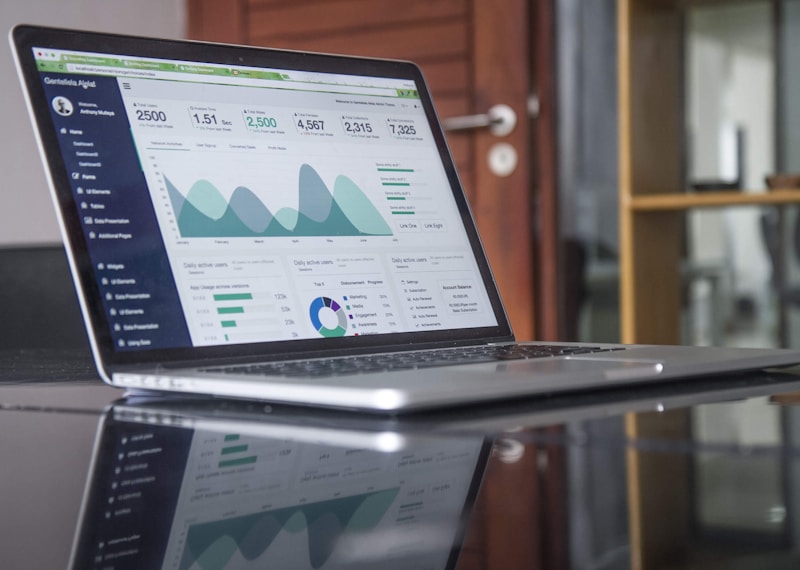
An AI A/B testing tool for small business websites turns your analytics dashboard into a decision machine — every test tells you exactly what to change next.
🤔 What Is an AI A/B Testing Tool for Small Business?
An AI A/B testing tool for small business websites is software that compares two or more versions of a web page and uses machine learning to decide which version performs best. The classic A/B test splits traffic 50/50 and waits for a winner. The AI version is smarter: it uses multi-armed bandit algorithms to shift traffic toward the winning variant in real time, so you lose fewer conversions while the test runs.
That matters enormously for small businesses. A large retailer can afford to send 50% of its traffic to a losing page for a month. A small business with 3,000 monthly visitors cannot. AI allocation protects your revenue during the experiment itself — and it can declare a winner with less traffic than a traditional test needs.
Most modern tools also add AI-generated test ideas. They scan your pages, spot friction points (a confusing form, a weak headline, a slow-loading hero), and suggest what to test first. Some even draft the variant copy for you.
Related reading: If you are still choosing the platform your tests will run on, see our guide to AI website builders for small business — several of the builders there include built-in testing features.
📈 Why Small Business Websites Need AI A/B Testing in 2026
Three forces make 2026 the year small businesses can no longer skip experimentation — and the year an AI A/B testing tool for small business owners moves from nice-to-have to essential.
First, traffic is more expensive than ever. Average cost-per-click across Google Ads rose again in 2025, and small businesses feel every wasted click. If your landing page converts at 2% instead of 3%, you are effectively paying 50% more for every lead. A single winning test can pay for a year of tooling.
Second, AI has collapsed the cost of testing. Five years ago, a proper A/B test meant hiring a developer to build variants and an analyst to read the results. In 2026, visual editors let a non-technical owner change a headline in minutes, and the AI interprets the results. The barrier is no longer skill — it is simply starting.
Third, your competitors are already testing. Research from VWO’s 2025 experimentation survey found that companies running structured testing programmes report average conversion lifts of 30–50% within the first year. Small businesses that never test are not standing still; they are falling behind competitors who improve a little every month. The good news: you do not need huge traffic. You need the right test design — big changes, clear goals, and an AI A/B testing tool for small business sites that allocates traffic intelligently while results accumulate.
⚙️ How AI A/B Testing Works: The 5-Step Walkthrough
Here is the exact process a small business follows to run its first AI-powered test. The whole setup takes under an hour with most tools below.
Step 1 — Pick one goal and one page. Choose a single conversion goal (newsletter signups, checkout completions, quote requests) and the page that drives it. Testing your homepage headline when your real problem is checkout abandonment wastes a month.
Step 2 — Form a hypothesis. Write one sentence: “We believe changing X to Y will increase Z because…” For example: “We believe replacing ‘Buy Now’ with ‘Get 10% Off Your First Order’ will increase checkout starts because first-time visitors need an incentive.” A clear hypothesis stops you from testing random ideas.
Step 3 — Build the variant in the visual editor. No code needed. Click the element, change the text, image or layout, and save it as Variant B. The original page stays untouched as Variant A (the control).
Step 4 — Let the AI allocate traffic. Instead of a fixed 50/50 split, the tool starts evenly, then gradually sends more visitors to whichever variant is converting better. This is the multi-armed bandit approach — it protects revenue and reaches a decision faster on low-traffic sites. It is the single biggest reason an AI A/B testing tool for small business sites beats a manual split test.
Step 5 — Ship the winner and log the learning. When the tool declares a winner (usually at 95% confidence), publish it as the new control and record what you learned in a simple test log. Then start the next test. Compounding small wins is how conversion rates double over a year.
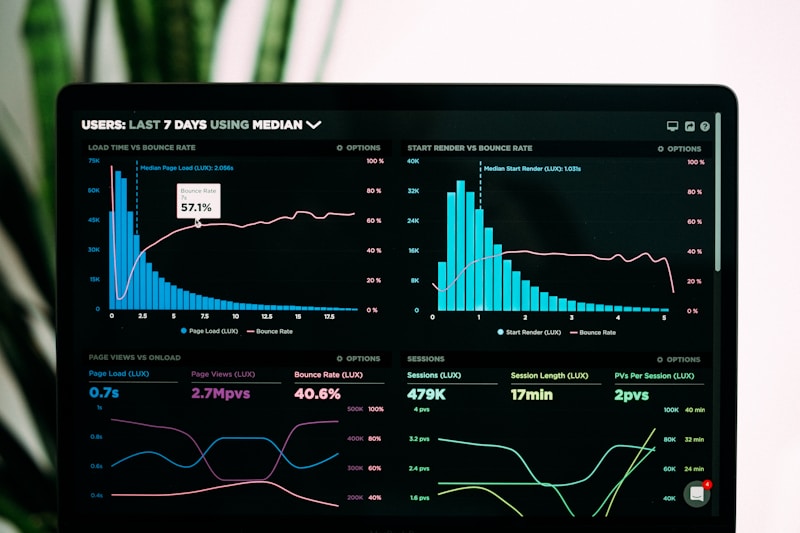
AI A/B testing tools for small business websites compare variants side by side and shift traffic to the winner automatically.
🏆 7 Best AI A/B Testing Tools for Small Business Websites
We evaluated these tools on small-business fit: price, ease of use without a developer, AI features, and how well they work on low-traffic sites. Prices are starting points as of late 2026 — always check the vendor site before buying.
| Tool | Best For | Starting Price | Standout AI Feature | Free Trial |
|---|---|---|---|---|
| VWO | All-round small business testing | From ~$199/mo | SmartStats Bayesian engine + AI test ideas | 30 days |
| Optimizely | Growing teams, feature testing | Custom pricing | AI-powered experimentation + feature flags | Demo |
| AB Tasty | Ecommerce & personalisation | From ~$200/mo | AI recommendations & audience targeting | Demo |
| Intelligems | Shopify stores | From $99/mo | AI price & content testing for stores | Free plan available |
| Convert Experiences | Privacy-focused teams | From $99/mo | AI insights, no flicker, GDPR-first | 15 days |
| Kameleoon | Advanced personalisation | Custom pricing | AI predictive targeting | Demo |
| Unbounce Smart Traffic | Landing pages | From $99/mo | AI routes each visitor to best variant | 14 days |
1. VWO — Best All-Round AI A/B Testing Tool for Small Business
VWO is the safest first choice for most small businesses. Its visual editor is genuinely no-code, its SmartStats engine uses Bayesian statistics (so you get readable “probability to beat baseline” scores instead of confusing p-values), and its AI suggests test ideas based on your heatmaps and session recordings. Plans start around $199/month — steep for a micro-business but fair for a site already earning from traffic.
2. Optimizely — Best for Growing Teams
Optimizely is the enterprise-grade option that now courts smaller teams. Its strength is depth: feature flags, server-side testing, and AI-assisted experiment planning. The trade-off is price — custom quotes only — so it suits businesses already spending serious money on marketing and ready to scale testing beyond landing pages.
3. AB Tasty — Best for Ecommerce Personalisation
AB Tasty pairs A/B testing with AI-driven personalisation: different visitors see different variants based on behaviour, location or device. For a small online store, a returning customer can see a loyalty offer while a first-time visitor sees a discount — tested automatically. Pricing starts around $200/month.
4. Intelligems — Best AI A/B Testing Tool for Small Business Shopify Stores
Intelligems is built for Shopify: it tests prices, shipping offers, product content and landing pages from one dashboard, with AI that recommends what to test next based on your store data. At $99/month with a free plan for very small stores, it is the most affordable serious option for ecommerce.
5. Convert Experiences — Best Privacy-First Option
Convert Experiences is the pick for businesses serving EU customers or anyone who wants testing without heavy tracking. It is GDPR-compliant by design, loads fast with no page flicker, and still offers AI-generated insights on test results. From $99/month with a 15-day trial.
6. Kameleoon — Best for AI Predictive Targeting
Kameleoon uses AI to predict each visitor’s likelihood to convert and serves the variant most likely to work for them. It is powerful but complex, and custom pricing puts it out of reach for most micro-businesses — consider it when your traffic passes 50,000 monthly visitors.
7. Unbounce Smart Traffic — Best for Landing Pages
Unbounce Smart Traffic is different: instead of declaring one winner, its AI learns which variant works best for each visitor type and routes traffic accordingly. If your business lives or dies by landing pages — lead magnets, webinar signups, paid ads — Smart Traffic from $99/month can lift conversions 20–30% with almost no setup.
Choosing tip: If you are still learning which AI tools fit your stack, browse the step-by-step AI tool guides at AIToolSteps — they walk through setup for small business tools in plain language. For authoritative background on test design, Nielsen Norman Group’s guide to A/B testing is the gold standard: nngroup.com/articles/ab-testing.
☕ Worked Example: How Copper Kettle Coffee Lifted Orders 31%
Copper Kettle Coffee Co. is a fictional-but-typical small roaster in Lahore with a WordPress + WooCommerce site getting about 4,200 visitors a month. Its problem: only 1.8% of visitors completed a purchase, and the owner suspected the product page was the bottleneck.
The test. Using an AI A/B testing tool for small business sites (VWO’s starter plan), the owner ran one test: the original product page (Variant A) versus a new version (Variant B) with three changes — the headline changed from “Single-Origin Ethiopian Yirgacheffe” to “Fresh-Roasted Ethiopian Coffee — Delivered in 48 Hours”, a “Free shipping over Rs. 2,000” badge added under the price, and the Add to Cart button moved above the fold on mobile.
The result after 21 days:
- Variant A conversion rate: 1.8% (38 orders from 2,110 visitors)
- Variant B conversion rate: 2.4% (51 orders from 2,125 visitors)
- Uplift: +31% in orders — roughly 13 extra orders a month, worth about Rs. 45,000 in additional revenue
- The AI traffic allocation shifted 68% of visitors to Variant B by day 14, so the store lost fewer sales while the test ran
The lesson: the winning changes were not clever — a clearer benefit headline, a shipping incentive, and a visible button. Small businesses win tests by fixing obvious friction, not by chasing exotic ideas. The owner then made Variant B the new control and started a second test on the checkout page.

Every AI A/B testing tool for small business websites starts with the same question: which version of this page earns more?
✅ AI A/B Testing Best Practices for Small Teams
- Test one variable at a time — or one clear bundle with a single hypothesis. If you change five things and conversions rise, you will never know which change did it.
- Test big changes first. On low-traffic sites, a 5% headline tweak is statistically invisible. Change the offer, the hero image, or the page layout — effects of 20%+ are what you can actually detect.
- Run tests for full weeks. Traffic behaves differently on weekends. A test that runs Monday–Friday only can mislead you; always include at least two full weekends.
- Let the AI finish. Ending a test early because Variant B “looks good” after three days is the most common beginner error. Wait for the tool’s confidence threshold — usually 95%.
- Pair tests with heatmaps. Knowing that Variant B won is useful; knowing why (visitors scrolled further, clicked the new badge) tells you what to test next. Our guide to AI heatmap tools for small business websites shows how to read them.
- Keep a test log. One spreadsheet: date, hypothesis, result, learning. After six months it becomes your most valuable marketing asset.
⚠️ 7 Mistakes That Ruin Small Business A/B Tests
- Testing button colours first. Colour changes move conversion by fractions of a percent. Test offers and headlines instead.
- Running five tests at once. Overlapping tests on the same page contaminate each other’s results — and split your traffic five ways.
- Stopping at the first “winner”. Early leads often reverse. Trust the tool’s confidence score, not your impatience.
- Ignoring mobile. Over 60% of small business traffic is mobile. A variant that wins on desktop can lose on phones — check results by device.
- Testing during a sale or holiday. Promotional traffic behaves differently. Results from a sale week will not generalise.
- No clear primary metric. If you watch ten metrics, one will always look good by chance. Pick one goal metric before you start.
- Never shipping the winner. The test ends, everyone agrees Variant B won, and nobody publishes it. Make shipping the winner part of the process.
🔀 AI A/B Testing vs Traditional Split Testing
| Factor | Traditional A/B Testing | AI A/B Testing |
|---|---|---|
| Traffic split | Fixed 50/50 until the test ends | Adaptive — more traffic to the winner as evidence grows |
| Time to result | 4–8 weeks on low-traffic sites | 2–4 weeks with bandit allocation |
| Revenue during test | Half your traffic sees the losing page | Losses shrink as traffic shifts to the winner |
| Test ideas | You invent them | AI suggests ideas from your analytics and heatmaps |
| Analysis | Manual p-values and spreadsheets | Plain-language winner declarations |
| Best for | High-traffic sites, rigorous research | Small businesses with limited traffic and no analyst |
Traditional testing is not wrong — it is simply built for a world of abundant traffic and dedicated analysts. An AI A/B testing tool for small business websites exists precisely because most small businesses have neither, and choosing the right AI A/B testing tool for small business needs is the decision that makes testing stick. If your traffic ever grows past 100,000 monthly visitors, the two approaches converge and the choice matters less.
❓ Frequently Asked Questions
How much traffic do I need for AI A/B testing?
As a rule of thumb, 1,000+ visitors a month to the tested page is enough to detect a 20–30% uplift within 2–4 weeks with an AI A/B testing tool for small business sites, because adaptive traffic allocation reaches decisions faster than fixed splits. Below 500 visitors, test big changes and use heatmaps and session recordings instead.
Is AI A/B testing expensive for a small business?
Serious tools start at $99/month (Intelligems, Convert, Unbounce), and several offer free plans or trials. For most small businesses, one winning test with an AI A/B testing tool for small business budgets covers a year of subscription.
Do I need a developer to run A/B tests?
No. Every tool in this guide has a visual editor — you click an element and change it. You only need a developer for server-side tests or tests inside custom checkout flows, which most small businesses should skip in year one.
Can AI A/B testing hurt my SEO?
No, when done correctly. Reputable tools use canonical tags and serve variants via JavaScript, so Google sees one URL. Avoid tools that create separate URLs for variants without canonicals, and never show search engines different content than users see.
How long should an A/B test run?
At least two full weeks, and until the tool reaches 95% confidence. Ending early is the single biggest cause of false winners. For low-traffic pages, four weeks is normal.
What should I test first on my website?
Test the page closest to money: your top product or service page, then your checkout or contact form. Headline, offer and call-to-action are the three highest-impact elements.
🎯 Conclusion: Start Small, Test One Thing
You do not need a data team, a big budget or huge traffic to benefit from experimentation. Pick one page, one goal and one AI A/B testing tool for small business websites from the table above, and run a single test this month. The first win — even a modest one — changes how you think about your website: it stops being a brochure and becomes something you improve every month, with evidence.
Our recommendation for most small businesses: start with VWO for all-round testing, or Intelligems if you run a Shopify store. Run the 5-step walkthrough from this guide, log what you learn, and let the wins compound.
Sources: VWO 2025 experimentation survey; Nielsen Norman Group, “A/B Testing” (nngroup.com); vendor pricing pages for VWO, Optimizely, AB Tasty, Intelligems, Convert Experiences, Kameleoon and Unbounce, accessed November 2026. Tool prices change — confirm current pricing on each vendor’s website before purchasing. This article is for general guidance and does not constitute professional advice.
About Digital 365 Agency: We help small businesses grow with AI-powered SEO, content marketing and web optimisation. Explore more practical guides in our AI tools for small business hub.