
Table of Contents
- Key Takeaways
- Why AI in Logistics Matters Right Now
- 1. Demand Forecasting That Actually Works
- 2. Route Optimization in Real Time
- 3. Warehouse Automation and Smart Picking
- 4. Inventory Optimization Across Every Node
- 5. Last-Mile Delivery, Reinvented
- 6. End-to-End Supply Chain Visibility
- 7. Risk Prediction and Disruption Response
- 8. Greener, Cheaper Freight
- 9. Getting Started: A Practical Roadmap
- Frequently Asked Questions
Key Takeaways
- AI in logistics is no longer a pilot project — it is how leading shippers cut costs, shorten delivery times, and survive disruption.
- The biggest wins come from demand forecasting, route optimization, and warehouse automation — applied together, not in isolation.
- Companies that pair AI with clean operational data see faster payback than those that buy tools first and fix data later.
- Start with one high-volume lane or warehouse, prove the return, then scale across the network.
AI in logistics is quietly rewriting how goods move around the world. From the moment a customer clicks “buy” to the second a parcel lands on their doorstep, artificial intelligence is forecasting demand, choosing routes, directing robots, and flagging problems before a human ever notices them. In 2026, this is not a futuristic vision — it is the operating standard for competitive supply chains.
The stakes are enormous. Logistics typically eats up 10–15% of a product’s final cost, and a single stockout, delayed shipment, or empty truck can erase a quarter’s margin. At the same time, customers now expect two-day — often same-day — delivery as standard. AI in logistics closes that gap: it turns mountains of shipment, weather, traffic, and sales data into decisions that are faster, cheaper, and more accurate than manual planning ever could be.
In this guide, you will learn nine proven ways AI is transforming supply chains in 2026, with practical examples, realistic benefits, and a roadmap you can actually follow — whether you run a global freight network or a growing e-commerce brand shipping from a single warehouse.
📋 Why AI in Logistics Matters Right Now
Three forces collided to make 2026 the breakthrough year for AI in logistics. First, data is finally good enough: modern transport management systems, warehouse systems, and IoT sensors generate the shipment-level detail that machine learning models need. Second, the models themselves matured — today’s forecasting and optimization tools handle messy, real-world constraints like driver hours, port congestion, and holiday surges. Third, disruption became normal: pandemics, port closures, tariffs, and extreme weather taught every operator that static annual plans fail.
The results speak for themselves. Industry analyses consistently report that AI-driven forecasting can cut forecast error by 20–50%, while dynamic routing regularly trims fuel and mileage by 10–20%. Warehouse automation guided by AI can lift picking productivity by two to three times. These are not lab results — they are the numbers operators report when AI moves from slide decks into daily dispatch decisions.
Just as importantly, AI in logistics compounds. Every shipment generates new training data, every exception teaches the model, and every optimized route makes the next plan smarter. Competitors who start now build a data advantage that late movers will struggle to close.
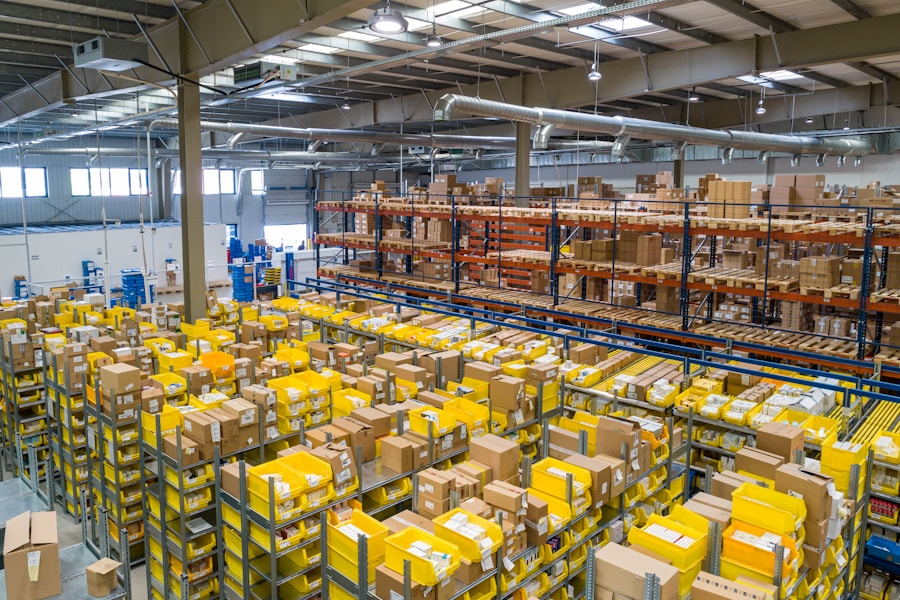
Modern warehouses pair human teams with AI-directed automation to pick, pack, and ship faster than ever.
🤖 1. Demand Forecasting That Actually Works
Traditional forecasting relied on last year’s sales plus a manager’s gut feeling. AI in logistics replaces that guesswork with models that weigh hundreds of signals at once: historical sales, promotions, seasonality, weather, local events, social trends, and even competitor pricing.
The practical payoff is fewer stockouts and less dead stock. A retailer that forecasts at the level of an individual store and SKU — rather than a national average — can place inventory where customers will actually buy it, instead of rushing emergency replenishments later at premium freight rates.
- Granular forecasts: predict demand by SKU, store, and week, not just by region and month.
- Promotion-aware models: learn how discounts, holidays, and marketing campaigns truly move volume.
- Continuous learning: models retrain as new sales data arrives, so forecasts improve every week.
For businesses already using AI elsewhere, this is a natural extension — our guide to AI in manufacturing shows how the same forecasting discipline tightens production planning too.
2. Route Optimization in Real Time
Static routes are dead. AI in logistics re-optimizes delivery routes continuously as traffic, weather, delivery windows, vehicle capacity, and driver availability change. A route planned at 6 a.m. can be reshaped by 10 a.m. when a highway closes — without a dispatcher manually redrawing anything.
The savings stack up quickly: fewer miles driven, less fuel burned, more drops per route, and fewer missed delivery windows. For fleets, dynamic routing also protects driver hours compliance automatically, balancing workloads so no driver is pushed past legal or safe limits.
Leading AI in logistics platforms now optimize across the whole network, not one truck at a time — deciding which warehouse should fulfil each order, which mode (road, rail, air) fits each shipment, and where consolidation can fill a half-empty trailer. That network-level view is where the largest cost reductions hide.
3. Warehouse Automation and Smart Picking
Inside the warehouse, AI in logistics directs both people and machines. Algorithms sequence picking tasks to minimize walking, assign the fastest picker to each job, and position fast-moving stock closest to packing stations. Autonomous mobile robots carry shelves to workers instead of workers walking to shelves.
Computer vision adds another layer: cameras verify picks, read labels, detect damaged packaging, and flag quality issues before a parcel ships. The result is fewer mispicks, fewer returns, and faster throughput during peak periods when hiring temporary labour is hardest.

AI-optimized routing cuts empty miles, fuel costs, and missed delivery windows across road freight networks.
4. Inventory Optimization Across Every Node
Holding too much stock ties up cash; holding too little loses sales. AI in logistics solves this tension by setting dynamic safety stock levels for every product at every location, updated as lead times and demand variability change.
- Multi-echelon optimization: balance stock across suppliers, distribution centres, and stores as one system.
- Lead-time intelligence: adjust buffers automatically when a supplier’s reliability slips.
- Slow-mover detection: flag dead stock early, while markdowns or transfers can still recover value.
Retailers using this approach often cut inventory value by 10–20% while improving availability — the rare win-win that finance teams and customers both love. If you sell online, pair this with the tactics in our AI in retail guide for a full demand-to-delivery picture.
5. Last-Mile Delivery, Reinvented
The last mile is the most expensive leg of delivery — often more than half of total shipping cost. AI in logistics attacks it from every angle: smarter delivery windows offered at checkout, locker and pickup-point suggestions that consolidate drops, and real-time ETAs that customers actually trust.
Machine learning predicts which customers will be home, which addresses cause failed deliveries, and which time slots produce the densest routes. Some operators now let AI in logistics choose the delivery promise at checkout — offering same-day only where the network can profitably deliver it, and a later slot elsewhere — protecting margins without disappointing customers.
Autonomous delivery pilots, drones for remote drops, and sidewalk robots for dense neighbourhoods are still emerging, but the AI dispatch and routing layer underneath them is already mainstream and delivering returns today.
6. End-to-End Supply Chain Visibility
You cannot manage what you cannot see. AI in logistics fuses GPS, carrier EDI feeds, port data, weather, and IoT sensor readings into a single live picture of every shipment — then predicts arrival times far more accurately than a carrier’s static estimate.
When a shipment will miss its window, the system does not just raise an alert — it suggests the fix: expedite a partial shipment, reroute through another hub, or proactively notify the customer with a revised promise. That shift from visibility to actionable visibility is what separates modern control towers from old tracking dashboards.
For teams adopting new platforms, step-by-step AI tutorials can help staff get comfortable with AI tools quickly, so the visibility layer actually gets used on the warehouse floor and not just in headquarters.
7. Risk Prediction and Disruption Response
Disruption is no longer an exception to plan around — it is the operating environment. AI in logistics scans news, weather, port congestion, labour signals, and geopolitical events to warn operators days before a disruption hits their lanes.
Leading supply chains now run digital twins: virtual copies of their network that simulate “what if” scenarios — a port closure, a supplier failure, a demand spike — and pre-compute the best response. When the real event occurs, the playbook is already written, approved, and ready to execute in hours instead of weeks.
This capability also strengthens supplier strategy. AI scores supplier risk continuously, so procurement can dual-source a critical component before a single-source failure becomes a production shutdown.
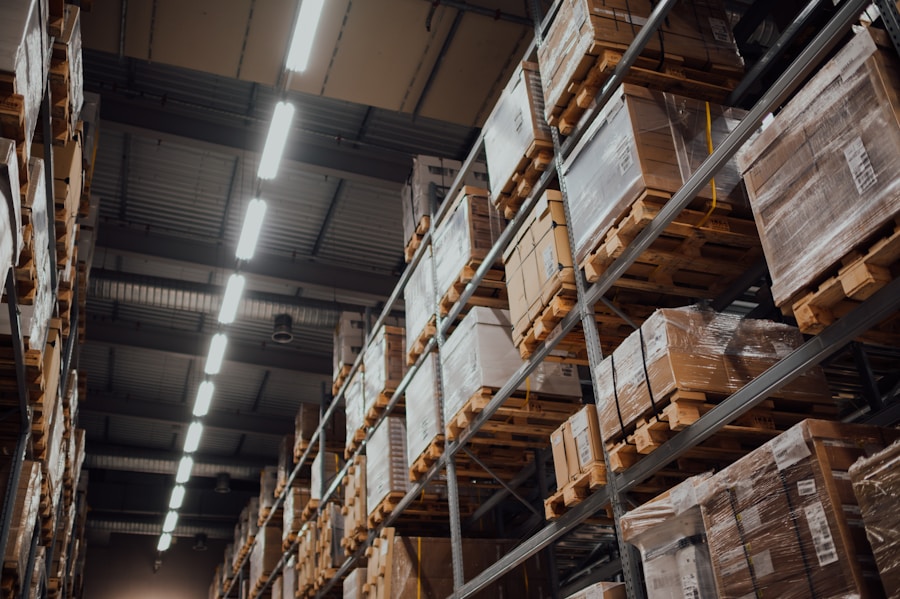
Live port and shipment data lets AI control towers predict delays and reroute freight before customers are affected.
🌱 8. Greener, Cheaper Freight
Sustainability and cost reduction finally point the same way. AI in logistics cuts emissions by cutting waste: fuller trucks, shorter routes, fewer empty return legs, and smarter mode selection that shifts suitable freight from road to rail.
AI also powers carbon accounting — estimating emissions per shipment, per lane, and per customer — so shippers can report credibly and choose lower-carbon options where the cost premium is smallest. Packaging optimization, another AI win, reduces dimensional weight and damage, cutting both freight spend and material use.
For brands under pressure from regulators and enterprise customers to disclose emissions, this data layer is becoming a competitive requirement, not a nice-to-have.
9. Getting Started: A Practical Roadmap
The biggest mistake is trying to AI-ify everything at once. The operators who succeed follow a disciplined sequence:
- Fix the data foundation. Clean shipment, inventory, and order data; connect your transport and warehouse systems. AI on dirty data just automates bad decisions faster.
- Pick one high-value use case. Demand forecasting for your top 100 SKUs, or route optimization for your densest delivery region. Prove a measurable return in 90 days.
- Put a human in the loop. Let planners approve AI recommendations at first, then automate as trust builds. Adoption beats perfection.
- Scale what works. Roll the winning use case across regions, then add the next one — inventory optimization, then visibility, then risk prediction.
- Measure relentlessly. Track cost per shipment, on-time rate, forecast accuracy, and inventory turns before and after. If the numbers do not move, the tool does not stay.
For a broader view of how automation pays off across the business, see our guide to AI automation tools. The pattern is consistent: small, measured pilots outperform grand transformation programmes.
Budget realistically, too. Cloud-based logistics AI is now available on subscription, so mid-sized shippers can start without enterprise capital spending. The scarce resource is rarely software — it is clean data and a team willing to change how dispatch decisions get made.
Frequently Asked Questions
What is AI in logistics?
AI in logistics is the use of machine learning, optimization, and computer vision to plan, execute, and monitor the movement of goods — from forecasting demand and routing trucks to automating warehouses and predicting disruptions.
How much can AI in logistics save?
Results vary by operation, but published case studies commonly report 10–20% lower transport costs, 20–50% better forecast accuracy, and two to three times higher warehouse picking productivity when AI is applied to the right use cases with clean data.
Do small businesses benefit from AI in logistics?
Yes. Cloud tools, route optimization apps, and AI forecasting subscriptions now serve small shippers affordably. Start with one lane or one warehouse, measure the return, and expand from proven wins.
Will AI replace logistics jobs?
AI changes logistics jobs more than it eliminates them. Dispatchers become exception managers, warehouse staff work alongside robots, and planners focus on strategy while algorithms handle routine optimization. Training and change management matter as much as the technology.
What data does AI in logistics need?
At minimum: order history, shipment and tracking data, inventory levels, carrier rates, and delivery outcomes. Weather, traffic, and promotion data sharpen forecasts further. Clean, connected data is the single biggest predictor of AI success.
How long does implementation take?
A focused pilot — one use case, one region — typically goes live in 4–12 weeks on a modern cloud platform. Full network rollouts take longer, but the pilot-first approach means returns arrive before the larger programme finishes.
The bottom line: AI in logistics is not about replacing human judgement — it is about giving planners, dispatchers, and warehouse teams superhuman foresight. The shippers winning in 2026 are not the ones with the most trucks or the biggest warehouses. They are the ones whose networks learn fastest. Start with one use case, prove the return, and let the compounding advantage do the rest.
Sources note: This guide synthesizes widely reported industry findings on AI-driven forecasting accuracy, routing savings, and warehouse productivity, including analyses from McKinsey and Gartner. Figures cited are typical ranges from published case studies, not guarantees for any single operation.