
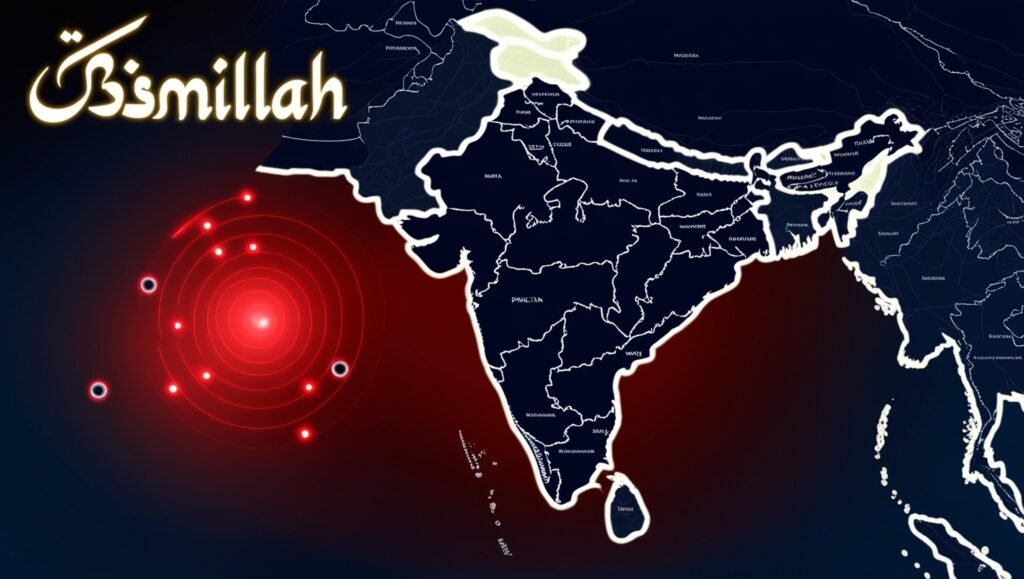
The Sudden Blackout Across Rajasthan
In an unusual development, a complete blackout was reported across Rajasthan, India. Eyewitnesses were shocked by the abrupt darkness and confusion, with official statements suggesting the blackout could last until 6:00 a.m. Speculation arose instantly — was this a technical failure or the first sign of war?
Drones in the Sky — And Accusations Begin
Indian media began reporting sightings of drones over Rajasthan, promptly blaming Pakistan. The claim? That Pakistani drones had crossed the border — a 100% assertion made without evidence, according to Pakistani officials.
At the same time, Pakistan’s military was proudly announcing its success in Operation Bunyān Mursūs, highlighting the damages inflicted and strategic victories secured.
A Tactical Media Game or Real Threat?
While Pakistan claimed it had caused serious damage to Indian military targets, the Indian government appeared shaken but defensive. With no official military retaliation yet, Indian media and political commentators began speculating on a looming war.
Prime Minister Narendra Modi, reportedly furious over the losses and embarrassment, is said to have instructed the military to respond aggressively: “For every bullet, respond with a shell.”
Cabinet and Military Meetings Signal a Shift
A high-level emergency meeting was reportedly called by Modi, involving top officials from the army, air force, and navy. New wartime protocols were allegedly discussed. Orders were issued that if a single attack occurs on Indian soil, it would be treated as a declaration of war.
Army commanders were told to act without waiting for formal orders if any Pakistani aggression occurred — a chilling sign of how close to the edge things may be.
DGMO Briefing: Karachi Under Radar?
The Director General of Military Operations (DGMO), Lt. Gen. Rajeev Ghai, briefed the media with serious accusations. He claimed that this time, it wasn’t just militants — but elements of the Pakistani military — that crossed into Indian territory and attacked border posts. He warned that any further misadventures would lead to direct Indian retaliation.
According to reports, India has already locked several Pakistani cities, especially Karachi, into its missile targeting systems.
Why the Sudden Ceasefire?
Indian media also raised questions about the sudden ceasefire after reports of heavy Pakistani attacks. Some compared it to a cricket player declaring the innings at 99 runs — a mysterious decision when so close to achieving a milestone.
When asked about the destruction of Rafale fighter jets, Indian air force officials dismissed it casually: “Losses happen during operations.” But this ambiguous answer sparked more ridicule than reassurance, especially as both countries continued to trade accusations in public and private.
The Global Spotlight on the India-Pakistan War
Meanwhile, US officials commented on the growing India-Pakistan tensions, urging both sides to maintain peace and exercise restraint. The United States, like the rest of the world, is watching closely as the situation unfolds — with the fear that any misstep could lead to a larger regional conflict.
Final Words: A Dangerous Crossroads
With war talk echoing louder and political tempers flaring, the question remains: Is India preparing for war — or is this all part of a larger strategic game? Will diplomacy intervene, or will the blackout signal the start of something far more destructive?