
HubSpot vs Zoho CRM for Small Business: Which Wins in 2026?
HubSpot vs Zoho CRM for small business is one of the most searched software comparisons of 2026 — and for good reason. Both platforms now ship serious AI (HubSpot’s Breeze AI and Zoho’s Zia), both offer generous free tiers, and both promise to turn scattered spreadsheets into a revenue machine. But they win in very different ways: HubSpot sells simplicity and a beloved free CRM, while Zoho sells unbeatable value and one of the deepest feature catalogs in the industry.
This guide compares the two head-to-head on the six things that actually matter for a small business — AI features, pricing, ease of use, integrations, support, and real-world cost — and ends with a worked cost example for a 10-person team so you can see exactly which CRM fits your budget.

Caption: The HubSpot vs Zoho CRM for small business decision comes down to six factors — this guide covers them all.
📑 Table of Contents
- Why This Comparison Matters in 2026
- AI Features: Breeze AI vs Zia
- Pricing Compared: Free Plans and Paid Tiers
- Ease of Use and Onboarding
- Integrations and Ecosystem
- Customer Support Compared
- Head-to-Head Comparison Table
- Worked Example: 10-Person Team Cost in 2026
- The Verdict: Which CRM Should You Pick?
- FAQs
🤔 Why HubSpot vs Zoho CRM for Small Business Matters in 2026
A CRM is no longer a contact database — it is the operating system of a small business’s revenue. According to recent industry research, companies with adopted CRM systems report up to 34% higher sales productivity, and Nucleus Research’s long-running benchmark finds roughly $8.71 returned for every $1 spent on CRM software. The catch: those returns only materialize when your team actually uses the tool, which is why the HubSpot vs Zoho CRM for small business debate is really a usability-and-cost debate, not a features checklist.
The 2026 twist is AI. Both vendors have woven generative AI into their core workflows: HubSpot’s Breeze AI drafts emails, scores leads, and summarizes calls; Zoho’s Zia predicts deal outcomes, detects anomalies, and automates data enrichment. AI is now a standard inclusion rather than a premium add-on, so your comparison should weigh how usable each AI layer is for a lean team, not just whether it exists — a core question in the HubSpot vs Zoho CRM for small business debate.
If you are still deciding whether AI belongs in your stack at all, our pillar guide to AI tools for small business walks through the complete 2026 landscape, and our breakdown of AI tools vs traditional software explains why AI-native workflows beat bolted-on features.
🤖 AI Features: Breeze AI vs Zia
This is where the HubSpot vs Zoho CRM for small business comparison gets interesting. Both AI engines are genuinely useful — they just take different philosophies.
HubSpot Breeze AI: the friendly copilot
Breeze is embedded everywhere in HubSpot’s interface. It drafts sales emails in your brand voice, generates follow-up tasks after calls, scores leads based on engagement signals, and its Breeze Copilot chat can build reports, pull up company records, and summarize deal history from natural-language prompts. For a small team without a sales-ops person, this removes hours of admin weekly. HubSpot also bundles AI chatbots that can qualify visitors 24/7 — a strong fit if your pipeline starts on your website, and one reason many HubSpot vs Zoho CRM for small business reviews give HubSpot the edge on outreach speed.
Zoho Zia: the analytical powerhouse
Zia, now in its second generation, is the more analytical of the two. It offers predictive lead scoring, churn prediction, anomaly detection in sales data, and workflow suggestions based on patterns it observes. Zia’s conversational analytics answers questions like “Which rep closed the most deals last quarter?” and its Ask Zia voice assistant works across Zoho’s suite. It also auto-enriches contact records from public sources, cutting manual data entry.
Verdict on AI: in the HubSpot vs Zoho CRM for small business AI showdown, HubSpot’s AI feels more natural for beginners and is better at content generation; Zoho’s AI is stronger at prediction and analytics. For a small business that lives in spreadsheets today, Zoho’s predictive insights may surprise you; for one that needs fast outreach, HubSpot wins.
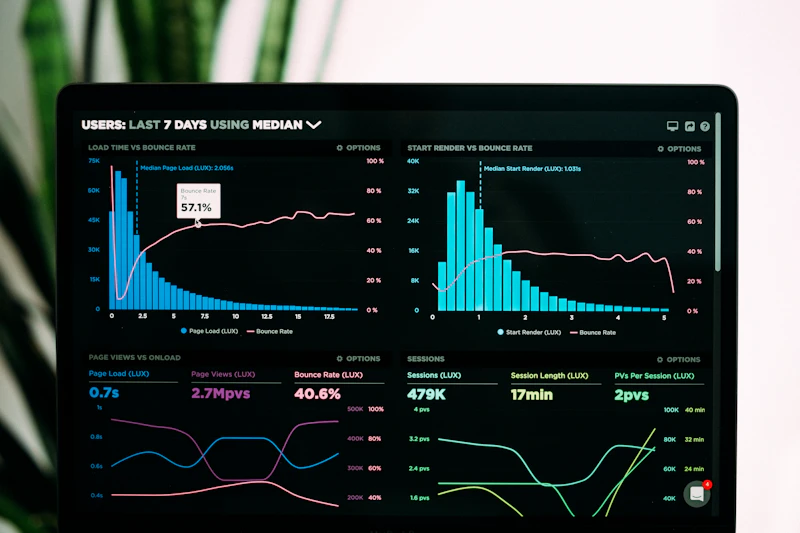
Caption: AI dashboards like Zoho’s Zia analytics turn raw pipeline data into decisions for small businesses.
💰 HubSpot vs Zoho CRM for Small Business Pricing in 2026
Pricing is the single biggest differentiator in the HubSpot vs Zoho CRM for small business fight — and the gap widens every year as both vendors expand their feature sets.
HubSpot pricing
- Free plan: genuinely free CRM with up to 1 million contacts, deal pipelines, email marketing (with limits), and basic reporting. Widely considered the best free CRM on the market.
- Starter: from ~$20/month per seat (Sales Hub Starter), adding automation, sequences, and phone.
- Professional: from ~$100/month per seat — the tier where AI automation, custom reporting, and playbooks unlock.
- The cost escalates fast: full Professional suites across Sales + Marketing can reach several thousand dollars per month for a 10-person team — the point in the HubSpot vs Zoho CRM for small business math where Zoho usually takes the lead.
Zoho CRM pricing
- Free plan: free for up to 3 users, with leads, contacts, deals, tasks, and basic automation.
- Standard: from ~$14–20/user/month — remarkably generous feature depth at this price.
- Professional: ~$23–35/user/month, adding inventory, Blueprint process management, and stronger analytics.
- Enterprise: ~$40–52/user/month — still cheaper than HubSpot’s Professional per-seat cost, with Zia prediction included.
Verdict on pricing: Zoho wins on raw value at every paid tier. HubSpot wins if you plan to stay on the free plan, since its free tier is far deeper than Zoho’s.
🧭 Ease of Use and Onboarding
HubSpot has built its entire brand on usability. New users typically create their first pipeline in under an hour, the interface is clean and consistent across hubs, and the learning curve for non-technical staff is the gentlest in the industry. Migration tools and a massive knowledge base (plus free HubSpot Academy certifications) shorten onboarding further.
Zoho CRM is powerful but denser. The interface carries more menus and customization panels, and its strength — extreme configurability — can overwhelm a first-time admin. That said, once configured, daily use is smooth, and Zoho’s guided setup wizards have improved substantially in 2025–2026. Teams that invest a weekend in setup rarely regret it.
Verdict on ease of use: HubSpot is the clear winner of this HubSpot vs Zoho CRM for small business round for teams that want to start today with zero training budget. Zoho rewards teams willing to invest setup time with deeper customization.

Caption: The best CRM is the one your team will actually use — factor onboarding time into your decision.
🔌 Integrations and Ecosystem
HubSpot’s App Marketplace offers 1,500+ integrations with best-in-class products (Slack, Stripe, Shopify, Zoom, Google Workspace), and its API is famously developer-friendly. If your stack already includes popular SaaS tools, HubSpot connects to them with minimal friction.
Zoho takes the opposite approach: it builds the apps itself. Zoho One bundles 45+ applications — CRM, email, accounting (Books), helpdesk (Desk), HR, marketing automation — into one subscription. For a small business that wants one vendor instead of twelve, this is enormously attractive and dramatically cheaper than buying each tool separately. When weighing HubSpot vs Zoho CRM for small business, factor in the cost of the whole stack, not just the CRM line item.
Verdict on integrations: in this HubSpot vs Zoho CRM for small business round, HubSpot wins for connecting your existing best-of-breed stack. Zoho wins for replacing your stack entirely at a fraction of the cost. Our earlier roundup of CRM software for small business covers nine platforms if you want alternatives beyond these two.
🎧 Customer Support Compared
Support quality matters more than most buyers expect — when your pipeline stalls, you need answers fast. HubSpot offers 24/7 phone and chat support on paid plans, a vast community forum, and HubSpot Academy’s free certifications. Free-plan users get community and email support. Zoho provides 24/5 support on most plans (24/7 on Enterprise), extensive documentation, and a responsive ticket system; phone support quality is solid but varies by region. Both vendors also maintain active partner networks for implementation help.
Verdict on support: HubSpot edges ahead on availability and self-serve resources; Zoho’s documentation is excellent but its support hours are slightly narrower on lower tiers. Neither vendor leaves a small business stranded, so weigh this HubSpot vs Zoho CRM for small business factor alongside price and usability.
📊 HubSpot vs Zoho CRM for Small Business: Head-to-Head Table
| Factor | HubSpot | Zoho CRM |
|---|---|---|
| Free plan | Best in class (1M contacts) | Up to 3 users |
| Paid starting price | ~$20/seat/month | ~$14/user/month |
| Mid-tier price | ~$100/seat/month | ~$23–35/user/month |
| AI copilot | Breeze AI (content + chat) | Zia (predictive analytics) |
| Ease of use | Excellent — industry benchmark | Good — steeper learning curve |
| Customization | Good | Excellent — Blueprint, Canvas |
| Integrations | 1,500+ third-party apps | 45+ native Zoho apps |
| Support | 24/7 (paid) | 24/5 (24/7 Enterprise) |
| Best for | Teams prioritizing simplicity | Teams prioritizing value & depth |
🧮 Worked Example: Real Cost for a 10-Person Team
Pricing pages hide the truth. Here is a realistic HubSpot vs Zoho CRM for small business cost comparison for a 10-person sales-and-marketing team over 12 months, assuming mid-tier plans with AI automation (the tier most growing businesses actually need):
HubSpot Sales Hub Professional: ~$100 × 10 seats × 12 months = ~$12,000/year. Add Marketing Hub Starter for email automation (~$20/month) and you land near $12,240/year.
Zoho CRM Professional: ~$29 × 10 users × 12 months = ~$3,480/year, with Zia AI, Blueprint automation, and inventory included. Even Zoho Enterprise (~$47/user/month) totals ~$5,640/year — still less than half of HubSpot’s mid-tier.
That is a ~$8,760/year saving with Zoho at the mid-tier — money a small business can reinvest into ads or headcount. The counterpoint: HubSpot’s free tier lets a 10-person team run basic pipelines at $0 while validating product-market fit. And if your team needs serious guidance setting up AI-powered workflows, following step-by-step AI tutorials for small business tools can shorten the learning curve on either platform.
Takeaway from the worked example: if you can live within HubSpot’s free plan, start there — it costs nothing. The moment you need paid automation, Zoho delivers comparable (often superior) power for 40–70% less.
🏆 The Verdict: HubSpot vs Zoho CRM for Small Business in 2026
There is no universal winner in the HubSpot vs Zoho CRM for small business matchup — but there is a right pick for your situation:
- Choose HubSpot if your team values the gentlest onboarding, you want the deepest free CRM, your stack is already best-of-breed SaaS, or content-heavy sales (email, sequences, chatbots) is your main motion.
- Choose Zoho if you want maximum value per dollar, need deep customization and predictive analytics, prefer one vendor for your whole software stack (Zoho One), or your budget simply cannot stretch to HubSpot’s Professional tier.
For most small businesses reading this in 2026, our recommendation is simple: start on HubSpot’s free plan to prove the habit, then evaluate Zoho before you pay — you may find Zoho’s paid tiers give you everything you need at a fraction of the price.
✅ Key Takeaways
- The HubSpot vs Zoho CRM for small business choice is really usability vs value.
- HubSpot offers the best free CRM and the easiest onboarding; Zoho offers the best paid value.
- Both ship strong AI in 2026 — Breeze for content and copilot tasks, Zia for predictions and analytics.
- A 10-person team saves roughly $8,760/year choosing Zoho Professional over HubSpot Professional.
- Start free on HubSpot, then compare Zoho’s paid tiers before committing budget.
❓ HubSpot vs Zoho CRM for Small Business: FAQs
Is HubSpot or Zoho better for a very small team?
For teams of 1–5, HubSpot’s free plan is usually better in the HubSpot vs Zoho CRM for small business matchup because it is fully featured and requires no training. Zoho’s free plan caps at 3 users, so a 4–5 person team either pays or splits tools.
Which CRM has better AI in 2026?
Both are strong. HubSpot’s Breeze AI excels at drafting emails, summarizing calls, and conversational reporting. Zoho’s Zia excels at predictive lead scoring, churn prediction, and anomaly detection. Pick based on whether you need content help (HubSpot) or forecasting help (Zoho).
Can I migrate from HubSpot to Zoho later?
Yes. Both platforms offer CSV import/export and third-party migration tools. Moving contacts, deals, and pipelines typically takes a few hours for a small database — but custom workflows and automations must be rebuilt manually.
Does Zoho really cost that much less?
At mid-tier plans, yes — roughly 40–70% less per user per month, as our worked example shows. The gap narrows at the free tier, where HubSpot is more generous, and at enterprise tiers where both offer custom pricing.
Do both integrate with Gmail and Outlook?
Yes — both offer deep Gmail and Outlook integrations with email tracking, send scheduling, and sidebar CRM views inside your inbox.
Sources: HubSpot and Zoho official pricing pages (October 2026), HubSpot Breeze AI documentation, Zoho Zia documentation, Nucleus Research CRM ROI benchmarks, and d365a.com internal testing notes. Pricing is indicative and may change — always confirm current rates before purchase.