
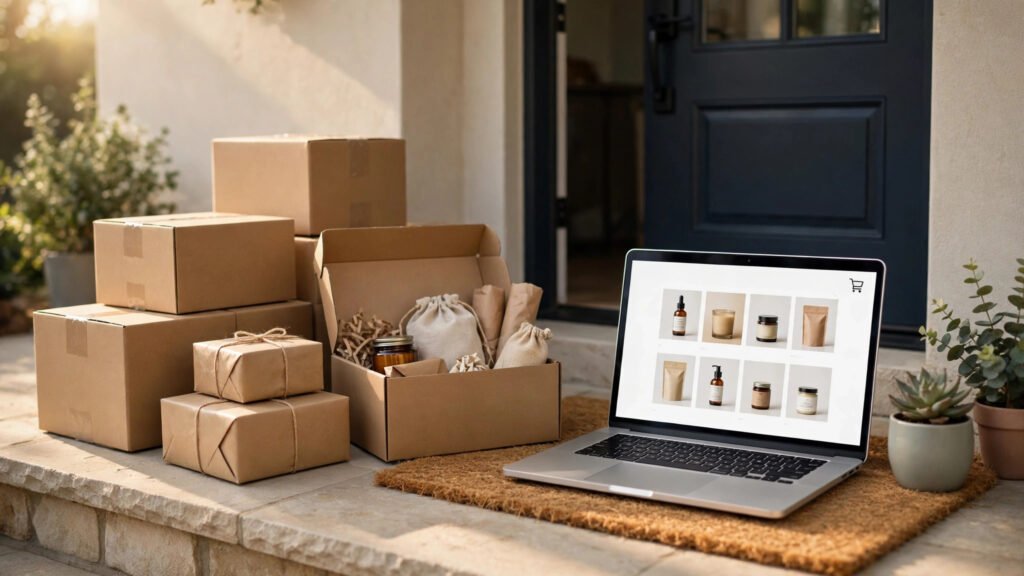
One-time sales are expensive. Every new order demands another ad click, another search ranking battle, another discount to win a stranger’s attention. Ecommerce subscription models flip that maths: you win the customer once and earn from them again and again. In this guide, you will learn nine proven ecommerce subscription models, how to price them, and how to keep subscribers happy long enough for recurring revenue to compound.
Subscriptions are no longer a novelty reserved for streaming giants and coffee clubs. From pet food to beauty products, razors to meal kits, shoppers now expect the option to “subscribe and save.” Research firm McKinsey has estimated that the subscription e-commerce market has grown rapidly as consumers trade ownership for convenience, discovery, and predictable pricing. For store owners, that shift means steadier cash flow, easier inventory planning, and a higher lifetime value from every customer acquired.
The catch? A subscription is a promise, not just a pricing trick. If the second box disappoints, the third never ships. The stores that win at ecommerce subscription models treat retention as the product — and use the nine models below to match the right promise to the right customer.
Key Takeaways
- Ecommerce subscription models turn one-time buyers into predictable recurring revenue and raise customer lifetime value.
- The best model matches how customers actually use your product: replenishment, discovery, access, or a hybrid of all three.
- Price for commitment, not just convenience — reward longer terms and make pausing easier than cancelling.
- Retention beats acquisition: onboarding, flexibility, and surprise value decide whether subscribers stay past month three.
- Track churn, average revenue per user, and lifetime value weekly; small improvements there beat big ad budgets.
Table of Contents
- Model 1: Replenishment Subscriptions
- Model 2: Curation and Discovery Boxes
- Model 3: Access and Membership Subscriptions
- Model 4: Build-Your-Own Bundles
- Model 5: Subscribe-and-Save Discounts
- Model 6: Tiered Subscription Plans
- Model 7: Seasonal and Limited-Edition Clubs
- Model 8: Digital-Product Add-On Subscriptions
- Model 9: Hybrid Ecommerce Subscription Models
- Pricing, Retention, and Metrics
- Frequently Asked Questions
1. Replenishment Subscriptions: The Workhorse of Ecommerce Subscription Models 🔁
Replenishment is the simplest of all ecommerce subscription models — and often the most profitable. Customers subscribe to products they consume on a schedule: coffee, supplements, pet food, skincare, cleaning supplies, baby essentials. The pitch is pure convenience: never run out, never remember to reorder. That is why replenishment sits at the heart of many ecommerce subscription models.
Success here depends on getting the interval right. Let customers choose every 2, 4, 6, or 8 weeks, and learn from their actual usage rather than guessing. A customer who finishes a 30-day supply in 45 days will cancel a rigid monthly plan; a flexible plan keeps them for years. Send a reminder a few days before each shipment with a one-click option to skip, swap, or delay — that single feature can cut churn dramatically.
Replenishment also smooths your operations. Predictable orders mean predictable inventory, fewer stockouts, and better negotiating power with suppliers. Pair it with our guide to ecommerce inventory management software to keep fulfilment tight as subscriber numbers grow.

2. Curation and Discovery Boxes: Sell Surprise 🎁
Curation boxes are one of the most popular ecommerce subscription models, and they trade on discovery. Each delivery is a themed selection chosen by your experts — beauty samples, snacks from around the world, books, craft supplies, or pet treats. Customers pay for the thrill of opening something new, not just for the products inside.
Discovery boxes have higher churn risk than replenishment because tastes vary, so personalization is everything. Use a short onboarding quiz (preferences, allergies, sizes, interests) and let subscribers rate each box. Feed those ratings back into the next curation, and publish “sneak peeks” that build anticipation without spoiling the surprise. The best boxes feel personal, not random.
Margins matter here too: negotiate sample and full-size stock from brands that want exposure to your audience, and keep packaging memorable — the unboxing moment is your cheapest marketing channel.
3. Access and Membership Subscriptions: Sell Belonging 👑
Access models are a distinct family of ecommerce subscription models: they charge for membership rather than products: free shipping, early access to drops, members-only prices, exclusive content, or a private community. Think of it as a loyalty programme with a paywall — and it pairs beautifully with the tactics in our ecommerce loyalty programmes guide.
Membership works best when the perks are used often. Free shipping on every order, for example, is a benefit subscribers feel weekly. Price it below the value of the perks a regular customer would earn in a few months, and show members their running savings on every order confirmation. When customers can see the membership paying for itself, renewals take care of themselves.
4. Build-Your-Own Bundles: Let Customers Choose 🧺
Build-your-own bundles are flexible ecommerce subscription models that sit between replenishment and curation: subscribers pick a set number of products each cycle from a curated catalogue. Meal kits, snack boxes, and supplement stacks all use this model, and customers love it because it removes the two biggest subscription fears — “I won’t like it” and “I’ll get bored.”
Make swapping effortless and deadline-friendly. A clear “choose by” date, a saved favourites list, and smart defaults (auto-refill last month’s bundle if the customer does nothing) remove friction. Stores that add a small “surprise item” to each bundle also get the discovery thrill without the curation risk.
5. Subscribe-and-Save Ecommerce Subscription Models: Reward Commitment 💰
Subscribe-and-save is the conversion engine behind many ecommerce subscription models. Offer 10–15% off and free shipping for subscribers, with deeper discounts for longer commitments — for example, 10% monthly, 15% quarterly, 20% prepaid annually. The discount is your customer-acquisition cost, paid once, instead of an ad budget paid forever.
Present the maths honestly on the product page: “Subscribe and save $6.30 per order” beats a vague “save 15%.” And protect your margins by applying the discount to the subscription price only, never stacking it with site-wide sale codes unless you intend to. A well-designed subscribe-and-save offer can lift conversion rates on eligible products by a fifth or more, because it turns a price comparison into a no-brainer.
6. Tiered Subscription Plans: Good, Better, Best ⭐
Tiered plans let customers self-select their level of commitment. A basic tier might offer the core product at a small discount; a mid tier adds free shipping and early access; a premium tier adds exclusive products, a dedicated support line, or a quarterly bonus gift. Three tiers work best — fewer feels restrictive, more feels confusing.
Design tiers so the middle one is the obvious value pick, and make upgrading a one-click decision from the account page. Many stores find that a well-priced premium tier also acts as a price anchor, making the standard plan look like a bargain. Review tier uptake quarterly: if almost nobody picks the top tier, its perks are wrong, not its price.
7. Seasonal and Limited-Edition Clubs: Sell Scarcity 🍂
Seasonal clubs are limited-run ecommerce subscription models that release a box four times a year — a spring gardening kit, a summer skincare set, a holiday gift edit. Because each edition is finite, they create urgency without constant discounting, and they suit products with strong seasonal demand.
Run seasonal clubs as an entry point to longer subscriptions: let one-time buyers try a single edition, then offer them a full-year membership at the checkout. Scarcity plus a low-risk trial is a powerful combination, and each edition gives you a natural marketing moment — launch emails, unboxing content, and user-generated reviews — four times a year.
8. Digital-Product Add-On Subscriptions: Sell the Extras 📱
Not every entry in ecommerce subscription models has to ship a box. Stores increasingly sell digital add-ons alongside physical products: a fitness app with workout gear, a recipe library with kitchen tools, a design-template library with stationery, or a members-only learning hub. Digital add-ons carry near-zero marginal cost, so they can lift average order value without touching your warehouse.
For store owners exploring digital offers, modern AI tools can speed up content creation, onboarding emails, and churn-prediction workflows — these step-by-step AI tool guides walk through practical setups for small teams. The rule is the same as for physical subscriptions: the digital benefit must be used regularly, or it will be cancelled quietly.
9. Hybrid Ecommerce Subscription Models: Combine and Win 🧩
The strongest ecommerce subscription models in 2026 are hybrids. A skincare brand might combine replenishment (your daily serum, every 60 days) with access (members-only prices and free shipping) and seasonal discovery (a quarterly limited-edition box). Each layer serves a different need, and together they make cancelling feel like losing three benefits at once.
Build hybrids gradually. Start with one proven model from these ecommerce subscription models, prove retention for two quarters, then add a second layer to your best customers first. Over-engineering on day one creates support tickets; layering on proof creates loyalty. And keep the subscription experience consistent at checkout — our ecommerce checkout optimization guide covers the friction points that kill subscription sign-ups.
Pricing, Retention, and Metrics for Ecommerce Subscription Models 📈
Pricing. Anchor your subscription price against the one-time price, not against competitors. Show the saving per order and per year, offer a prepaid annual option for your most loyal buyers, and test price points with new subscribers only — never surprise existing subscribers with a price rise without added value and 30 days’ notice.
Retention. The first 90 days decide everything. Send a welcome sequence that explains what arrives when, how to manage the subscription, and how to get help. Make pausing and skipping prominent — counterintuitively, customers who can pause easily cancel less, because pausing is not a goodbye. Add small surprises: a sample in month three, a handwritten note, an early-access offer. Retention is a series of small delights, not one big discount.
Metrics. Watch four numbers weekly: monthly churn rate, average revenue per user, customer lifetime value, and subscriber acquisition cost. A healthy consumer subscription business typically aims for monthly churn in the low single digits; if yours is above 10%, fix onboarding and flexibility before spending another dollar on ads. Also track “skip rate” — a rising skip rate is an early warning that intervals or product mix need adjusting.
Common mistakes. Hiding the cancel button (it breeds chargebacks and angry reviews), discounting so deeply that margins vanish, launching ten products as subscriptions before one works, and forgetting that subscribers are your best reviewers — ask them, reward them, and feature their stories.
Frequently Asked Questions
Which ecommerce subscription model is best for beginners?
Start with subscribe-and-save on your best-selling consumable product. It is the easiest to launch, the easiest to explain, and it proves demand before you invest in boxes, tiers, or membership perks.
How much discount should a subscription offer?
Most stores offer 10–15% off plus free shipping. Deeper discounts should be tied to longer commitments, such as prepaid quarterly or annual plans, so the discount buys loyalty rather than just a cheaper order.
What is a good churn rate for ecommerce subscriptions?
Low single-digit monthly churn is strong for replenishment models; discovery boxes often run higher. If churn exceeds 10% a month, revisit onboarding, product fit, and how easy it is to pause or swap.
Can small stores run ecommerce subscription models?
Yes. Shopify, WooCommerce, and most major platforms offer subscription apps that handle recurring billing, dunning, and customer portals. Start with one product and a simple plan, then expand as retention data comes in.
How do subscriptions affect cash flow?
Positively, once they scale: recurring orders make revenue predictable and inventory planning easier. Watch the timing of prepaid annual plans, though — that cash is earned over twelve months, not on day one.
Sources and further reading: Shopify’s subscription commerce resources, McKinsey’s research on subscription e-commerce growth, and Stripe’s guides to recurring billing. Figures cited are industry estimates and vary by category — test them against your own store data before making pricing decisions.