

An AI meta description generator for small business owners is one of the fastest wins in modern SEO. You paste in a page URL or a few keywords, and within seconds you get a polished, click-ready snippet for Google’s search results. No copywriter on retainer, no blank-page staring, and no more auto-generated snippets that bury your best offer.
Yet most small businesses still leave their meta descriptions blank or duplicated across dozens of pages. Google then writes the snippet for you — usually by pulling a random sentence from the page. The result is a listing that looks generic next to competitors who crafted their message. In this guide, you will learn how AI meta description tools work, which seven tools are worth your money in 2026, and a repeatable seven-step workflow that lifts click-through rate (CTR) without touching your rankings strategy.
Key Takeaways
- An AI meta description generator for small business sites turns a 20-minute writing task into a 60-second draft.
- Meta descriptions do not directly change rankings, but they strongly influence CTR — and CTR is traffic you already earned.
- The best results come from human editing: AI drafts, you refine the offer, the call to action, and the keyword placement.
- Measure before and after in Google Search Console; a 1–2 point CTR lift on a high-impression page is a real revenue win.
Table of Contents
- What an AI Meta Description Generator for Small Business Actually Does
- Why Meta Descriptions Still Move CTR in 2026
- 7 AI Meta Description Generator Tools Compared
- The 7-Step Workflow: From Blank Snippet to Click Magnet
- Worked Example: A Small Plant Store Doubles Its CTR
- Common Mistakes That Kill Your Snippet
- Measuring Results in Google Search Console
- Frequently Asked Questions
🔍 What an AI Meta Description Generator for Small Business Actually Does
An AI meta description generator for small business use is simple: the tool reads your page content, your target keyword, and sometimes your brand voice, then writes a 120–160 character summary designed to earn the click. Good tools do more than summarize. They front-load the primary keyword, add a benefit, and close with a clear call to action such as “Shop now,” “Book a free quote,” or “Download the guide.”
Think of it as a shop window. Your title tag is the sign above the door; the meta description is the display that convinces a passer-by to walk in. AI handles the first draft at scale — fifty product pages in an afternoon instead of a week — while you keep control of accuracy, tone, and offers. That division of labour is exactly why these tools fit small teams: one person can now manage snippet quality across an entire site.
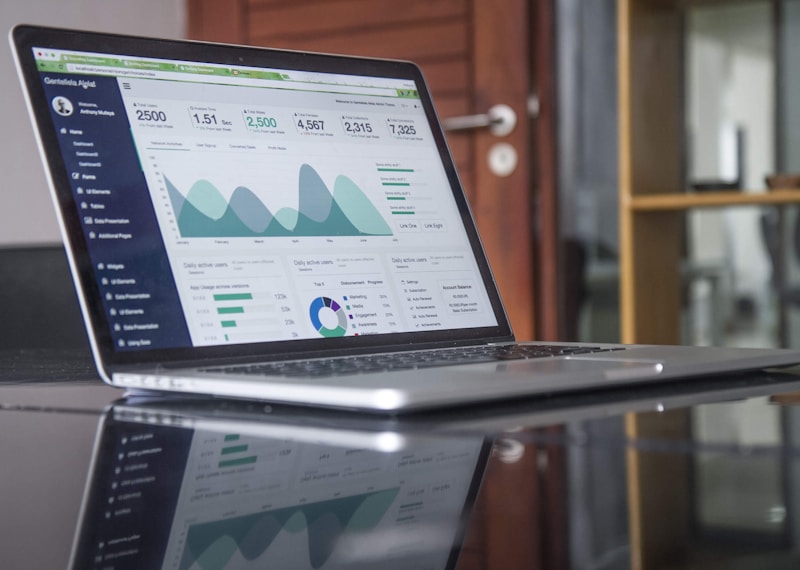
Search analytics reveal which pages need better snippets first — start where impressions are high and clicks are low.
📈 Why Meta Descriptions Still Move CTR in 2026
Google has repeatedly confirmed that meta descriptions are not a direct ranking factor. That fact misleads many owners into ignoring them entirely. The reality is subtler: a better snippet earns more clicks from the same position, and more clicks mean more traffic without new content, new links, or a bigger budget.
Consider the numbers. Industry CTR studies consistently show that moving a snippet from generic to benefit-led can lift CTR by 30% or more on the same ranking position. If a page gets 5,000 impressions a month at a 2% CTR, that is 100 visits. Lift CTR to 3.5% and the same page delivers 175 visits — a 75% traffic increase from one paragraph of text. For a small business, that is the cheapest growth channel available.
There is a second, quieter benefit. Writing descriptions forces you to clarify each page’s promise. Pages with vague or duplicated descriptions usually have vague positioning too. The snippet audit often exposes pages that need sharper offers, better titles, or consolidation — all of which improve the site as a whole.
🛠️ 7 AI Meta Description Generator Tools Compared
Not every generator is built for small business budgets and workflows. The seven below were judged on snippet quality, bulk generation, brand-voice control, and price. Free tiers are noted where they genuinely help a small site.
| Tool | Best for | Bulk mode | Starting price |
|---|---|---|---|
| Writesonic | Fast single-page snippets | Yes | Free tier available |
| Copy.ai | Brand-voice consistency | Yes | Free tier available |
| Jasper | Teams with style guides | Yes | Paid plans from ~$49/mo |
| Surfer AI | SEO-integrated snippets | Yes | Paid plans from ~$89/mo |
| Frase | Content-brief workflows | Yes | Paid plans from ~$45/mo |
| Scalenut | Budget all-in-one SEO | Yes | Paid plans from ~$39/mo |
| ChatGPT / Gemini | Flexible custom prompts | Via spreadsheets | Free tier available |
Our pick for most small businesses: start with a free-tier general tool for your top 20 pages, then graduate to an SEO-integrated option like Surfer or Frase once you are optimizing at scale. The tool matters less than the workflow — a disciplined process with a free tool beats an expensive subscription used randomly. If you are new to AI writing workflows generally, these step-by-step AI tutorials walk through prompt setup and bulk generation in plain language.
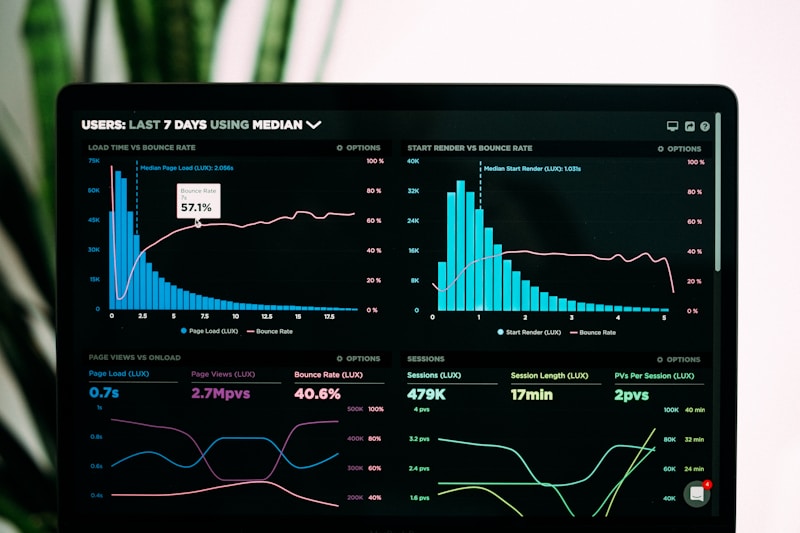
Compare tools on real output, not marketing claims — generate the same ten snippets in each and keep the winner.
✅ The 7-Step Workflow: From Blank Snippet to Click Magnet
Follow this workflow exactly, and every snippet you publish will be better than the one it replaces. It works with any AI meta description generator for small business teams use, free or paid.
Step 1: Audit first, write second
Export your pages from Google Search Console, sort by impressions, and flag pages with high impressions but low CTR. These are your quick wins. Also flag missing, duplicated, and over-long descriptions using a crawler like Screaming Frog’s free version.
Step 2: Define one promise per page
Before generating anything, write one sentence: what does the visitor get from this page? A quote, a product, a download, an answer? If you cannot answer in one sentence, the page — not the snippet — needs work first.
Step 3: Feed the tool the right inputs
Give the generator the target keyword, the page’s main benefit, the audience, and the call to action. Vague inputs produce vague output. Example prompt: “Write a 150-character meta description for a page selling handmade ceramic planters, targeting ‘handmade ceramic planters,’ ending with ‘Free shipping over $50.'”
Step 4: Generate three variants, not one
Always generate at least three options per page. One benefit-led, one curiosity-led, one offer-led. Comparing variants side by side exposes weak phrasing you would miss in a single draft.
Step 5: Edit for the human, not the algorithm
Check the keyword appears naturally near the start, cut filler words, verify the character count (120–160), and confirm the claim is true. Never promise “free delivery” or “24/7 support” unless the page delivers it — misleading snippets raise bounce rates and damage trust.
Step 6: Match the snippet to search intent
A buyer searching “buy ceramic planters” wants price, shipping, and range. A researcher searching “ceramic vs terracotta planters” wants a comparison. The same product page family needs different snippet angles for different intents — this is where most AI-only workflows fail.
Step 7: Publish, wait 30 days, then measure
Publish in batches, note the date, and compare CTR in Search Console after 30 days. Keep winners, rewrite losers, and roll the winning formula across similar pages. Snippet optimization is a loop, not a one-time task.
🌱 Worked Example: A Small Plant Store Doubles Its CTR
Consider GreenLeaf, a fictional ten-person online plant store with 120 product and category pages. Its “indoor plants” category page ranked #4 and received 8,000 monthly impressions — but only 160 clicks, a 2% CTR. Its meta description was auto-generated: “Indoor plants for sale. Browse our collection of indoor plants, pots and accessories. Shop online today.”
Using the workflow above, the owner generated three variants with an AI meta description generator for small business tool and chose: “Shop 80+ pet-friendly indoor plants with free delivery over $50. Healthy, nursery-grown plants delivered to your door in 2–4 days.” After 30 days, CTR rose from 2% to 4.1% — clicks grew from 160 to 328 per month on the same ranking. The owner then applied the same formula (range + offer + delivery promise) to the top 30 pages, adding roughly 1,500 extra monthly visits with zero ad spend.
The lesson is not that one magic sentence exists. It is that specificity wins: a number (80+), a differentiator (pet-friendly), and a concrete offer (free delivery over $50) beat generic category language every time.
Small snippet changes compound: one winning formula, rolled out across your top pages, moves total site traffic.
⚠️ Common Mistakes That Kill Your Snippet
- Duplicating descriptions across pages — Google ignores them and writes its own.
- Keyword stuffing — repeating the keyword three times reads as spam and wastes characters.
- Exceeding 160 characters — Google truncates with an ellipsis, cutting off your call to action.
- Writing for rankings, not humans — descriptions do not rank pages; they earn clicks from people.
- Forgetting mobile — most searchers see your snippet on a phone, where space is tighter; front-load the benefit.
- Never updating — prices, offers, and ranges change; a stale snippet quietly loses clicks for months.
📊 Measuring Results in Google Search Console
Open Search Console, select the page, and compare CTR for the 28 days before and after your change. Ignore tiny pages — you need at least a few hundred impressions for the comparison to mean anything. Track three numbers per page: impressions, CTR, and average position. If CTR rises while position holds steady, your snippet did the work. If position also moved, note it, but do not credit the snippet alone.
For a deeper view, pair this with your broader SEO workflow. Snippet wins stack with other AI-assisted improvements — for example, our guide to AI rank tracking for small business shows how to monitor position changes, and our AI keyword clustering for small business guide helps you group the keywords your snippets should target. Together with the pillar guide to AI tools for small business, these form a complete small-team SEO system. Google’s own guidance on snippets is the authoritative reference for length and best practice — see Google Search Central’s snippet documentation.
❓ Frequently Asked Questions
Do meta descriptions affect Google rankings?
No. Google has confirmed meta descriptions are not a direct ranking factor. They affect CTR, which affects traffic — and traffic is what pays the bills.
What is the ideal meta description length in 2026?
Aim for 120–160 characters. Google truncates longer descriptions, usually around 155–160 characters on desktop and slightly less on mobile.
Can I use the same AI meta description generator for small business blogs and product pages?
Yes, but change the prompt. Blog snippets should promise an answer or insight; product snippets should promise range, price, or delivery. One prompt does not fit both.
Should I let Google auto-generate my snippets?
Only as a fallback. Google’s auto-snippets match the query, but they rarely include your offer or call to action. Hand-written snippets consistently outperform them on commercial pages.
How often should I update meta descriptions?
Review your top 20 pages quarterly, and update any snippet immediately when its offer, price, or range changes. Low-traffic pages can be reviewed annually.
Is AI-generated snippet content safe for SEO?
Yes, when edited by a human and factually accurate. Google penalizes spammy, misleading, or scaled low-value content — not AI assistance itself. Always verify claims before publishing.
Final Word
An AI meta description generator for small business websites is not a shortcut around good marketing — it is leverage for the marketing you already do. Audit your high-impression pages, run the seven-step workflow, and measure honestly. The clicks you win this month cost nothing extra, and they compound as you roll winning formulas across your site. Start with your top ten pages today; by next month, the data will tell you exactly where to go next.
Sources note: CTR benchmarks reflect widely cited industry studies; Google’s position on meta descriptions is documented in Google Search Central. Tool prices were checked at time of writing and may change.