
A dentist opens the clinic on a Monday morning to a full chair, a waiting room that is already half full, and a phone that keeps ringing with the same three questions: how much does a cleaning cost, do you have a slot today, and where do I park. The hygienist is ready, the assistant is setting up, and the dentist is already behind before the first patient sits down, because the morning disappeared into forms, reminders, and chasing the patient who did not show up last Friday. AI tools for dentists can take that morning back.
That is the week AI tools for dentists are built for. They read the X-ray with a second pair of eyes, fill the empty slots, remind the patient who forgets, and collect the review from the patient who leaves happy, so the dentist can spend the day on the treatment instead of the telephone. The dentist still diagnoses, still explains the plan, and still makes the call when a tooth can be saved or has to go. The tool just makes sure the patient arrives, the record is straight, and the chair is never empty for no reason.
This guide covers seven picks. Each one does a different part of the job, each one can be tried without rebuilding the whole clinic, and each one is judged the same way: what it does well, where it needs a human, and which kind of clinic it suits best. If you want the wider comparison first, the best AI tools for small business guide covers fifteen categories in one place, and the best free AI tools for small business guide lists ten picks that cost nothing to start with. If you are new to all of this, start with how to use AI for small business before you buy anything.
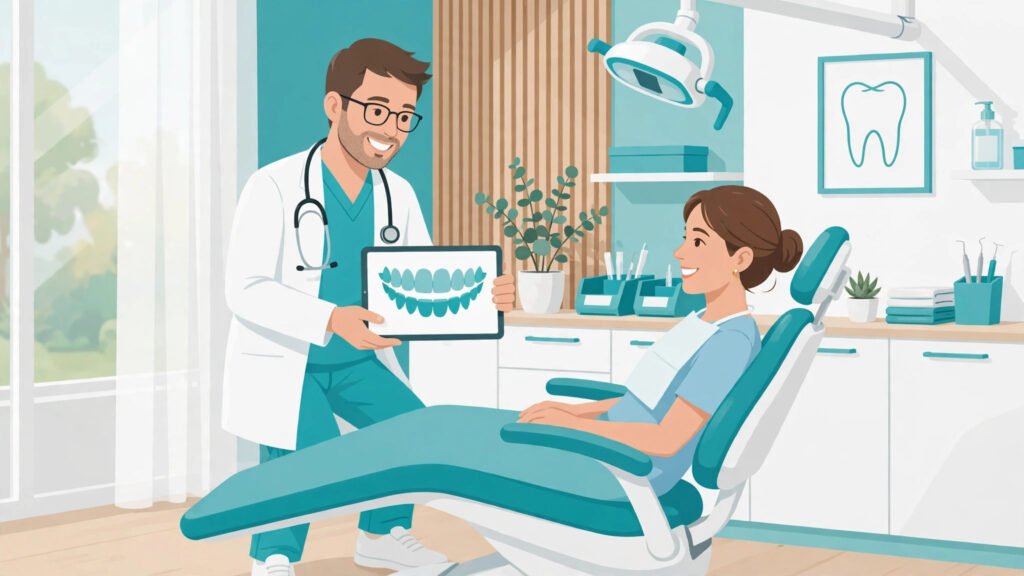
What AI tools for dentists should do
Before the tools, it helps to name the jobs. A dental clinic is not one job. It is five small jobs that repeat for every single patient.
First, seeing what is on the X-ray. A small shadow between two teeth is easy to miss on a busy day, and a missed cavity becomes a root canal, a crown, and a patient who wonders why nobody saw it sooner.
Second, filling the diary. An empty chair is lost income that never comes back, and a canceled appointment that nobody refills is a hole in the day that the whole team feels.
Third, reminding the patient. People forget, they get busy, and they miss the six-month check they promised themselves they would keep, until the reminder arrives at the right moment.
Fourth, keeping the record straight. The treatment plan, the consent, the notes, and the next visit all have to agree, because a record that disagrees with itself is a problem waiting for a bad day.
Fifth, earning the review. A happy patient rarely writes a review on their own, and a clinic with no recent reviews looks quiet online even when the chairs are full every day.
Seven tools cannot do all five jobs perfectly. But each tool below takes one job and makes it lighter, and together they cover the whole clinic. Pick the job that hurts most, start there, and add the next tool only when the first one is part of your routine. That is the test every one of the AI tools for dentists in this guide had to pass.
1. Pearl AI — the second opinion that reads the X-ray with you
Pearl AI is the diagnostic tool on this list. Its Second Opinion system reads dental X-rays and highlights the signs of decay, bone loss, and other findings, so the dentist has a second pair of eyes on every image before the patient is told the plan.
Its strength is that it makes the invisible visible to the patient too. The dentist can show the patient the highlighted area on the screen, explain what it means in plain words, and agree the treatment together, instead of asking the patient to trust a dark image they cannot read. That shared picture is where AI tools for dentists earn their keep: the patient who sees the problem accepts the treatment sooner, and the dentist who catches the small cavity early saves the patient the bigger treatment later.
Its weakness is that it is a second opinion, not a diagnosis. A highlight on an image still needs a dentist who knows the patient, the history, and the tooth in the chair. A clinic that treats every highlight as a finding will overtreat, and a clinic that never looks at the highlights has bought a tool it does not use. The fix is simple: the dentist reviews every image, uses the highlight as a prompt to look again, and decides. The tool does the spotting. The human still diagnoses.
Best for: clinics that want earlier detection and clearer case acceptance, and dentists who want patients to see the reason for the treatment on screen.
2. Overjet — the X-ray analysis that also sorts the claims
Overjet is the analysis and admin tool on this list. It reads X-rays to support the diagnosis and it also checks the claim against the image and the notes, so the paperwork that follows the treatment matches what was actually done.
Its strength is that it connects the chair to the office. The finding, the treatment, and the claim all point at the same image, which means fewer claims sent back, fewer phone calls chasing documents, and fewer hours spent retyping the same details into a different system. For a clinic that loses a morning a week to insurance paperwork, that is where AI tools for dentists save the most time. The front desk stops guessing what the dentist saw, because the image and the finding travel together.
Its weakness is that a system this connected needs clean records to start with. A chart with missing notes will produce a claim that still gets questioned, and the tool will be blamed for a record the team never finished. The fix is to finish the note while the patient is still in the chair, and to keep the naming of findings tidy from the first day. The tool does the matching. The human still writes the record.
Best for: clinics with a heavy insurance workload, group practices, and dentists who want the claim to leave the building once, correctly.
3. Dental Intelligence — the dashboard that shows what the clinic is really doing
Dental Intelligence is the analytics tool on this list. It reads the practice management data and turns it into a simple picture: who is overdue for a check, which chairs are empty next week, which treatments were offered and which were accepted, and where the clinic is losing patients without noticing.
Its strength is that it turns a feeling into a number. A dentist who feels the clinic is quiet can see whether the diary is actually empty or whether the patients are simply booked further out, and a front desk that feels busy can see whether the busy work is filling chairs or just answering the phone. The follow-up matters most: the patient who is six months overdue is already in the system, and the list of those patients is a morning of calls that fills next week. For a clinic that wants to grow without buying new chairs, that is where AI tools for dentists build a steadier month. The website side of this is covered in the AI website builder tools for small business guide.
Its weakness is that a dashboard only works if the team looks at it. A report that nobody opens is just a cost, and a clinic that checks the numbers once a month will still be surprised by the empty week. The fix is to put one number on the morning huddle, the same number every day, and to act on it before the first patient arrives. The platform does the counting. The human still has to make the call.
Best for: clinic owners who want to see the whole practice at a glance, and multi-chair clinics where one person cannot hold every diary in their head.
4. Weave — the phone system that answers, books, and reminds
Weave is the patient communication tool on this list. It brings the calls, the texts, the online booking, and the reminders into one place, so a patient who rings while the team is with another patient still gets an answer, and a patient who cancels still gets the slot offered to someone else.
Its strength is that it stops the phone from running the clinic. The team can see who is calling, what they last came in for, and whether they have an unpaid balance, before they pick up, and the patient can book, confirm, and pay without a long phone call. The missed call matters most: a call that goes unanswered is often a new patient who simply rings the next clinic on the list, and a system that texts them back within minutes saves the booking. For a clinic whose front desk is always busy, that is where AI tools for dentists pay for themselves. The sales side of this is covered in the AI sales tools for small business guide.
Its weakness is that it is a communication system, not a receptionist. A text that goes out with the wrong time, or a reminder that arrives at midnight, will annoy the very patient it was meant to help. The fix is to check the message templates once, properly, and to let the team read the replies every morning before the first patient arrives. The tool does the sending. The human still reads the answer.
Best for: busy clinics with a ringing phone, practices that lose new patients to missed calls, and teams that want booking and reminders in one place.
5. Curve Dental — the cloud system that holds the whole clinic
Curve Dental is the practice management tool on this list. It holds the charts, the diary, the treatment plans, and the billing in the cloud, so the dentist can see the same record from the surgery, the front desk, or another branch, without a server humming in a back room.
Its strength is that it removes the single point of failure. There is no machine in the clinic that holds the only copy of the day, and a dentist who moves between rooms or branches does not have to wait for a file to catch up. The imaging and the notes sit with the patient, the diary shows the whole team at once, and the day runs from one screen. For a clinic that is growing past one chair, that is where AI tools for dentists build a practice that can scale without breaking. The automation side of this is covered in the AI automation tools for small business guide.
Its weakness is that a system this central needs the whole team to work inside it. A diary with half the appointments in it is worse than a paper book, because it looks complete when it is not. The fix is simple: every appointment goes through it, every time, even the emergency walk-in, and the notes are finished before the next patient sits down. The tool does the holding. The human still has to enter the work.
Best for: growing clinics, multi-branch practices, and dentists who want the record available everywhere without a server to maintain.
6. Modento — the patient experience that starts before the visit
Modento is the patient experience tool on this list. It handles the forms, the reminders, the reviews, and the follow-up messages, so the patient arrives with the paperwork already done and leaves with a review request that arrives while the visit is still fresh.
Its strength is that it makes the clinic feel organized from the first contact. The new patient fills in the form at home instead of on a clipboard in the waiting room, the reminder arrives with the time and the address, and the review request goes out when the patient is still pleased with the visit. The forms matter most: a form that is already filled in saves ten minutes in the chair, and ten minutes saved in every appointment is an extra patient a day. For a clinic that wants to look modern without hiring more staff, that is where AI tools for dentists build a better first impression.
Its weakness is that it is a front door, not the treatment. A smooth form will not save a clinic where the patient waits an hour past the appointment time, and a review request sent after a bad visit will collect the complaint the clinic earned. The fix is to keep the promise the message makes: the appointment runs on time, the form is actually read, and the review is answered by a person. The platform does the greeting. The human still delivers the visit.
Best for: clinics that want a modern first impression, practices with many new patients, and teams that want forms, reminders, and reviews in one flow.
7. RevenueWell — the marketing that brings patients back
RevenueWell is the patient marketing tool on this list. It runs the recalls, the campaigns, and the review requests, so the patient who has not been seen for a year gets a reason to come back, and the happy patient is asked for a review at the right moment.
Its strength is that it works on the patients the clinic already has. A recall campaign to the patients who are overdue is cheaper than finding new patients, and a review from a real patient is worth more than any advert the clinic could buy. The timing matters most: the reminder that arrives a week before the six-month mark feels like care, and the one that arrives a year late feels like a bill. For a clinic that wants to grow from its own patient list, that is where AI tools for dentists build a fuller diary without a bigger advert. The email side of this is covered in the AI email marketing tools for small business guide.
Its weakness is that it is a megaphone as well as a reminder. A clinic that messages every patient every week will train them to ignore the messages, and the recall that matters will be lost in the noise. The fix is to send less, and to send it to the right patient: the overdue patient gets the recall, the happy patient gets the review request, and everyone else is left alone. The tool does the sending. The human still decides who needs to hear from the clinic.
Best for: clinics with a large patient list, practices that want more recalls and reviews, and owners who want marketing that starts from patients they already know.
AI tools for dentists compared
| Tool | Main job | Best for |
|---|---|---|
| Pearl AI | X-ray second opinion | Earlier detection and case acceptance |
| Overjet | X-ray analysis and claims | Insurance-heavy clinics |
| Dental Intelligence | Practice analytics | Owners who want the whole picture |
| Weave | Calls, booking, and reminders | Busy front desks |
| Curve Dental | Cloud practice management | Growing and multi-branch clinics |
| Modento | Forms, reminders, and reviews | A modern first impression |
| RevenueWell | Recalls and patient marketing | Filling the diary from existing patients |
Read the table as a map, not a ranking. A single-chair clinic does not need a group-practice dashboard, and a clinic with a full diary does not need a recall campaign first. The right pick is the one that fixes the job that is actually being lost. Start with one row, use it for a month, and only then look at the next one.
How to choose the right tool
Choosing is easier when the dentist starts from the clinic, not from the feature list. The tools all sound good in a demo. The clinic shows which one is needed.
Start with the empty chair problem. Count the missed appointments last month, the slots that stayed empty after a cancellation, and the patients who are overdue for a check. If the number is high, the booking or recall tool comes first, because every other tool feeds on patients who actually arrive. Fix the diary before buying a bigger system. The productivity habits around this are covered in the AI productivity tools for small business guide.
Match the tool to the clinic type. A single-chair clinic needs communication and reminders. A group practice needs analytics and a cloud record. A clinic with many insurance patients needs claims that match the image. The clinic type decides the order, and the order decides the return.
Check the human handoff. Every tool on this list needs a moment when the person takes over. Ask where that moment is before buying: who explains the X-ray to the patient, who calls the patient who missed twice, who answers the review that is not happy. If the answer is unclear, the tool will quietly drop the cases that matter most. The notes habit for a busy clinic is covered in the AI meeting notes tools for small business guide.
Mistakes to avoid with AI tools for dentists
The tools fail in the same few ways, and all of them are avoidable.
Buying before fixing the diary. A new app poured into a clinic with a broken diary just confuses more patients faster. The first money should go to the system that gets patients into the chair on time, and only then to the system that reads the X-ray.
Letting the AI write the whole patient message. A patient can tell when nobody is listening. The reminder should be checked, the time should be right, and only then should the message go out. A tool that is left to write everything will eventually send the wrong time, in the clinic’s name, to a patient who was ready to come.
A third mistake is trusting a highlight the dentist has not looked at. The X-ray tool is a prompt, and the dentist’s eye is the correction. A dentist who trusts the screen without looking will treat the shadow and miss the tooth.
A fourth mistake is ignoring the unhappy review. The review request, the reminder, and the recall are only useful if the clinic answers the patient who was not happy. A review that nobody answers is just a complaint on display.
Frequently asked questions
Do AI tools for dentists replace the dentist?
No. They replace the chasing, the retyping, and the missed shadow on a busy day. The diagnosis, the explanation, and the call made when a tooth can be saved still belong to the dentist, and those are the parts the patient remembers.
Which tool should a clinic try first?
The one that fixes the biggest leak. For most clinics that is the diary: a system that books, reminds, and refills canceled slots without errors. If the diary is already solid, the next pick is the one that matches the clinic, a diagnostic tool for case acceptance and an analytics tool for a growing practice. If you are still torn between two systems, the which AI tool is best for small business guide walks through the choice.
Can a small clinic afford these tools?
Start with one tool, not seven. Pick the job that loses the most money, use the tool for a month, and judge it by the chairs that stayed full and the patients who came back. A tool that pays for itself in one filled week has earned its place.
Will patients mind that an AI looked at their X-ray?
Most patients mind being told a cavity was missed, not the software. A clear picture on screen and an honest explanation feel like care, not surveillance. The dentist should be honest about the second opinion, and should always use it to serve the patient better. The social side of staying visible is covered in the AI social media content tools for small business guide.
How do I keep the clinic personal when a tool does the admin?
Let the tool do the admin and keep the personal parts for yourself. The tool books, reminds, and drafts. The dentist explains, listens, and makes the call. A clinic that is organized by a tool and led by a person is a clinic patients return to.
Conclusion
The clinic that wins is rarely the one with the most tools. It is the one whose diary is full, whose X-rays are read twice, whose patients arrive on time, and whose reviews are recent. One tool, used every day, does more than seven tools bought and forgotten.
Start with the leak. If the chair is empty, start with booking and recalls. If the diagnosis is missed, start with the second opinion. If the front desk is drowning, start with communication. Use it for a month, judge it by the chairs that stayed full and the patients who came back, and then add the next one. If you want one more place to compare tools before you choose, the AI Tool Steps site lists practical picks by job. The research behind a good choice is covered in the AI research tools for small business guide.