

AI ad testing tools for small business are changing how small advertisers find winning ads. Instead of guessing which headline, image, or audience works, these tools run structured experiments, read the results, and tell you what to scale — often within days. This guide compares 7 AI ad testing tools for small business owners, shows a 5-step testing workflow, and walks through a worked example where a small bakery cut its cost per purchase by 38% in three weeks.
Table of Contents
- What Are AI Ad Testing Tools?
- Why Small Businesses Need Ad Testing in 2026
- 7 Best AI Ad Testing Tools for Small Business
- AI Ad Testing Tools Compared: Features and Pricing
- How to Run Your First AI Ad Test in 5 Steps
- Worked Example: How a Bakery Cut Cost Per Purchase by 38%
- 5 Costly Ad Testing Mistakes to Avoid
- Key Takeaways
- Frequently Asked Questions
🤖 What Are AI Ad Testing Tools?
AI ad testing tools for small business use artificial intelligence to plan, run, and interpret advertising experiments. Traditional A/B testing asks you to change one element, wait for data, and judge the result yourself. AI-powered ad testing automates the slow parts: generating variations, allocating budget toward early winners, and explaining in plain language why one ad beat another.
Most tools do three things well: create variations (headlines, hooks, images, calls to action) from your existing ads; manage the experiment by splitting traffic fairly and shifting spend as signals emerge; and turn raw metrics into decisions — kill this creative, scale that audience, test this angle next.
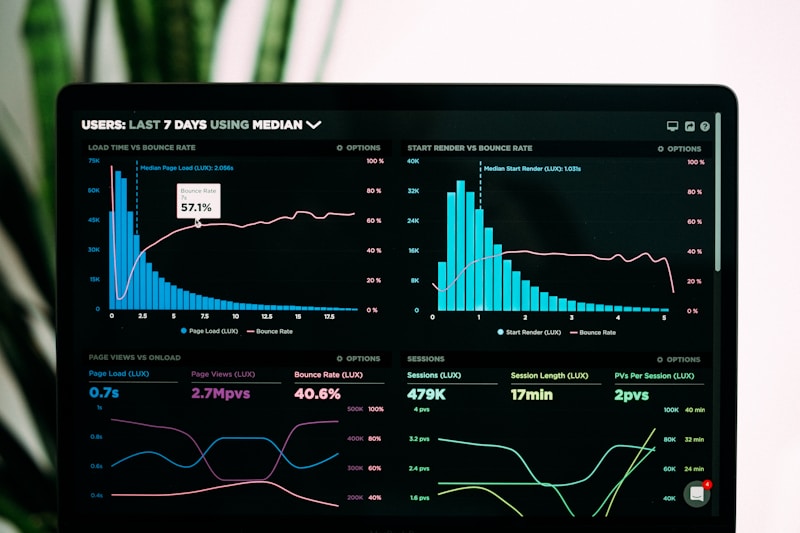
An AI ad testing dashboard turns raw data into clear winners and losers.
For a small business, the difference is speed: a test cycle that took a month can now run in a week. Ad platforms reward fresh creative, and the fastest tester usually wins the auction cheapest.
📊 Why Small Businesses Need Ad Testing in 2026
Advertising has never been more competitive for small budgets. Click costs keep rising, privacy changes have dulled targeting, and AI-generated creative lets competitors launch ten ad variations before lunch. Testing is the only reliable way to protect your return on ad spend.
Advertisers who test creative systematically typically see 20–40% lower acquisition costs than those who run a single ad until it fatigues. Meta’s own guidance notes that ad creative is the single biggest driver of performance in its auction, and Nielsen research has long shown creative quality accounts for roughly half of a campaign’s sales impact. When creative does the heavy lifting, testing it is the highest-leverage work a small advertiser can do.
A $1,000 monthly budget split across two untested ads is a coin flip. The same $1,000 run through a structured test buys lasting knowledge: which message your customers respond to.
AI ad testing tools for small business have removed the old excuses — no statistician, designer on retainer, or five-figure budget needed. Most tools below start under $50 a month, and several offer free tiers.
🧪 7 Best AI Ad Testing Tools for Small Business
Each tool was judged on price, ease of use, variation quality, and clarity of results. Prices are approximate 2026 starting points — confirm on the vendor’s site.
1. AdCreative.ai — Best for Generating Test Variations Fast
AdCreative.ai generates hundreds of ad creatives from one product URL or image, each scored by a predictive model trained on high-performing ads. Launch ten different concepts in an afternoon and let the scores shortlist the strongest before you spend a dollar. Best for: small stores needing many creative options fast. From: ~$39/month. Watch out for: scores predict creative quality, not guaranteed sales.
2. Pencil — Best for AI Video Ad Testing
Pencil builds video and static ad variations from your brand assets and predicts which will perform before launch. Its strength is iteration speed for video, historically the slowest format to test — it compresses a week of editing into an hour. Best for: video-first campaigns on Meta, TikTok, and YouTube Shorts. From: ~$119/month. Watch out for: it suits advertisers spending $2,000+ a month.
3. Marpipe — Best for Structured Multivariate Testing
Marpipe tests combinations — headlines × images × calls to action — and isolates which element moved the needle. Powerful when you have a proven offer and want to know whether the headline or the image deserves the credit. Best for: advertisers with a working funnel optimizing element by element. From: ~$99/month. Watch out for: multivariate tests need more traffic, so pair it with a healthy daily budget.
4. Motion — Best for Creative Analytics and Reporting
Motion connects to your ad accounts and automatically tags, organizes, and analyzes every creative you have ever run. Its AI surfaces patterns — which hooks, formats, and messages correlate with wins — so your next test starts from evidence, not hunches. Best for: businesses with months of unanalyzed ad history. From: ~$99/month. Watch out for: it analyzes creative you already have; pair it with a generator for new variations.
5. Madgicx — Best All-in-One AI Ad Testing for Meta Advertisers
Madgicx combines AI creative generation, automated audience testing, and budget rules in one dashboard for Meta advertisers. It launches structured experiments, shifts budget to winners, and pauses losers without daily babysitting — replacing three tools for a small team. Best for: small businesses spending mostly on Meta. From: ~$49/month. Watch out for: depth on Google and TikTok is thinner.
6. Revealbot — Best for Automated Testing Rules
Revealbot lets you write plain-language rules — “pause any ad spending $20 without a purchase,” “scale winners by 20% daily” — and its AI applies them around the clock. A tireless assistant that enforces your experiment discipline while you sleep. Best for: advertisers who know what to test but cannot monitor campaigns all day. From: ~$49/month. Watch out for: you supply the creative variations yourself.
7. Optimizely — Best for Landing Page and Funnel Testing
Ads do not convert in isolation — the landing page finishes the job. Optimizely’s AI-assisted platform tests landing page headlines, layouts, and offers with the same rigor you apply to ads, and its visual editor needs no developer. Best for: businesses ready to test beyond the ad itself. From: custom, with a free tier for basic experiments. Watch out for: full-feature pricing is enterprise-leaning; start with the free tier.
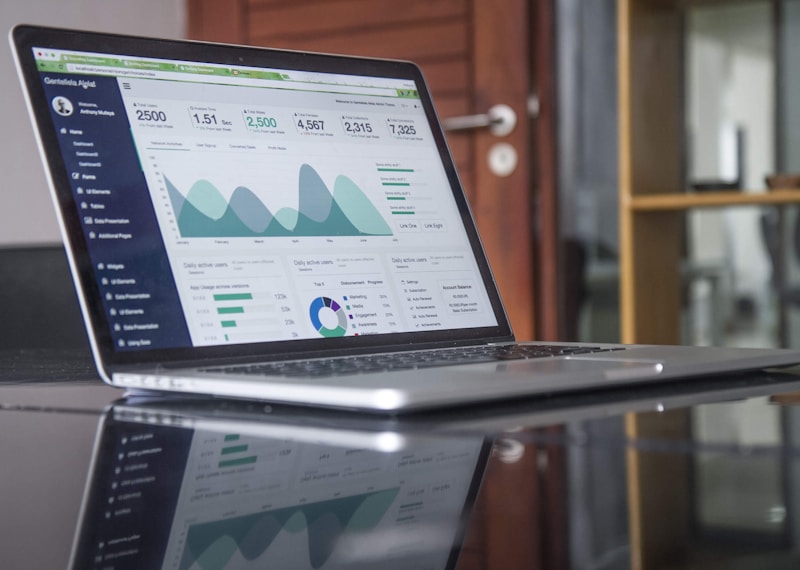
Side-by-side results show which variation earns its budget — and which to pause.
📋 AI Ad Testing Tools Compared: Features and Pricing
Pick based on your bottleneck: making variations, analyzing results, or managing the test.
| Tool | Best For | Starting Price | Key Strength |
|---|---|---|---|
| AdCreative.ai | Fast creative variations | ~$39/mo | Predictive creative scoring |
| Pencil | Video ad testing | ~$119/mo | Rapid video iteration |
| Marpipe | Multivariate testing | ~$99/mo | Element-level insights |
| Motion | Creative analytics | ~$99/mo | Pattern detection in past ads |
| Madgicx | All-in-one Meta testing | ~$49/mo | Automated budget rules |
| Revealbot | Automated test rules | ~$49/mo | 24/7 rule enforcement |
| Optimizely | Landing page testing | Free tier | No-code page experiments |
Match one tool to your weakest link. Drowning in creative production? Start with AdCreative.ai. Already have ads but no idea which work? Start with Motion. Mostly on Meta and short on time? Madgicx covers the most ground for the least money. Pair any choice with strong copy — our guide to AI ad copy generators for small business shows how to write variations worth testing.
Every testing program sits inside a wider AI toolkit. Our pillar guide to AI tools for small business maps the full stack — content, chatbots, ads.
🪜 How to Run Your First AI Ad Test in 5 Steps
Step 1: Pick One Question, Not Five
Every test answers a single question: does a benefit-led headline beat a price-led headline? Does a customer photo beat a product photo? Write it down before building anything. Tests that try to answer everything answer nothing.
Step 2: Build Three Variations, Not Thirty
Generate three genuinely different versions of your control ad — different hook, image, and call to action. Three is the sweet spot for small budgets: enough variety to learn from, few enough that each variation gets meaningful spend.
Step 3: Set a Fair Budget and a Kill Rule
Give each variation an equal daily budget and decide your kill rule in advance — for example, pause any variation after $25 spent with no conversion. Writing the rule before launch removes emotion later.
Step 4: Let the Test Run to Significance
Most small advertisers fail here: they check results after a few hours and kill the test early. Wait for at least 100 clicks per variation, or 3–5 days of data. Treat an early “likely winner” flag as a hint, not a verdict, until confidence clears 90%.
Step 5: Scale the Winner, Bank the Learning
Move 70–80% of the budget to the winner, keep the runner-up alive as your new control, and write down what you learned in one sentence: “Customers respond to freshness, not discounts.” That sentence is the real return on your test. For a deeper system, the guides at AI Tool Steps walk through AI workflows for small business marketing, including reusing winning ad angles.
🍞 Worked Example: How a Bakery Cut Cost Per Purchase by 38%
The business: Hearth & Honey, a neighborhood bakery in Lahore selling weekend cake boxes online. Monthly ad budget: $600 on Meta. Problem: cost per purchase had crept from $8 to $14 as their single ad fatigued.
The test: they generated three variations of their control ad. Variation A kept the original “20% off weekend cake boxes” offer. Variation B led with a benefit hook — “Fresh from the oven at 7am, gone by noon.” Variation C used a customer photo and a review quote. Each received $20 a day for 7 days ($420 total).
Results after 7 days:
- Variation A (discount): $140 spent, 12 purchases, $11.67 per purchase, 1.1% click-through rate.
- Variation B (freshness hook): $140 spent, 22 purchases, $6.36 per purchase, 2.4% click-through rate.
- Variation C (customer photo): $140 spent, 15 purchases, $9.33 per purchase, 1.6% click-through rate.
The decision: Variation B won clearly — nearly double the purchases at almost half the cost. The bakery shifted 80% of its budget to Variation B and retired Variation A. Cost per purchase settled around $8.70 over the next three weeks — a 38% reduction from the $14 peak, worth roughly $190 a month on the same $600 budget. The learning mattered as much as the saving: customers cared more about freshness than discounts, a message that now leads their website, their AI retargeting ads, and their shop signage.
Small businesses see fast wins from ad testing — one winning message can cut acquisition costs by a third.
⚠️ 5 Costly Ad Testing Mistakes to Avoid
1. Testing too many things at once. Change the headline, image, audience, and budget simultaneously and you learn nothing. Change one variable per test, or use a multivariate tool like Marpipe.
2. Ending tests too early. A variation leading after 50 clicks can lose after 500. Wait for statistical confidence or at least 100 clicks per variation.
3. Testing without a control. Keep your current best ad running as the control. A new variation is only a winner if it beats something real.
4. Ignoring the landing page. A brilliant ad sending traffic to a slow, confusing page will test as a failure. Test the ad and the page together. Guidance from Meta Business Help Center and Google Ads Help stresses that post-click experience is part of ad quality — and ad quality affects what you pay per click.
5. Never retesting winners. Audiences fatigue, competitors copy your angles, and platforms change. Re-run your champion against a fresh challenger every 4–6 weeks.
✅ Key Takeaways
- AI ad testing tools for small business turn guessing into a system: generate variations, run fair tests, scale winners.
- Start with one question, three variations, and a pre-written kill rule — then wait for 100 clicks per variation.
- Creative is the biggest performance lever in modern ad auctions; systematic testing typically cuts acquisition costs 20–40%.
- Match the tool to your bottleneck: AdCreative.ai for volume, Motion for analysis, Madgicx for Meta, Optimizely for landing pages.
- Bank every learning in one sentence — it shapes your next ten ads.
❓ Frequently Asked Questions
How much should a small business spend on AI ad testing?
Budget roughly 10–20% of monthly ad spend for testing, with a minimum of $20–25 per variation. On a $600 budget, about $100 a month buys one solid test cycle.
How long does an AI ad test take?
Most small-business tests reach a reliable result in 5–7 days; low-traffic campaigns may need 10–14 days. Treat early “likely winner” flags as hints until confidence passes 90% or each variation has roughly 100 clicks.
Do AI ad testing tools work with small budgets?
Yes. The tools start around $39–49 a month, and structured testing protects small budgets by killing losers early. Test three variations, not thirty, so each gets enough data.
Which ad element should I test first?
Test the hook first — the first line of copy or first three seconds of video. It has the largest effect on whether anyone stops scrolling. Then test the image, the offer, and the call to action.
Sources: Meta Business Help Center; Google Ads Help; Nielsen research on creative’s sales impact; vendor pricing pages (accessed November 2026). Pricing is approximate.