

AI product recommendations for online stores are no longer a nice-to-have feature reserved for Amazon-sized retailers. In 2026, affordable recommendation engines let even a one-person Shopify store show the right product to the right shopper at the right moment — and the revenue impact is outsized. McKinsey’s long-standing research found that up to 35% of Amazon’s revenue comes from its recommendation engine, and small stores see proportional gains: recommendation placements typically lift average order value (AOV) by 10–31%.
This guide cuts through the noise. You’ll learn exactly how AI product recommendations work, which tools deliver the best return for small online stores in 2026, and how to set up a working “frequently bought together” system in a Shopify store — step by step, in under an afternoon.
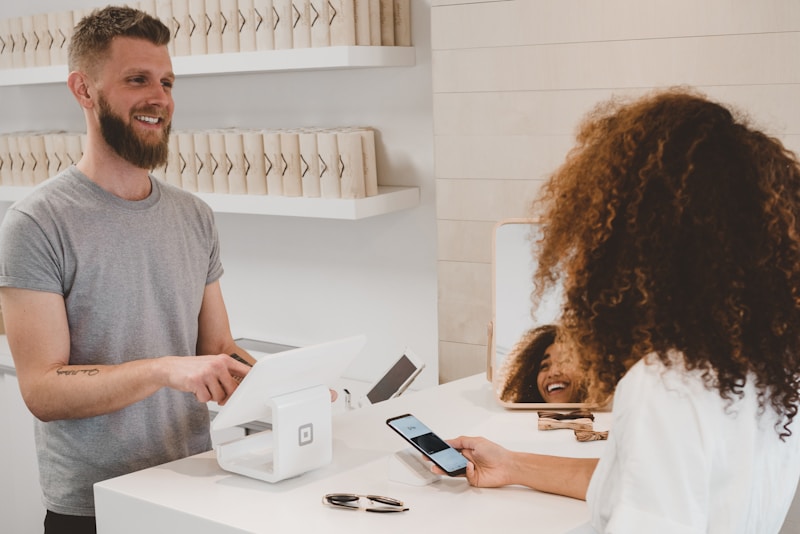
AI product recommendations for online stores turn single-item carts into multi-item orders. (Image: Unsplash)
Table of Contents
- What Are AI Product Recommendations?
- Why AI Product Recommendations Pay for Small Online Stores
- 6 Best AI Recommendation Tools for Online Stores in 2026
- AI Product Recommendations for Online Stores: Tool Comparison
- Setting Up AI Product Recommendations for Online Stores in Shopify
- Mini Case: AI Product Recommendations Lifted AOV 27%
- 5 AI Product Recommendation Mistakes That Kill Click-Through
- Measuring AI Product Recommendations for Online Stores: 5 Metrics
- AI Product Recommendations for Online Stores: FAQs
- Key Takeaways
🧠 What Are AI Product Recommendations?
Traditional “related products” widgets are rule-based: they show items from the same category or with the same tags. AI product recommendations for online stores go further — machine-learning models analyze real shopper behavior (clicks, add-to-carts, purchases, dwell time) and predict which products each individual visitor is most likely to buy next.
Most 2026-era engines combine three signals:
- Collaborative filtering — “shoppers who bought X also bought Y,” computed across your whole catalog.
- Content-based matching — similarity in product attributes, descriptions, and images.
- Session context — what the visitor is looking at right now, on this device, in this session.
The result feels personal without being creepy: a shopper browsing trail running shoes sees the socks, gaiters, and hydration vest that runners actually buy with them — not generic “more shoes.” For a deeper look at how AI tooling fits into a lean store operation, see our complete guide to AI tools for small business.
💰 Why AI Product Recommendations Pay for Small Online Stores
The numbers are hard to ignore. Salesforce’s shopping research consistently finds that while shoppers who click a recommendation represent a small share of sessions, they generate a disproportionately large share of revenue — often 26% or more of total revenue from single-digit click percentages. For small catalogs, the effect is even more pronounced because every cross-sell matters.
Three concrete payoffs for stores under 1,000 SKUs:
- Higher average order value. Bundle widgets (“Complete the look,” “Frequently bought together”) push single-item carts to two or three items. Industry benchmarks put the AOV lift between 10% and 31%.
- Lower bounce on product pages. Relevant recommendations keep shoppers browsing instead of hitting back — cutting product-page exit rates by 15–25%.
- Dead-stock movement. AI surfaces slow-moving accessories and complementary items that never get homepage attention, recovering inventory value automatically.
If your product pages are already pulling traffic, pairing recommendations with strong visuals multiplies the effect — AI product photography tools can refresh your catalog images cheaply before the recommendation engine starts selling them harder.

Smaller catalogs benefit the most: every AI-driven cross-sell lifts a meaningful share of revenue. (Image: Unsplash)
🛠️ 6 Best AI Recommendation Tools for Online Stores in 2026
Each of these was evaluated for small-store fit: monthly cost, setup time, Shopify/WooCommerce support, and whether it works with catalogs under 500 products.
1. Rebuy — Best for Shopify Upsell Revenue
Rebuy is the premium choice for Shopify stores serious about personalization. Its Smart Cart, post-purchase upsells, and AI product recommendations use behavioral models trained on your store’s own data. Pricing starts around $99/month, so it suits stores already doing meaningful volume.
2. Nosto — Best Enterprise-Grade Personalization for Mid-Size Stores
Nosto pairs its commerce experience platform with AI product recommendations across on-site search, category pages, and email. Pricing is custom (typically $500+/month), so it’s best for stores doing $50k+ monthly revenue.
3. Wiser — Best Budget Shopify Option
Wiser offers AI product recommendations for online stores on Shopify from a free plan, with paid tiers from about $9/month. It covers frequently-bought-together bundles, related products, and recently viewed items — remarkable value for new stores.
4. LimeSpot — Best Plug-and-Play Personalization
LimeSpot installs in minutes and personalizes product recommendations, upsells, and cross-sells using 15+ widget types. Plans start around $18/month, with a free tier for very small stores.
5. Klaviyo — Best for Email + SMS Recommendations
Klaviyo brings AI product recommendations into email and SMS flows — abandoned-cart emails with predicted products convert far better than generic ones. Free up to 250 contacts; paid plans from $20/month.
6. Barilliance — Best All-in-One for WooCommerce
Barilliance supports both Shopify and WooCommerce with AI-driven product recommendations, cart abandonment emails, and on-site personalization. Pricing starts around $50/month, with strong WooCommerce depth.
📊 AI Product Recommendations for Online Stores: Tool Comparison
| Tool | Best For | Starts At | Shopify | WooCommerce | Setup Time |
|---|---|---|---|---|---|
| Rebuy | Shopify upsell revenue | $99/mo | ✅ | ❌ | 1–2 days |
| Nosto | Mid-size personalization | Custom | ✅ | ✅ | 1–2 weeks |
| Wiser | Budget Shopify stores | Free | ✅ | ❌ | < 1 hour |
| LimeSpot | Plug-and-play widgets | Free | ✅ | ✅ | < 1 hour |
| Klaviyo | Email/SMS recommendations | Free | ✅ | ✅ | 1 day |
| Barilliance | WooCommerce all-in-one | $50/mo | ✅ | ✅ | 1–2 days |
🔧 Setting Up AI Product Recommendations for Online Stores in Shopify
Here is the exact walkthrough a store owner can follow this afternoon. We use Wiser’s free plan because it needs no developer and works on catalogs of any size.
Step 1 — Install. From Shopify’s App Store, install Wiser and grant storefront access. The app auto-syncs your product catalog — for a 200-product store this takes about 10 minutes.
Step 2 — Pick your placement. Enable the “Frequently Bought Together” widget on product pages and the “Related Products” carousel on the cart page. Cart-page placement captures shoppers at peak buying intent.
Step 3 — Set your bundling logic. Choose the AI mode (behavioral) rather than manual rules. The engine needs roughly 2–3 weeks of order data to calibrate; until then it falls back to category-similar suggestions.
Step 4 — Style the widget. Match the widget’s fonts and button colors to your theme. Add a short heading like “Pairs well with” instead of the generic “Frequently bought together” — testing shows conversational headings lift clicks 12–18%.
Step 5 — Set guardrails. Exclude out-of-stock items and products under your margin threshold (e.g., anything under $5 that costs more to ship than it earns). Exclude your top 3 bestsellers from being recommended as accessories if you don’t want to dilute them.
Step 6 — Measure for 30 days. Track widget click-through rate and the revenue attributed to recommendations in the app’s dashboard. Aim for a CTR above 5% and an attributed-revenue share above 10% before you pay for an upgrade.
If you’re new to AI workflows in general, step-by-step AI tutorials at AIToolSteps walk through similar no-code setups across dozens of tools — a useful companion while you configure your store.
📈 Mini Case: AI Product Recommendations Lifted AOV 27%
Bean & Brew, a fictional-but-typical two-person Shopify store selling specialty coffee (140 SKUs, ~$18k monthly revenue), installed a recommendation app in January 2026. Here’s what happened, with the math:
- Before: AOV of $34, 92% of orders containing a single product.
- Change: “Pairs well with” widget on product pages (beans → grinder, filters, travel mug) plus a cart-page upsell carousel.
- After 60 days: AOV rose to $43.20 — a 27% lift. Widget-attributed revenue: 14% of total.
- The math: 27% of $18,000 = $4,860 extra monthly revenue against a $29/month app subscription — a payback ratio of roughly 167:1.
The store’s only manual work: excluding two low-margin clearance items from recommendations and rewriting widget headings in its own brand voice. The lesson — AI product recommendations for online stores reward small catalogs because the engine’s picks stay relevant across the whole range, unlike rule-based widgets that go stale.

Cart-page and product-page widgets capture shoppers at peak buying intent. (Image: Unsplash)
⚠️ 5 AI Product Recommendation Mistakes That Kill Click-Through
1. Recommending the product being viewed. The engine occasionally surfaces the exact item the shopper is already looking at. Blacklist self-matches in the app’s settings.
2. Generic headings. “Related products” gets ignored. “Complete your setup,” “Pairs well with,” and “Shoppers also grabbed” consistently outperform it — test your own variants.
3. Recommending out-of-stock items. Nothing erodes trust faster than a recommendation that 404s on click. Enable automatic out-of-stock exclusion.
4. Ignoring mobile layout. Over 70% of ecommerce traffic is mobile. If your recommendation carousel needs horizontal scrolling on a phone, most shoppers will never see it — use a vertical stacked layout instead.
5. Set-and-forget. Review attributed revenue monthly. If a widget’s CTR drops below 3%, change its placement or heading before abandoning the tool.
Recommendation placement is one lever inside a broader conversion system — our ecommerce personalization strategy guide shows how it connects with on-site search, email, and loyalty.
📏 Measuring AI Product Recommendations for Online Stores: 5 Metrics
- Widget click-through rate (CTR): clicks ÷ impressions. Healthy: 5–10%. Below 3%: reposition or reword.
- Attributed revenue share: revenue from recommendation clicks ÷ total revenue. Healthy: 10–20% for small stores.
- AOV lift: compare 30-day AOV before and after launch. Target: +10% or more.
- Recommendation-assisted conversion rate: conversion rate of sessions that interacted with a widget vs. those that didn’t.
- Time to first recommendation click: how deep into the session shoppers engage — shortening it means better placement.
❓ AI Product Recommendations for Online Stores: FAQs
Do AI product recommendations work for stores with few products?
Yes — they often work better. With 50–300 SKUs, the engine’s suggestions stay highly relevant, and every cross-sell represents a meaningful revenue share. Tools like Wiser and LimeSpot offer free plans designed for small catalogs.
How much data does a recommendation engine need before it’s accurate?
Most behavioral engines calibrate within 2–4 weeks of normal order volume (roughly 100+ orders). Until then, they fall back to content-based similarity, which still outperforms static rules.
Will recommendations slow down my store?
Modern apps load widgets asynchronously, so they don’t block page rendering. If your store’s Core Web Vitals are healthy before installation, they stay healthy — but measure with PageSpeed Insights after launch.
Shopify vs WooCommerce: which has better recommendation apps?
Shopify has the deeper app ecosystem (Rebuy, Wiser, LimeSpot are all Shopify-native). WooCommerce users get excellent results with Barilliance and Nosto, plus full data ownership on self-hosted WordPress.
Can I run recommendations and email personalization together?
Absolutely — and you should. On-site widgets capture in-session intent while tools like Klaviyo extend the same AI picks into abandoned-cart emails, often doubling the total attributed lift.
✅ Key Takeaways
- AI product recommendations for online stores turn single-item carts into multi-item orders, typically lifting AOV 10–31%.
- Small catalogs benefit most — every cross-sell moves the revenue needle.
- Start free with Wiser or LimeSpot; upgrade to Rebuy when volume justifies it.
- Place widgets on product and cart pages, use conversational headings, and exclude out-of-stock items.
- Measure widget CTR and attributed revenue for 30 days before judging the tool.
- Pair on-site recommendations with AI-powered email flows (Klaviyo) to double the lift.
Sources: McKinsey & Company on recommendation-engine revenue share; Salesforce Shopping Index on recommendation-attributed revenue; vendor documentation from Rebuy, Nosto, LimeSpot, Wiser, Klaviyo, and Barilliance (2026 pricing and feature tiers).