
Table of Contents
- Why AI Lead Generation for Small Business Is Exploding in 2026
- How AI Lead Generation Actually Works
- 8 AI Lead Generation Tools for Small Business Compared
- Worked Example: From 500 Visitors to 12 Booked Calls
- The 4-Week AI Lead Generation Rollout Plan
- What Does AI Lead Generation Cost?
- 6 Mistakes That Kill AI Lead Generation Results
- Measuring Success: The Only Metrics That Matter
- Key Takeaways
- Frequently Asked Questions
Most small businesses do not have a traffic problem — they have a conversion problem. Industry research consistently shows that roughly 97% of first-time website visitors leave without taking any action. Every one of those visitors was a potential customer who found you, looked around, and quietly disappeared. AI lead generation for small business is how you stop that leak: instead of hiring a bigger sales team, you deploy affordable AI tools that capture, qualify, and follow up with leads automatically — 24 hours a day, 7 days a week.
In this playbook you will learn how AI lead generation for small business actually works, compare 8 proven tools with honest pricing, see a worked example with real numbers, and follow a 4-week rollout plan you can start this week — no technical team required.

AI lead generation for small business turns anonymous visitors into a predictable pipeline — here is the complete playbook.
🤖 Why AI Lead Generation for Small Business Is Exploding in 2026
Three forces are colliding at once, and they all favor the small businesses that act first. First, buying behavior has changed for good: classic Gartner research found that B2B buyers are roughly 57% through their purchase decision before they ever talk to a salesperson. Your website is now doing most of the selling — which means the businesses that capture and nurture those silent visitors win.
Second, speed matters more than ever. Widely cited sales research shows that contacting a lead within 5 minutes makes you up to 100 times more likely to connect than waiting even 30 minutes. Human teams cannot do that at 2 a.m. on a Sunday — but AI lead generation for small business can, because AI chatbots, instant email sequences, and automated follow-ups never sleep.
Third, the cost barrier has collapsed. Enterprise-grade lead intelligence that cost thousands per month five years ago now starts at free or under $50/month. According to Salesforce‘s State of Sales research, sales teams using AI report meaningfully higher quota attainment than those that do not — and that advantage used to belong only to big companies. In 2026, a 5-person business can run the same AI playbook as a 500-person one.
The bottom line: AI lead generation for small business is not a luxury anymore. It is the cheapest way to grow revenue without growing headcount.
How AI Lead Generation Actually Works
Strip away the hype and AI lead generation runs on four simple stages. Understanding them helps you buy the right tools instead of the shiniest ones.
- 1. Capture: AI chatbots, smart popups, and visitor-identification tools turn anonymous traffic into known contacts. A chatbot qualifies a visitor at midnight; a visitor-ID tool reveals which companies browsed your pricing page.
- 2. Enrich: Enrichment tools automatically fill in the blanks — company size, role, industry, verified email — so your list is accurate instead of a spreadsheet of guesses.
- 3. Score: Predictive lead scoring ranks every lead by likelihood to buy, using behavior signals (pages visited, emails opened, time on pricing page). Your team calls the hot leads first.
- 4. Nurture: AI-written email sequences, SMS follow-ups, and retargeting keep you in front of prospects until they are ready. This is where most deals are won: classic sales research shows around 80% of sales need five or more follow-ups, yet nearly half of salespeople quit after one.
If you are new to these platforms, working through step-by-step AI tool tutorials first can flatten the learning curve — most of the tools below can be set up in an afternoon once you know the basics. For the bigger picture of where lead tools fit in your stack, see our AI Tools for Small Business: The Complete 2026 Guide.
8 AI Lead Generation Tools for Small Business Compared
There are hundreds of options, so here is a shortlist that fits small-business budgets and actually delivers. Prices change often, so treat the figures below as starting points and confirm current pricing before you buy.
| Tool | Starting price (approx.) | Best for | Standout feature |
|---|---|---|---|
| HubSpot Breeze AI | Free CRM; paid from ~$20/mo | All-in-one starter stack | AI lead scoring inside a free CRM |
| Apollo.io | Free tier; paid from ~$49/mo | B2B prospecting lists | 275M+ contact database with AI filters |
| Clay | From ~$149/mo | Data enrichment | Waterfall enrichment from 50+ sources |
| Instantly.ai | From ~$37/mo | Cold email at scale | Unlimited warmup + AI reply handling |
| RB2B | Free tier; paid plans vary | Identifying site visitors | Real-time visitor ID with Slack alerts |
| Seamless.AI | Free tier; paid from ~$149/mo | Finding contact details | Real-time email/phone finder |
| Drift (Salesloft) | Quote-based (premium) | Conversational chat | AI chat that books meetings itself |
| Lemlist | From ~$59/mo | Personalized outreach | AI personalization + multichannel sequences |
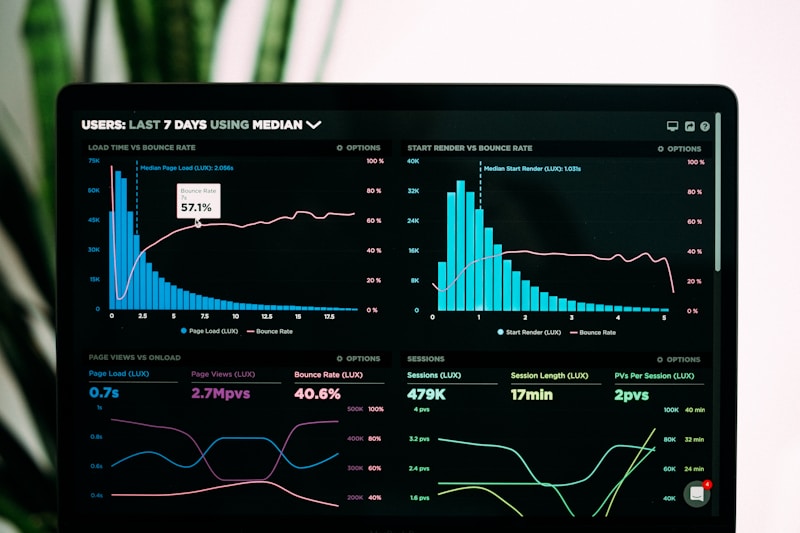
Compare AI lead generation for small business tools on one metric: cost per qualified lead, not vanity features.
1. HubSpot Breeze AI — the all-in-one starter
If you are starting from zero, start here. HubSpot’s free CRM ships with Breeze AI: predictive lead scoring, AI email writing, and automatic company enrichment. You can run the entire capture-to-nurture loop inside one tool, which is why it is the most common first pick for AI lead generation for small business teams that want simplicity.
2. Apollo.io — the prospecting database
Apollo combines a giant B2B contact database with AI search filters and built-in sequences. Tell it your ideal customer profile and it builds a targeted list, finds verified emails, and launches follow-ups. The free tier is genuinely usable — the cheapest way to test AI prospecting.
3. Clay — the enrichment engine
Clay is the “spreadsheet on steroids” that enriches any list from 50+ providers in a waterfall — if one source lacks an email, it tries the next. Pair it with Apollo lists or your own CSVs and lead accuracy jumps from ~60% to 95%+. It powers many of the best AI lead generation for small business workflows.
4. Instantly.ai — the cold email workhorse
Instantly handles the backbone of outbound: unlimited email warmup, deliverability monitoring, and AI-generated first lines so every email feels personal. Small businesses run 5,000+ personalized cold emails a month for less than one ad campaign costs.
5. RB2B — the anonymous-visitor revealer
Remember the 97% who leave without converting? RB2B identifies a meaningful share of those anonymous visitors — especially US-based companies — and pushes them to Slack or your CRM in real time. For B2B small businesses, this one tool can double pipeline from existing traffic, with zero extra ad spend.
6. Seamless.AI — the contact finder
When your list has names but no contact details, Seamless.AI finds verified emails and direct-dial numbers in real time. Use it to complete records for your highest-value target accounts, then reach out with a genuinely personalized message.
7. Drift — the chatbot that books meetings
Drift’s AI chat qualifies visitors in real time, answers common questions, and books meetings onto your calendar. It is premium-priced, so it suits businesses where one extra booked call is worth hundreds — agencies, consultants, B2B services. If your pricing page gets real traffic, it often pays for itself within weeks.
8. Lemlist — the personalization layer
Lemlist’s AI writes custom first lines, generates personalized images, and runs multichannel sequences across email and LinkedIn. Best fit when outreach must feel hand-written at scale — the difference between a 2% and a 12% reply rate is usually personalization.
📊 Worked Example: From 500 Visitors to 12 Booked Calls
Let us make this concrete. Imagine a 5-person web design studio getting 500 website visitors per month. Here is the before-and-after math of AI lead generation for small business in action.
Before (manual process): a 2% conversion rate on a static contact form produces 10 raw leads. The owner follows up “when there is time” — usually a day or two later — and books maybe 3 calls. The rest go cold.
After (AI stack costing ~$120/month):
- Capture: An AI chatbot engages visitors 24/7 and lifts form capture from 2% to 5% → 25 leads instead of 10.
- Reveal: A visitor-ID tool identifies 30 companies that browsed but never filled a form → 55 total prospects.
- Enrich + score: Enrichment fills in the missing data and AI scoring ranks all 55 by buying intent. The studio focuses on the top 20.
- Instant follow-up: Every hot lead gets an automated email within 5 minutes and a personalized sequence over 7 days.
Result: 12 booked calls from the same 500 visitors — a 4x improvement in booked meetings, with no extra ad spend and no extra staff. The studio paid ~$120 in tools to create roughly $24,000 in proposal pipeline (12 calls × $2,000 average project). That is the real economics of AI lead generation for small business: tiny input costs, outsized pipeline output.
AI Lead Generation for Small Business: The 4-Week Rollout Plan
You do not need to install everything at once. Follow this phased plan — one week per stage — and you will have a working AI pipeline by day 28.
Week 1 — Capture everything. Install an AI chatbot on your site (HubSpot’s free tier is enough to start) and add a smart popup offering a lead magnet your visitors actually want — a pricing guide, a checklist, an audit. Goal: lift your capture rate above your current baseline. Once calls start landing on your calendar, an AI meeting assistant for small business can handle scheduling, reminders, and follow-up notes automatically.
Week 2 — Enrich and score. Connect an enrichment tool to your CRM and turn on lead scoring. Define your scoring rules simply: +points for pricing-page visits, repeat visits, and company-size fit; −points for free email domains and job-seeker behavior. Review the first 50 scored leads manually to calibrate.
Week 3 — Automate follow-up. Build a 7-touch nurture sequence: instant welcome email, day-2 value email, day-4 case study, day-7 personal check-in, plus two SMS/LinkedIn touches for hot leads. Use AI to draft the emails, then edit them in your own voice — authenticity still wins.
Week 4 — Measure and optimize. Check the metrics in the next section, kill whatever is underperforming, and double down on your best channel. Most teams find that 80% of their pipeline comes from 2 of the 4 stages — lean into those.

A working AI lead generation for small business stack can be live in 4 weeks — one stage per week.
💰 What Does AI Lead Generation Cost?
The honest answer: anywhere from $0 to ~$500/month for a complete small-business stack. A realistic starter budget looks like this:
- Free ($0): HubSpot free CRM + Apollo free tier + RB2B free tier. You can capture, score, and prospect without spending a dollar.
- Growth (~$100–$200/mo): Add Instantly or Lemlist for outbound and Clay’s starter plan for enrichment. This is the sweet spot for most small businesses.
- Scale (~$300–$500/mo): Add Drift-style conversational AI or Seamless.AI credits when your volume justifies it.
Compare that with the alternative: one part-time salesperson costs $1,500+/month, and Google Ads clicks in competitive niches run $5–$50 each. When new pipeline starts converting, plan for the cash impact too — our AI cash flow forecasting guide for small business shows how to model revenue from a growing pipeline so growth never surprises you.
⚠️ 6 Mistakes That Kill AI Lead Generation for Small Business Results
- Buying email lists. Purchased lists destroy deliverability and violate spam laws. Build your own list with the tools above instead.
- Slow follow-up. A 5-minute response beats a 5-hour response by orders of magnitude. Automate the first touch or lose the lead.
- Scoring without data. AI scoring needs at least a few dozen leads to calibrate. Review scores manually for the first month.
- Generic messaging. “Dear Sir/Madam” in 2026 is an instant delete. Use the personalization features you are paying for.
- Ignoring deliverability. Warm up new email domains for 2–3 weeks before sending volume, or your emails land in spam.
- Dirty CRM data. Enrichment decays — re-verify emails quarterly. A 20% bounce rate can get your domain blacklisted.
Measuring Success: The Only Metrics That Matter
Track these five numbers weekly. If all five are moving in the right direction, your AI lead generation for small business system is healthy.
- Speed to lead: median minutes from form-fill to first contact. Target: under 5 minutes.
- Lead-to-MQL rate: % of raw leads that become marketing-qualified. Target: 20–40%.
- Cost per qualified lead: total tool + ad spend ÷ qualified leads. Target: trending down month over month.
- Pipeline value created: total deal value of opportunities sourced. This is the number your accountant cares about.
- Close rate: % of AI-sourced opportunities that become customers. Target: at or above your baseline.
✅ Key Takeaways
AI lead generation for small business in 2026, summarized: capture visitors 24/7 with AI chat and visitor ID, enrich and score every lead automatically, follow up within 5 minutes, and nurture with AI-personalized sequences. A $100–$200/month stack can 4x your booked calls from the same traffic. Start with free tiers, measure cost per qualified lead, and scale what works.
❓ Frequently Asked Questions
How much does AI lead generation for small business cost?
You can start free with HubSpot’s free CRM, Apollo’s free tier, and RB2B’s free tier. Most small businesses settle at $100–$200/month for a full stack — far less than one part-time salesperson.
Will AI replace my sales team?
No — it replaces the repetitive parts (data entry, follow-up, scoring) so humans spend time on conversations that close deals. Think of it as giving every rep a tireless assistant.
Does AI lead generation work for local businesses?
Yes. Local service businesses (plumbers, clinics, agencies) benefit the most because AI chat captures after-hours inquiries that would otherwise go to a competitor who answers faster.
How fast will I see results?
Capture and speed-to-lead improvements show up in week one. Meaningful pipeline growth typically takes 4–8 weeks as your nurture sequences and scoring calibrate.
Is AI lead generation legal under GDPR and spam laws?
Yes, when done right: get consent for marketing emails, honor unsubscribes immediately, and follow local rules (GDPR in Europe, CAN-SPAM in the US). Never buy lists — it is both illegal in many jurisdictions and bad for deliverability.
Sources: Salesforce State of Sales research; Gartner buyer-behavior research; widely cited sales-response studies on 5-minute follow-up; vendor pricing pages (verified October 2026 — confirm current pricing before purchase). Figures and case-study numbers are illustrative examples based on typical small-business benchmarks.