
Table of Contents
- Key Takeaways
- Why AI in Agriculture Matters Right Now
- 1. Precision Crop Monitoring with AI in Agriculture
- 2. Yield Forecasting That Farmers Can Trust
- 3. Smart Irrigation and Water Savings
- 4. Early Pest and Disease Detection
- 5. Soil Health and Smarter Fertilization
- 6. Autonomous Machinery and Robotics
- 7. Smarter Livestock Management
- 8. From Farm Gate to Market: AI in Agriculture Supply Chains
- 9. Getting Started with AI in Agriculture in 2026
- Frequently Asked Questions
Key Takeaways
- AI in agriculture is moving from research labs to real fields, helping farmers grow more food with less water, fertilizer, and waste.
- The biggest wins come from precision monitoring, yield forecasting, and smart irrigation — applied together, not as isolated gadgets.
- AI tools now work at every scale, from small family farms using a smartphone app to large operations running drones and autonomous tractors.
- Start with one high-value problem — water, pests, or forecasting — prove the return, then expand across the farm.
AI in agriculture is quietly changing how the world grows its food. A drone scans a wheat field at dawn, a soil sensor reports moisture levels to a farmer’s phone, and a machine-learning model predicts the harvest weeks before a single grain is cut. In 2026, this is not a futuristic vision — it is the daily reality for a growing number of farms across the globe.
The stakes could hardly be higher. The world must feed more people on roughly the same amount of farmland, while water grows scarcer, weather grows less predictable, and input costs keep climbing. At the same time, consumers and regulators expect food to be produced more sustainably, with fewer chemicals and a smaller carbon footprint. AI in agriculture closes that gap: it turns satellite images, weather data, soil readings, and market prices into decisions that are faster, more precise, and more profitable than guesswork ever could be.
In this guide, you will learn nine proven ways AI in agriculture is transforming farming in 2026, which tools are worth your money, and how to start without overhauling your entire operation at once.
🌾 Why AI in Agriculture Matters Right Now
Farming has always been a data business — farmers read the sky, the soil, and the season. What changed is the volume and speed of that data. Cheap sensors, affordable drones, and satellite imagery now generate more information in a single week than a farmer could collect in a lifetime of walking fields. AI in agriculture is the tool that makes sense of it all.
Consider the economics. Fertilizer, fuel, and water are among a farm’s largest costs, and applying them uniformly across a field wastes a large share of them. Precision systems typically cut input use by targeting only the plants that need treatment. Industry analyses consistently report double-digit savings on water and chemicals for farms that adopt variable-rate application, and yield gains of 10–30% are commonly reported when forecasting and monitoring are combined with good agronomy.
Climate pressure adds urgency. Unpredictable rainfall, heat waves, and new pest ranges mean that last season’s playbook no longer guarantees this season’s result. Models trained on years of weather and crop data can spot stress early, recommend planting dates, and warn of disease outbreaks days before they are visible to the naked eye. For a farm business, that early warning is often the difference between a good year and a lost crop.
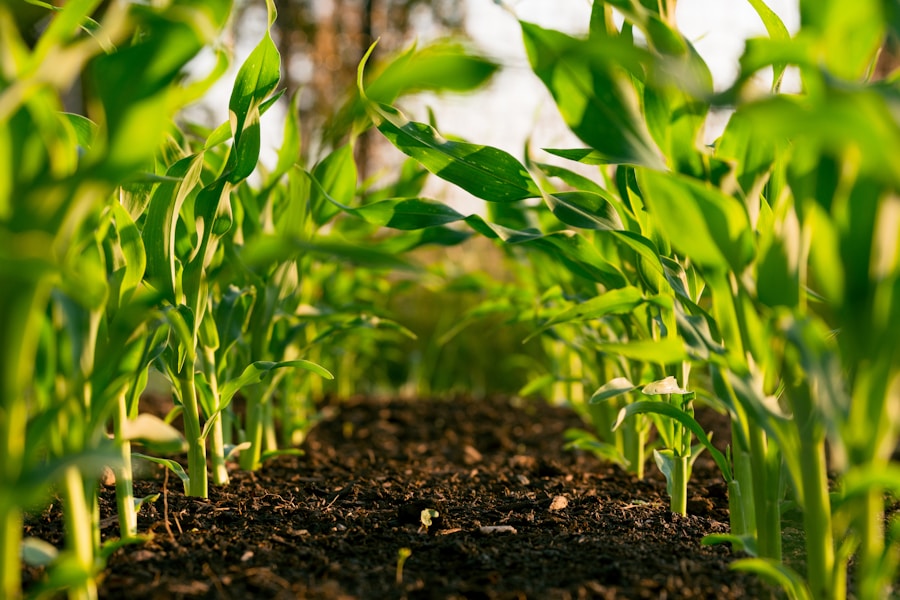
Aerial monitoring is one of the most accessible entry points into AI in agriculture.
🤖 1. Precision Crop Monitoring with AI in Agriculture
Precision crop monitoring is the foundation of modern AI in agriculture. Drones and satellites capture multispectral images — light wavelengths invisible to the human eye — that reveal plant stress, nutrient deficiency, and water problems long before leaves turn yellow. AI models analyse those images field by field, row by row, and flag exactly where attention is needed.
The practical payoff is immediate. Instead of spraying an entire field, a farmer can treat only the affected zones. Instead of walking hundreds of acres to check growth, they can review a colour-coded map on a tablet in minutes. For large farms, that saves days of labour every week; for small farms, it means problems are caught while they are still cheap to fix.
What to look for in a monitoring tool: high-resolution imagery, a clear stress or NDVI map, and recommendations tied to specific actions rather than raw data alone. The best platforms integrate with your existing farm management software so maps, tasks, and records live in one place.
📊 2. Yield Forecasting That Farmers Can Trust
Yield forecasting is where AI in agriculture earns its keep in the boardroom as well as the field. Machine-learning models combine historical yields, soil data, weather forecasts, satellite growth curves, and planting dates to estimate the harvest weeks or months ahead — and to update that estimate as conditions change.
Accurate forecasts change real decisions. A grower can lock in forward contracts with confidence, plan labour and storage, and decide whether extra irrigation or fertilizer will actually pay for itself. Grain traders, cooperatives, and food processors use the same forecasts to plan logistics, which is why forecasting accuracy directly affects the price a farmer receives.
💧 3. Smart Irrigation and Water Savings
Water is farming’s most precious input, and AI in agriculture is making every litre work harder. Smart irrigation systems combine soil-moisture sensors, weather forecasts, and crop-stage models to decide when, where, and how much to water — automatically adjusting schedules when rain is forecast or when a particular zone is already moist enough.
The results are striking. Farms using sensor-driven irrigation commonly report water savings of 20–40% compared with fixed schedules, while maintaining or improving yields because plants are never over- or under-watered. In water-stressed regions, that efficiency is not just a cost saving; it is what keeps farming viable at all.
Getting started is simpler than most farmers expect. A handful of soil sensors in representative zones, plus a controller that talks to your existing irrigation system, is often enough to prove the concept in a single season before expanding coverage.
Sensor-driven irrigation targets water where crops actually need it.
🔬 4. Early Pest and Disease Detection
Every day a pest or disease goes undetected, it spreads — and the eventual treatment costs more and works less well. AI in agriculture tackles this with image recognition: a farmer photographs a suspicious leaf with a phone, and an app identifies the disease, estimates its severity, and recommends treatment within seconds.
At field scale, drone and trap-camera systems do the same job continuously, scanning for insect pressure and disease signatures across thousands of plants. Early detection means targeted, smaller interventions instead of blanket spraying — better for yields, better for the environment, and better for the farm’s chemical bill.
Accuracy matters here more than anywhere. Use tools trained on your region’s crops and diseases, verify the first few diagnoses with an agronomist, and keep records of what was found and what worked. Over a season, that record becomes one of the farm’s most valuable datasets.
🌱 5. Soil Health and Smarter Fertilization
Healthy soil is a farm’s long-term asset, and AI in agriculture is finally making soil management precise. Models combine soil-test results, satellite data, and yield history to build variable-rate fertilizer maps: more nutrients where the soil is depleted, less where it is already rich. The result is lower fertilizer costs, less runoff into waterways, and more consistent yields across the field.
Beyond fertilization, AI tools now track soil organic matter, moisture trends, and compaction risk over time, helping farmers judge whether cover cropping, reduced tillage, or rotation changes are actually improving their ground. That long view matters: soil improvements compound over years, and data is what proves which practices pay.
For farmers exploring step-by-step AI tutorials and practical guides to farm technology, the team at AI Tool Steps publishes accessible walkthroughs that explain how AI tools work in plain language — a useful starting point before committing to a paid platform.
🚜 6. Autonomous Machinery and Robotics
Labour shortages are pushing AI in agriculture into the machine shed. Autonomous tractors can plough, plant, and spray with centimetre-level GPS accuracy, working through the night and in conditions where human operators would tire. Smaller robots handle weeding — identifying weeds with computer vision and removing them mechanically or with micro-doses of herbicide — cutting chemical use dramatically.
Harvest robotics is advancing fastest in high-value crops such as strawberries, apples, and tomatoes, where picking is labour-intensive and timing is critical. These systems are still expensive, so most farms will encounter them first through contractors or machinery-sharing services rather than outright purchase.
🐄 7. Smarter Livestock Management
AI in agriculture is not only about crops. On livestock farms, wearable sensors and cameras monitor animal health, feeding, and behaviour around the clock. A cow that eats less, moves differently, or shows an early fever signature is flagged for attention days before a human would notice — earlier treatment, lower veterinary costs, and better welfare.
Computer-vision systems count and weigh animals without handling stress, monitor barn conditions, and even detect lameness from gait changes. For dairy operations, AI-driven milking and feeding systems adjust rations per animal based on yield, health, and lactation stage, squeezing more milk from the same feed.
Autonomous machinery and AI guidance are reshaping farm operations.
📦 8. From Farm Gate to Market: AI in Agriculture Supply Chains
A great harvest is worth little if it rots in storage or misses its market window. AI in agriculture now extends beyond the field into storage, grading, logistics, and pricing. Vision systems grade produce by size, colour, and defects faster and more consistently than manual sorting. Cold-chain sensors and predictive models warn when storage conditions threaten quality, and market-forecasting tools help farmers time sales instead of selling at harvest lows.
This is also where farm AI meets business AI. The same forecasting and automation principles that power AI in logistics and AI in manufacturing apply to moving food from farm to shelf — fewer losses, lower transport costs, and fairer prices for growers who can prove quality and predict supply.
✅ 9. Getting Started with AI in Agriculture in 2026
Starting with AI in agriculture does not require a technology degree or a huge budget. Follow this practical sequence, used by many successful early adopters:
- Pick one problem. Water costs, pest losses, or uncertain yields — choose the pain that costs you most, and solve that first.
- Start with your phone. A disease-identification app or a satellite-monitoring subscription costs little and teaches you how AI recommendations feel in practice.
- Fix your data basics. Record planting dates, inputs, and yields per field. AI tools are only as good as the records they learn from.
- Pilot on one field. Run the new tool alongside your usual practice for one season, compare results honestly, and scale only what proves itself.
- Budget for learning, not just licences. Training for you and your team, plus a season of experimentation, is part of the real cost — and the real return.
On pricing, expect a mix: smartphone apps from free to around $10–30 per month, drone and satellite monitoring from roughly $5–15 per hectare per season depending on resolution and frequency, and machinery automation priced per machine or through contractor rates. Always trial before committing to an annual contract, and ask vendors for reference farms in your climate and crop — results from another continent rarely transfer directly.
The broader lesson from AI automation tools applies here too: the tool matters less than the workflow around it. Farms that succeed with AI treat it as a decision-support system — human judgement, informed by better data — not as a replacement for farming knowledge.
❓ Frequently Asked Questions
What is AI in agriculture?
AI in agriculture is the use of machine learning, computer vision, and data analytics to improve farming decisions — from monitoring crops and forecasting yields to automating irrigation, detecting disease, and managing livestock.
Is AI in agriculture affordable for small farms?
Yes. Many tools now run on a smartphone with a monthly subscription, and cooperatives or contractor services make drones and machinery accessible without buying equipment outright. Start with one low-cost app and scale from proven results.
Does AI in agriculture replace farmers?
No. AI handles data-heavy, repetitive monitoring and analysis, but planting, judgement calls, and farm management still need human experience. The best results come from farmers using AI insights, not from farms run by AI alone.
How much water can smart irrigation save?
Sensor-driven irrigation commonly saves 20–40% of water compared with fixed schedules, while maintaining or improving yields, because water is applied only when and where crops need it.
What data does AI in agriculture need?
At minimum, field boundaries, planting dates, and yield records. Satellite imagery and weather data are often supplied by the platform itself; soil sensors and drone flights add precision as you scale.
Sources and further reading: This guide draws on publicly available guidance from the Food and Agriculture Organization of the United Nations (FAO), IBM’s research on AI in agriculture, and vendor-reported field results for precision farming systems. Figures cited are typical reported ranges, not guarantees — results vary by crop, climate, and farm management. Always validate a tool on your own fields before scaling.