
Key Takeaways
- An AI contract generator for small business turns a blank page into a signed client contract in under 30 minutes — work that used to take days of back-and-forth.
- The best tools cost $15–$49 a month and pay for themselves the first time they prevent a scope-creep dispute or a late-payment chase.
- AI drafts are a starting point, not a lawyer: review every generated contract for payment terms, scope, and termination clauses before you send it.
- Maple & Main Design Studio, a 3-person firm, cut contract turnaround from 6 days to 4 hours and collected 92% of invoices on time using the 5-step workflow in this guide.
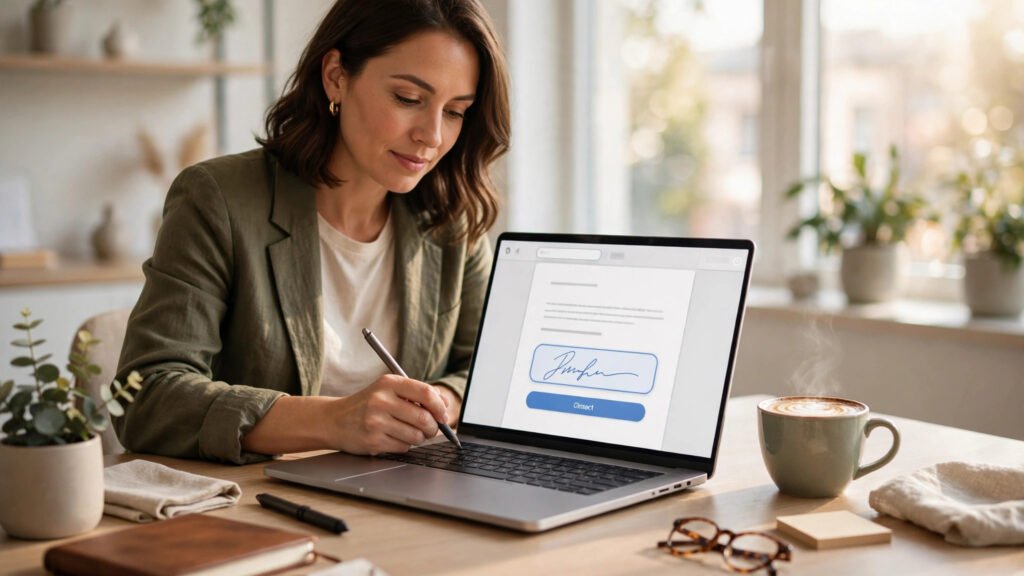
Every small business owner knows the feeling: a client says yes on a call, and then the work stalls for a week while a contract gets written, reviewed, and chased for a signature. Meanwhile the project cannot start, the invoice cannot go out, and the cash flow waits. An AI contract generator for small business removes that bottleneck — it drafts a professional, plain-English contract from a few prompts, adds e-signature, and sends it before the excitement of the yes fades.
In this guide, you will compare the 7 best tools, learn a 5-step workflow that keeps your contracts airtight, and see a worked example of a small firm that rebuilt its entire contracting process in one week.
Table of Contents
- What Is an AI Contract Generator for Small Business?
- Why Small Businesses Are Switching to AI Contracts in 2026
- 7 Best AI Contract Generator Tools for Small Business
- How to Use an AI Contract Generator: A 5-Step Walkthrough
- Worked Example: Maple & Main Design Studio’s Contract Turnaround
- AI Contract Generator vs Hiring a Lawyer
- 7 Mistakes to Avoid With AI-Generated Contracts
- Frequently Asked Questions

A signed contract is the difference between a handshake and a business. AI gets you there in minutes, not days.
📝 What Is an AI Contract Generator for Small Business?
An AI contract generator for small business is a tool that writes contracts for you. You describe the deal — who the client is, what you will deliver, how much it costs, and when — and the tool produces a structured, legally flavored agreement with the clauses small businesses actually need: scope of work, payment schedule, late fees, intellectual property, confidentiality, and termination terms.
The best tools go further than drafting. They store reusable templates, let clients sign electronically, track who has viewed and signed, send automatic reminders, and keep every signed agreement searchable in one place. For a business that signs a handful of contracts a month, that is an entire admin job handled by software that costs less than one billable hour.
Think of it this way: a generic AI chatbot can write a contract-shaped document. A dedicated AI contract generator for small business writes one that is built for how small firms actually work — fixed-fee projects, milestone payments, revision limits, and cancellation terms that protect both sides.
📈 Why Small Businesses Are Switching to AI Contracts in 2026
The shift is not about novelty. It is about math. Small businesses lose more money to slow contracting than most owners realize, and the numbers behind the trend are hard to ignore:
- Speed wins deals. Studies of B2B sales cycles consistently show that proposals and contracts sent within 24 hours of a verbal yes close at far higher rates than those sent a week later. An AI contract generator for small business turns a week of drafting into an afternoon.
- Late payments shrink. Contracts with clear payment schedules and late-fee clauses get paid faster. Businesses that formalize payment terms in writing report materially fewer overdue invoices than those relying on email threads and memory.
- Scope creep costs real money. Without a written scope, the “one more small change” habit can quietly eat 20–30% of a project’s margin. A generated contract that lists exactly what is included — and what costs extra — ends that conversation before it starts.
- E-signatures are now the norm. Electronic signatures are legally recognized in most major markets, including the US (ESIGN Act), the EU (eIDAS), and the UK. Clients expect to sign on their phone, not print, sign, scan, and email back.
- Costs keep falling. A single lawyer-drafted template used to cost $500–$2,000. In 2026, an AI contract generator for small business delivers a comparable starting draft for $15–$49 a month — and you can reuse it forever.
The businesses adopting these tools fastest are the ones that live on contracts: agencies, freelancers, consultants, trades, photographers, event planners, and SaaS resellers. If your revenue depends on signed agreements, this is no longer optional equipment.

Deals close faster when the contract arrives while the conversation is still warm.
🏆 7 Best AI Contract Generator Tools for Small Business
We tested each AI contract generator for small business below on the same brief: a $4,800 website redesign for a local retailer, 50% upfront, two revision rounds, 30-day delivery. Here is how they compare.
| Tool | Best for | Starting price | E-signature | Templates |
|---|---|---|---|---|
| PandaDoc | All-round proposals + contracts | $19/user/mo | Yes | 700+ |
| HoneyBook | Creatives & service businesses | $19/mo | Yes | 100+ |
| Juro | Clean, collaborative drafting | Free tier | Yes | 50+ |
| DocuSign | Trusted e-signature at scale | $15/mo | Yes | 100+ |
| Ironclad | Growing teams, approvals | Custom | Yes | 200+ |
| Contractbook | Simple, affordable drafting | $15/mo | Yes | 80+ |
| ChatGPT / Claude | Free first drafts | Free | No | None |
1. PandaDoc — Best All-Rounder
PandaDoc is the closest thing to a complete AI contract generator for small business. Its AI assistant drafts contracts from a short description, its template library covers service agreements, NDAs, and statements of work, and clients can sign, pay, and approve in the same document. Analytics show you when a client opens the contract and how long they spend on each section — useful leverage for a polite follow-up. At $19 per user per month, it is the default pick for agencies and consultants who send contracts weekly.
2. HoneyBook — Best for Creatives and Service Businesses
HoneyBook bundles contracts with invoicing, scheduling, and client portals, which is why photographers, event planners, coaches, and designers love it. Its AI helps draft service agreements from your intake form answers, and clients sign and pay a deposit in one flow. If your business runs on bookings and creative services, HoneyBook replaces three tools at once.
3. Juro — Best for Clean, Collaborative Drafting
Juro’s editor feels like a modern document tool rather than legal software. Its AI suggests clauses as you type, flags risky language, and keeps a clean version history so you can see exactly what changed. The free tier is generous enough for a solo business to test properly, and the paid plans add approval workflows for small teams.
4. DocuSign — Best for Trusted E-Signature
DocuSign is the name clients already trust, which matters when you ask someone to sign on their phone. Its AI-assisted drafting (DocuSign IAM) turns it into a capable AI contract generator for small business: it extracts key terms from existing contracts and generates new ones from templates, while the signature experience itself is the smoothest in the business. Choose DocuSign when the signature — not the drafting — is the bottleneck.
5. Ironclad — Best for Growing Teams
Ironclad is the most powerful AI contract generator for small business on this list, built for businesses that need approval chains, clause libraries, and a searchable repository of every agreement. Its AI tags and summarizes contracts automatically. Pricing is custom and it is overkill for a solo operator, but a 10–20 person firm that signs dozens of contracts a month will outgrow the simpler tools quickly.
6. Contractbook — Best Budget Pick
Contractbook keeps things simple: AI-drafted contracts, e-signatures, and automatic reminders, starting at $15 a month. It lacks the deep integrations of PandaDoc, but it is the best-value AI contract generator for small business for anyone who wants clean contracts without a learning curve.
7. ChatGPT or Claude — Best Free Starting Draft
A general AI chatbot doubles as a free AI contract generator for small business — it will write a solid first draft of almost any contract for free, and for many small businesses that is enough to start. The catch: no templates, no e-signature, no reminders, and no version control. Use it to draft, then move the result into DocuSign or PandaDoc for signing. For step-by-step guidance on getting reliable drafts out of general AI tools, see these step-by-step AI tutorials that walk through prompting and workflows for everyday business documents.
🪜 How to Use an AI Contract Generator for Small Business: A 5-Step Walkthrough
Follow these five steps with any tool on the list above and you will have a signed contract the same day you agree the deal.
Step 1: Pick your template (5 minutes)
Start from a template, not a blank page. Choose the closest match — service agreement, freelance contract, or consulting agreement — and save it as your master template. You will reuse it for every client, changing only the details.
Step 2: Feed the AI the deal facts (10 minutes)
Give the AI contract generator for small business the specifics: client name, project scope in plain language, total fee, payment schedule, delivery date, number of revision rounds, and who owns the final work. Vague inputs produce vague contracts, so be precise — “two homepage design revisions” beats “reasonable revisions”.
Step 3: Review the four clauses that matter most (10 minutes)
Read the generated draft and check four things: scope (exactly what is included), payment (amounts, dates, late fees), ownership (who owns the work and when), and termination (how either side can exit). Fix anything fuzzy before you send it — this review is where the contract earns its keep.
Step 4: Send, track, and nudge (2 minutes)
Send the contract with an e-signature request and a short message: “Here is the agreement as discussed — sign when ready and we will start Monday.” Most tools show you when the client opens it. If there is no signature in 48 hours, send one polite reminder. Chasing is built into the tool, not your to-do list.
Step 5: Store and reuse (2 minutes)
Once signed, the contract lives in your repository, searchable by client, date, or value. Clone it for the next similar deal instead of starting over. After five or six contracts, your template will be better than anything you could buy — because it is tuned to your actual business.
💼 Worked Example: Maple & Main Design Studio’s Contract Turnaround
Maple & Main is a 3-person branding studio in Austin. Before switching, their process was familiar: a verbal yes, a Word document copied from an old project, three days of email edits, and a signature chase that stretched to six days on average. Two projects a year stalled completely because the contract never got signed.
In one week they rebuilt the process around an AI contract generator for small business: they picked a service-agreement template in PandaDoc, fed it their standard scope and payment terms, and set up a 50%-upfront, 50%-on-delivery structure with a 1.5% monthly late fee. The owner now generates a contract in about 20 minutes, sends it the same day as the sales call, and gets most signatures within 24 hours.
The results after 90 days: average time from verbal yes to signed contract fell from 6 days to 4 hours; 92% of invoices were paid on time (up from 68%); and one scope-creep dispute — a client requesting a third full redesign round — was resolved in a single email because the contract limited the project to two rounds. The studio estimates the change is worth roughly $1,400 a month in faster cash flow and recovered hours.
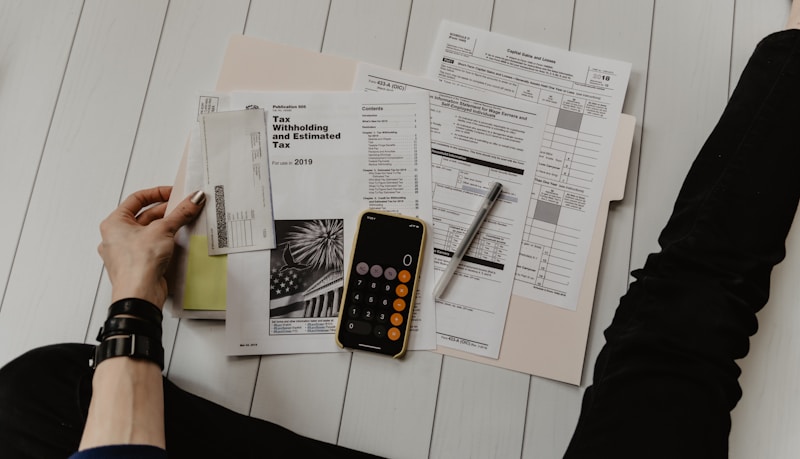
Clear payment terms in writing are the single biggest predictor of getting paid on time.
⚖️ AI Contract Generator for Small Business vs Hiring a Lawyer
| Factor | AI contract generator | Hiring a lawyer |
|---|---|---|
| Cost | $15–$49/month, unlimited contracts | $500–$2,000 per template |
| Speed | Minutes to a first draft | Days to weeks |
| Best for | Standard client agreements | High-value, unusual, or risky deals |
| E-signature | Built in | Usually a separate tool |
| Risk | Generic clauses may miss local rules | Tailored advice, higher cost |
| Updates | Templates update automatically | Pay again for every revision |
The smart approach is both: use an AI contract generator for small business for your everyday agreements, and have a local lawyer review your master template once a year. That single review typically costs a few hundred dollars and covers every contract you send for the next twelve months. Save the lawyer for deals above your comfort threshold — a six-figure project, an unusual liability clause, or anything involving intellectual property you cannot afford to lose.
⚠️ 7 Mistakes to Avoid With AI-Generated Contracts
- Sending the first draft untouched. AI fills gaps with guesses. Always check names, amounts, dates, and scope before sending.
- Skipping the late-fee clause. A contract without a late fee is a polite request, not a payment term. Add one — 1.5% per month is standard.
- Leaving scope vague. “Website redesign” invites endless revisions. List deliverables, revision rounds, and what costs extra.
- Forgetting intellectual property. State who owns the work and when ownership transfers — usually on final payment.
- No termination clause. Every contract needs a clean exit: notice period, payment for work done, and handover terms.
- Using a template from another country. Contract law differs by jurisdiction. Pick templates written for your country and have a local lawyer review your master.
- Storing signed contracts in email. Use the tool’s repository. When a dispute arrives two years later, you will find the contract in seconds instead of searching an inbox.
One more thing worth building alongside your contract system: a matching invoice workflow. Pairing your new contracts with an AI invoice generator for small business — covered in our guide at AI Invoice Generator for Small Business: Get Paid Faster — means the invoice goes out the moment the contract is signed, with the same payment terms already agreed.
❓ Frequently Asked Questions
Are AI-generated contracts legally binding?
Yes, if they contain the elements of a valid contract — offer, acceptance, consideration, and the intent to create legal relations — and are signed by both parties. An AI contract generator for small business produces the document; the signatures make it binding. For high-value or unusual deals, have a lawyer review it first.
How much does an AI contract generator cost?
Most tools cost $15–$49 per user per month, with free tiers from Juro and free drafting from ChatGPT or Claude. Compared with $500–$2,000 for a single lawyer-drafted template, most small businesses recover the cost with their first contract.
Can clients sign AI-generated contracts on their phone?
Yes. Every tool in this guide includes legally recognized e-signatures that work on mobile. Clients tap a link, review the contract, and sign with a finger or typed name — no printing required.
Do I still need a lawyer if I use an AI contract generator?
For standard client agreements, a lawyer-reviewed master template is enough for most small businesses. Use a lawyer for high-value deals, unusual liability, or anything involving intellectual property you cannot afford to lose.
What should every small business contract include?
At minimum: scope of work, total fee and payment schedule, late-fee terms, revision limits, intellectual property ownership, confidentiality, and a termination clause. An AI contract generator for small business includes all of these by default — check that each one is filled in correctly for your deal.
Which AI contract generator for small business is best for freelancers?
HoneyBook and PandaDoc lead for freelancers: both combine drafting, e-signature, and payment collection in one flow. If budget is the priority, start with Contractbook at $15 a month or a free chatbot draft signed through DocuSign.
Sources
Tool pricing and features were checked against vendor pages in November 2026, including PandaDoc and DocuSign. E-signature legality reflects the US ESIGN Act and the EU eIDAS regulation. For the broader picture of how AI tools fit a small business, start with our pillar guide AI Tools for Small Business: The Complete 2026 Guide and our AI business plan generator guide for planning the work your contracts will protect.