
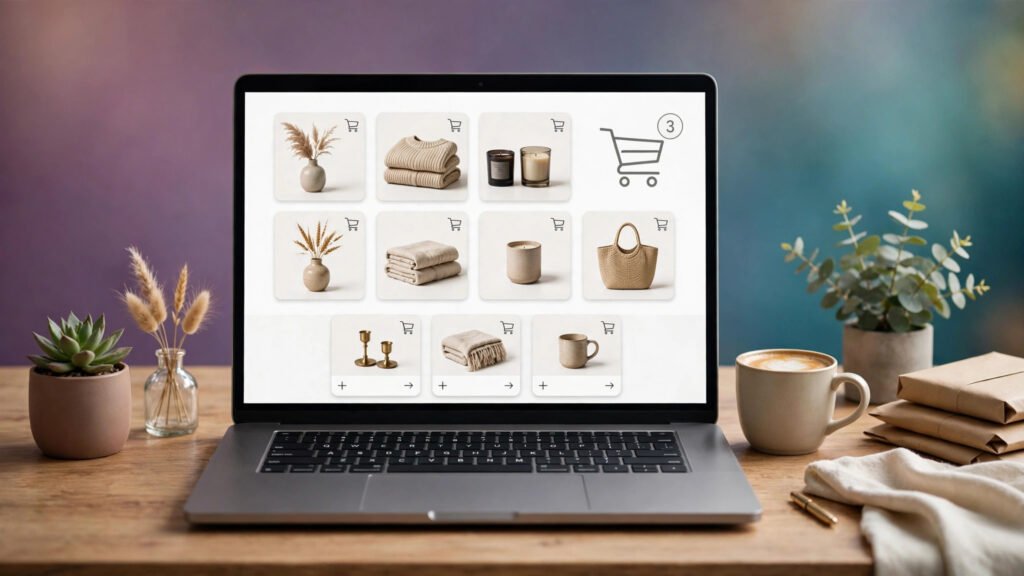
AI product recommendations for small stores are no longer a luxury reserved for Amazon-scale retailers. In 2026, affordable AI-powered product suggestion tools have put personalized recommendations within reach of any independent online store — and the payoff is real: stores that add intelligent recommendations typically see a 10–30% lift in average order value and a measurable jump in repeat purchases — exactly what AI product recommendations for small stores are built to deliver. This guide compares the best tools for a tight budget, walks through a Shopify setup step by step, and shows exactly where to place recommendations for maximum revenue.
Table of Contents
- What AI Product Recommendations Do for Small Stores
- Why Small Stores Can’t Afford to Skip Personalization
- How AI Product Recommendation Engines Work
- The 6 Best AI Recommendation Tools for Small Stores in 2026
- Real Numbers: A Mini Case Study
- Step-by-Step: Setting Up AI Recommendations on Shopify
- Where to Place Recommendations for Maximum Lift
- What AI Product Recommendations Cost Small Stores in 2026
- Common Mistakes to Avoid
- Key Takeaways
- Frequently Asked Questions
Personalized recommendations help small online stores compete with retail giants.
🛍️ What AI Product Recommendations Do for Small Stores
Every time you see “Customers also bought” or “You may also like” on a product page, that is a product recommendation engine at work. The difference between a generic rule (always show the same three accessories) and AI product recommendations for small stores is that AI watches actual shopper behavior — what people click, view, add to cart, and buy — and learns which products genuinely belong together for each customer segment.
For a small store, that personalization is a competitive weapon. You cannot outspend a marketplace on advertising, but you can out-personalize one on your own site. Modern AI product recommendations for small stores connect to Shopify, WooCommerce, BigCommerce, or Wix in minutes and start learning from your catalog immediately, even with only a few hundred visitors a day.
AI product recommendations for small stores typically deliver three concrete outcomes:
- Higher average order value (AOV): complementary suggestions nudge shoppers to add one more item — the single most profitable thing a small store can do without new traffic.
- Better conversion rates: showing the right product removes decision fatigue. A visitor who sees “this matches what you viewed” converts more often than one scrolling a static catalog.
- More repeat purchases: post-purchase recommendations turn one-time buyers into repeat customers.
📈 Why Small Stores Can’t Afford to Skip Personalization
Consider the math for a typical small store doing $8,000/month with a $42 average order. Adding recommendations that lift AOV by 12% and conversion by 8% takes monthly revenue to roughly $9,660 — nearly $20,000 a year in extra revenue from the traffic you already have. Most AI recommendation tools cost $20–$80/month at this scale. The ROI math is not close.
Industry data backs this up: shoppers shown relevant recommendations consistently spend more per session, and relevance is the top driver of purchase decisions on product pages. For small stores on thin ad budgets, squeezing more revenue from existing visitors is the cheapest growth channel available — and AI pricing tools for e-commerce stores paired with recommendations compound the effect by optimizing both what you show and what you charge.
As detailed in our complete guide to AI tools for small business, capabilities that once needed a data-science team are now plug-and-play apps — and recommendations are one of the highest-ROI entries on the list.
⚙️ How AI Product Recommendation Engines Work
You do not need to understand machine learning to use these tools, but a one-minute mental model helps you configure them well. An AI product recommendation engine combines three signals:
- Collaborative filtering — “people like you also bought.” The algorithm finds shoppers whose behavior resembles the current visitor’s and suggests what those lookalikes purchased. Even a modest order history makes recommendations smarter over time.
- Content-based filtering — “this is similar to what you’re viewing.” The engine compares product attributes: category, tags, price band, material, color. A visitor on a ceramic pour-over dripper sees other ceramic brewing gear, not random mugs.
- Real-time behavioral signals. Modern tools weight the current session heavily: recent views, cart adds, traffic source. This is what makes AI product recommendations for small stores feel “alive” rather than canned.
The engine scores candidate products against these signals and renders the top picks into widgets you place on your site: product-page carousels, cart drawers, checkout upsells, and post-purchase emails. Most tools also run automatic A/B tests so you can see the actual revenue lift.
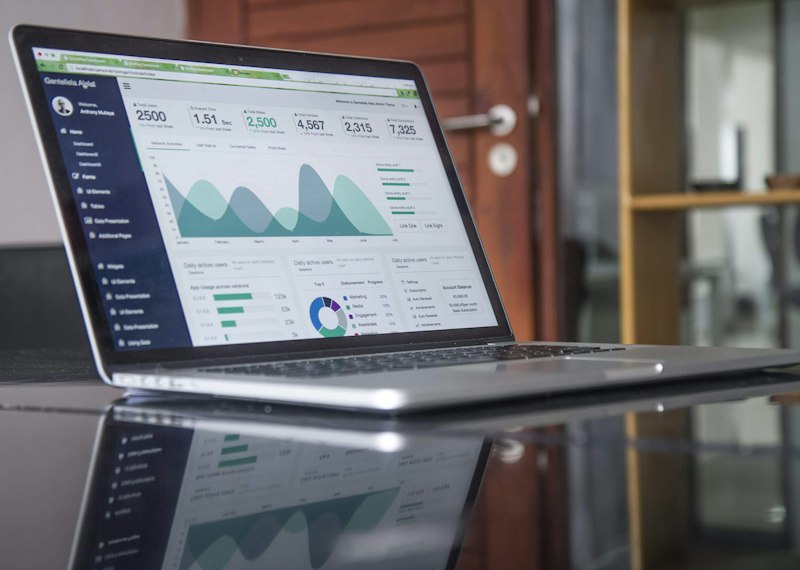
Recommendation analytics show the direct revenue lift of AI-powered product suggestions.
🏆 The 6 Best AI Recommendation Tools for Small Stores in 2026
Not every app offering AI product recommendations for small stores suits a small catalog and a small budget. These six are proven with stores under 5,000 SKUs, with transparent pricing and no enterprise sales calls. Comparison table first, details below:
| Tool | Best for | Starting price (2026) | Key strength |
|---|---|---|---|
| Nosto | Shopify/BigCommerce growth stores | ~$99/mo | Full personalization suite: recommendations + popups + email |
| Rebuy | Shopify upsell-focused stores | Free plan; paid from ~$99/mo | Smart cart + post-purchase one-click upsells |
| LimeSpot | Budget-conscious Shopify stores | ~$18/mo | 15+ widget types; strong free-ish tier for small catalogs |
| Wiser | WooCommerce stores | ~$9/mo | Deep WooCommerce integration; frequently-bought-together bundles |
| Klaviyo | Email-first personalization | Free to ~$45/mo | AI recommendations inside emails & SMS, not just on-site |
| Also Bought (Code Black Belt) | Smallest stores, minimal budget | ~$9.99/mo flat | Simple, reliable cross-sells; no AI complexity overhead |
1. Nosto is the closest thing to an enterprise personalization suite at small-business pricing. If your store does $20k+/month, segmented campaigns (different recommendations for new vs. returning visitors) justify the cost quickly.
2. Rebuy owns the post-purchase moment. Its one-click post-purchase upsell — “add this to your order before it ships” — converts at 3–5% for many small stores, often their single highest-converting placement.
3. LimeSpot is the budget sweet spot for AI product recommendations for small stores just starting out. Fifteen widget types cover product pages, carts, collections, and search, and the AI learns your catalog automatically.
4. Wiser is built for WooCommerce. If you run WordPress + WooCommerce, its frequently-bought-together bundles and related-product widgets install without touching code.
5. Klaviyo extends recommendations beyond the site. Its product-feed AI inserts personalized picks into abandoned-cart and post-purchase emails — critical, because email drives a disproportionate share of revenue for small stores.
6. Also Bought is for stores that want cross-sells working this afternoon. Not the smartest AI on this list, but at a flat ~$9.99/month it pays for itself with one extra sale a month.
If you want a broader tour of what AI can do across your operation, the step-by-step AI tool guides at AIToolSteps walk through popular business AI tools with screenshots — a handy companion while you evaluate options.
📊 Real Numbers: A Mini Case Study
The store: “GlowPure,” a fictional-but-typical small skincare store on Shopify — 120 SKUs, ~6,000 monthly visitors, $11,200/month revenue, 2.4% conversion rate, $52 average order value.
What they did: In January 2026, GlowPure installed an app for AI product recommendations for small stores ($18/month) and added three placements: a “Complete your routine” carousel on product pages, a smart cross-sell in the cart drawer, and a post-purchase one-click upsell for a travel-size set.
What happened over 90 days:
- Average order value rose from $52 to $61 (a 17% lift) as routine bundles sold as sets.
- The post-purchase upsell converted at 4.1%, adding roughly $340/month in near-pure-margin revenue.
- Monthly revenue climbed to $12,900 (+$1,700) while traffic stayed flat.
- Total cost: $54 for the app over the period. Net gain: roughly $5,000.
Nothing exotic happened here. The AI simply noticed that buyers of the vitamin C serum also bought the matching moisturizer 38% of the time — a pattern the owner had never spotted — and started suggesting the pair. That is the entire promise of AI product recommendations for small stores: finding the money your catalog is already hiding.
🧰 Step-by-Step: Setting Up AI Recommendations on Shopify
Here is a complete walkthrough you can finish in under an hour:
- Pick your tool. Start with LimeSpot or Rebuy’s low tier. Install from the Shopify App Store and grant catalog + order-history access.
- Let the AI index your catalog. The app scans products, tags, and collections automatically — give it 24–48 hours on a live store, or import past orders to speed up learning.
- Add the product-page carousel. In the app’s visual editor, enable “Related products” with “AI-powered” logic, capped at 4–8 items so the page stays fast.
- Enable the cart-drawer cross-sell. Turn on “Frequently bought together” in the cart — consistently the highest-lift on-site placement.
- Activate the post-purchase upsell. Create one offer — a small complementary item under 30% of your AOV — shown after checkout with one click to add.
- Exclude what should never be suggested. Gift cards, out-of-stock items, and loss leaders don’t belong in widgets. Use the app’s exclusion list.
- Turn on analytics and the A/B test. Split traffic 90/10 for two weeks and judge by revenue per visitor, not clicks.
WooCommerce stores follow the same logic with Wiser: install the plugin, enable the widget positions, and connect your product feed. The principles behind AI product recommendations for small stores — AI logic, cart placement, post-purchase offer, exclusion list, measured test — are platform-independent.
🎯 Where to Place Recommendations for Maximum Lift
With AI product recommendations for small stores, placement matters more than the algorithm. Ranked by typical revenue impact:
- Post-purchase one-click upsell. The buyer has already trusted you with their card. One complementary item here converts at 3–5%.
- Cart drawer / cart page cross-sell. “Frequently bought together” lifts AOV directly — the shopper is already in buying mode.
- Product-page carousel. “Complete the look” under the add-to-cart button. High visibility, moderate lift.
- Abandoned-cart email recommendations. Personalized picks in the recovery email outperform generic reminders — pair this with the tactics in our e-commerce personalization strategy guide.
- Homepage “trending now” sections. Useful for returning visitors; weakest for cold traffic.
Avoid clutter: more than two recommendation widgets per page dilutes attention and slows load times. One strong placement beats three weak ones.

Smart cart cross-sells are among the highest-converting recommendation placements.
💰 What AI Product Recommendations Cost Small Stores in 2026
Realistic budgets for AI product recommendations for small stores, by store size:
- Under $5k/month revenue: $10–$25/month (LimeSpot, Also Bought, Wiser). Free tiers exist but usually cap widget views or SKUs.
- $5k–$25k/month: $25–$100/month. This is the sweet spot where Rebuy’s smart cart or Nosto’s segmentation start paying for themselves many times over.
- $25k+/month: $100–$300/month for full personalization suites with email + on-site + analytics.
Watch usage-based pricing: some tools charge by recommendation views or monthly orders, so prefer flat-rate plans while you are small.
⚠️ Common Mistakes to Avoid
- Judging by clicks instead of revenue. Measure revenue per visitor in an A/B test, not click rate.
- Recommending out-of-stock items. Set the app to hide unavailable products automatically.
- Showing the same items everywhere. Use different logic per placement so shoppers don’t tune out.
- Ignoring mobile layout. Over 70% of small-store traffic is mobile — test every widget on a real phone.
- Setting and forgetting. Re-tune logic seasonally; an engine trained on summer stock will embarrass you in December.
✅ Key Takeaways
- AI product recommendations for small stores typically lift average order value 10–30% — the cheapest growth channel for traffic-constrained shops.
- Start with three placements: post-purchase upsell, cart cross-sell, and a product-page carousel.
- Budget tools ($10–$25/month) work fine under $5k/month revenue; upgrade to Nosto or Rebuy as you scale.
- Always run an A/B test and judge by revenue per visitor, not clicks.
- Keep widgets to two per page maximum, hide out-of-stock items, and test everything on mobile.
❓ Frequently Asked Questions
Do AI product recommendations work for stores with low traffic?
Yes — that is exactly the use case for AI product recommendations for small stores. Content-based filtering (matching by product attributes) works from day one with zero order history, and the AI gets smarter as orders accumulate. Even 200–300 monthly visitors is enough to see a measurable AOV lift within weeks.
Will recommendation widgets slow down my store?
Modern apps load recommendations asynchronously, so they do not block the initial page render. Keep widgets to two per page, use lazy loading, and monitor Core Web Vitals after installation.
Shopify or WooCommerce — which is easier for AI recommendations?
Both are easy. Shopify has the deeper app ecosystem (Rebuy, LimeSpot, Nosto install in one click). WooCommerce stores get excellent native options like Wiser. Choose based on your platform, not the recommendation tool.
How long before I see results from AI product recommendations?
Most stores using AI product recommendations for small stores see the first measurable lift within 2–4 weeks as the AI learns from live sessions. Run the A/B test for at least two full weeks (or 1,000+ sessions per variant) before judging, and expect the lift to compound as the model trains on more data.
Can AI recommendations replace manual cross-sells?
Not entirely. Use AI for scale — it tests thousands of combinations you never would — but keep manual control for hero bundles and seasonal campaigns. The best setups combine both.
Sources: Shopify App Store listing data and vendor pricing pages (checked November 2026); Baymard Institute cart-abandonment benchmarks; Digital 365 Agency’s internal e-commerce testing notes.