
AI rank tracking for small business is quietly becoming the highest-ROI SEO habit of 2026. While big companies pay thousands of dollars a month for enterprise rank monitoring suites, AI has put automated position tracking, volatility alerts, and competitor movement detection within reach of any small business — for the price of a coffee a month. If you’ve ever wondered “Am I actually ranking, or just hoping?”, this guide answers it: which tools to use, a one-afternoon setup, and how to turn the data into traffic that pays.
In this guide: why manual checks lie, what makes AI rank tracking for small business different, the 7 best tools of 2026, a one-afternoon setup, a comparison table, and a 20-minute weekly routine. Let’s dive in.
📋 Table of Contents
- Why Tracking Your Rankings Matters More Than Ever
- Why Manual Google Searches Lie to You
- AI Rank Tracking for Small Business: What It Is (and Isn’t)
- The One-Afternoon Setup: A Step-by-Step Walkthrough
- AI Rank Tracking for Small Business: 7 Best Tools in 2026
- Head-to-Head Comparison Table
- AI Rank Tracking for Small Business: Turning Data Into Traffic
- AI Rank Tracking for Small Business: 5 Costly Mistakes
- AI Rank Tracking for Small Business: 20-Minute Weekly Routine
- Key Takeaways
- Frequently Asked Questions
🎯 Why Tracking Your Rankings Matters More Than Ever
Here is an uncomfortable truth: you cannot improve what you do not measure. According to Ahrefs’ 2026 SEO statistics roundup, organic search remains the dominant traffic channel for most websites — yet most small businesses publish content and then guess whether it works. AI rank tracking for small business changes that equation by showing you, keyword by keyword, exactly where your site sits on Google every single day.
And 2026 made this urgent: AI Overviews intercept a growing share of queries and positions swing faster than ever, so position data is your early-warning radar — a slip from 4 to 9 is fixable this week if you see it. The good news: you no longer need an SEO analyst. Modern trackers collect the data, explain what moved and why, and recommend the next action — in plain language. If you can read a weather forecast, you can run AI rank tracking for small business.
🔍 Why Manual Google Searches Lie to You
Most owners “check rankings” by typing a keyword into Google. Here’s why that number is fiction:
- Personalization: Google tailors results to your history and device — you see your own site more than strangers do.
- Location bias: A search from your office shows different local results than one from another city.
- No history: A manual check can’t tell you whether you fell from position 3 to 11 last month.
- Scale: You can track 5 keywords by hand; a real campaign tracks 50–500. Incognito tabs don’t scale.
AI rank tracking for small business solves all four at once: clean consistent locations, a daily history, and automatic scale to hundreds of keywords — no incognito gymnastics required.
🤖 AI Rank Tracking for Small Business: What It Actually Is (and Isn’t)
Rank tracking means recording where your pages appear on Google for your keywords, every day. Traditional trackers have done this for 15 years; AI adds interpretation and automation:
- Anomaly detection: Instead of you scanning 200 rows, the AI flags the handful of keywords that moved unusually — and which pages to check first.
- SERP feature tracking: AI trackers monitor your presence in AI Overviews, featured snippets, image packs, and local map packs — not just blue links.
- Plain-language explanations: “Your keyword dropped 4 positions on Tuesday — a competitor published a longer guide the same day.” That is actionable.
- Forecasting: Some tools project where a keyword is trending — handy for prioritizing content refreshes.
No AI rank tracking for small business solution can guarantee rankings, and none replaces fixing thin content. Think of it as a fitness tracker for your SEO — it shows the numbers; you still do the workout. In short, AI rank tracking for small business is measurement plus interpretation plus action: the three things that turn SEO from a cost center into a growth engine. Pair it with a broader AI strategy for your business, like the one laid out in our complete guide to AI tools for small business, and the data starts compounding.
🛠️ The One-Afternoon Setup: A Step-by-Step Walkthrough
The original walkthrough I give every small business client. About 90 minutes, done once — then the tool runs itself.
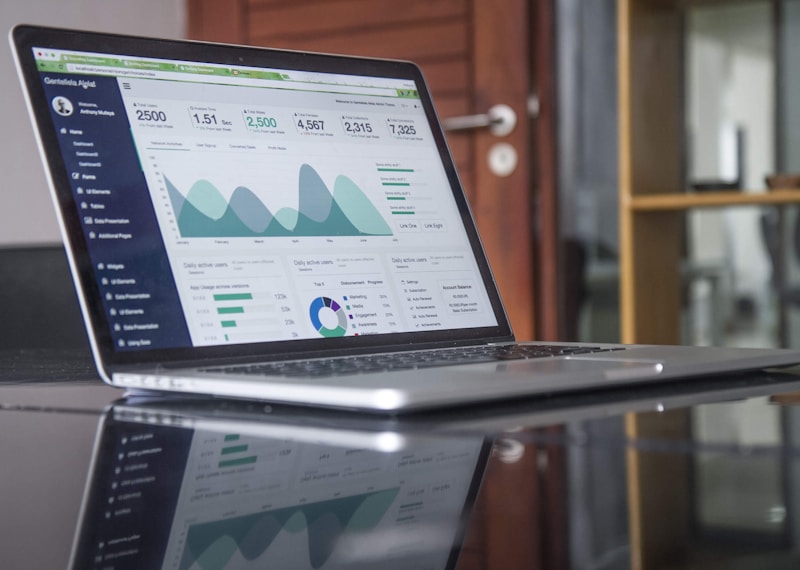
Step 1: Connect your site (10 minutes)
Sign up for a tracker (start free), add your domain, and connect Google Search Console to cross-check against Google’s own data.
Step 2: Build your keyword list (30 minutes)
Aim for 50–150 keywords in three buckets:
- Money keywords (10–20): buyer terms — “accounting software for freelancers”, “plumber near me price”.
- Content keywords (30–80): your blog topics, mapped to specific posts. Read our AI keyword clustering guide first — clustered keywords are ten times easier to interpret.
- Brand keywords (5–10): your business name and misspellings. A drop here signals a reputation problem, not an SEO one.
Step 3: Set locations and devices (10 minutes)
Add every location you serve and track both mobile and desktop — results still diverge for roughly 1 in 5 commercial queries.
Step 4: Add 3–5 competitors (10 minutes)
Add the competitors you actually lose customers to — when one leapfrogs you, the tracker alerts you with the exact keyword.
Step 5: Configure alerts and reports (15 minutes)
Turn on weekly email summaries and alert only on: keywords entering the top 3, leaving the top 10, and competitors overtaking you on money keywords. Silence the rest — alert fatigue kills the habit.
Step 6: Record your baseline (15 minutes)
Export the first report as your “before” photo. In 90 days you’ll compare against it — proof your SEO investment works.
💡 Pro tip: Do this on a Friday afternoon — by Monday you’ll have your first full weekend of data, and that Monday alert becomes your most useful email of the week.
🏆 AI Rank Tracking for Small Business: 7 Best Tools in 2026
I judged the tools on five criteria: under $50/month, AI insight quality, local tracking accuracy, SERP feature coverage, and ease of setup. Every tool below supports AI rank tracking for small business out of the box — no enterprise contract required. Here are the standouts:
1. Nightwatch — the small-business sweet spot
Nightwatch pairs daily tracking with AI annotations that auto-correlate position changes with algorithm updates. ~$32/month for 250 keywords. Best for: one affordable dashboard.
2. AccuRanker — the speed champion
AccuRanker refreshes any keyword on demand — no waiting for tomorrow’s crawl — and its AI explains why positions moved. Best for: before-and-after publishing checks.
3. SERPWatcher by Mangools — the beginner-friendly pick
Part of Mangools’ SEO suite (~$30/month); its Dominance Index distills hundreds of keywords into one plain-English health score. Best for: beginners wanting tracking bundled with keyword research.
4. SE Ranking — the best value all-rounder
One subscription (~$44/month, 500 keywords) covers tracking, content briefs, and audits, with excellent local tracking and best-in-class AI Overview visibility at this price. Best for: local businesses wanting an all-in-one toolkit.
5. Wincher — the budget starter
Daily tracking from ~$24/month with a simple interface and solid competitor tracking. Lighter AI suggestions, unbeatable price. Best for: tight budgets under 500 keywords.
6. Ahrefs Rank Tracker — the data-depth option
Draws on the industry’s largest backlink and content database for AI-powered change explanations. ~$129/month entry. Best for: Ahrefs users or competitive niches.
7. AgencyAnalytics — the reporting machine
AI summaries turn raw rank data into client-ready narratives automatically. Best for: agencies and freelancers whose monthly reports should write themselves.
For deeper dives into each platform’s full SEO stack, step-by-step AI tool guides walk through setup workflows — so you can pick the stack that fits your budget before committing.
📊 Head-to-Head Comparison Table
Prices are starting tiers as of late 2026 — verify on each vendor’s site.
| Tool | Starting Price | Keywords | AI Insights | AI Overview Tracking | Best For |
|---|---|---|---|---|---|
| Nightwatch | ~$32/mo | 250 | ★★★★☆ | Yes | Affordable all-rounder |
| AccuRanker | ~$39/mo | 1,000 | ★★★★☆ | Yes | On-demand refreshes |
| SERPWatcher | ~$30/mo | 200 | ★★★☆☆ | Limited | Beginners |
| SE Ranking | ~$44/mo | 500 | ★★★★☆ | Yes | Local businesses |
| Wincher | ~$24/mo | 500 | ★★★☆☆ | Limited | Tight budgets |
| Ahrefs | ~$129/mo | 750 | ★★★★★ | Yes | Data depth |
| AgencyAnalytics | ~$79/mo | 1,000 | ★★★★☆ | Yes | Client reporting |
The verdict: Start with SE Ranking or Nightwatch — AI-grade insight, local tracking, and AI Overview monitoring under $50/month.
📈 AI Rank Tracking for Small Business: Turning Data Into Traffic
Here is the decision framework the AI alerts feed into:
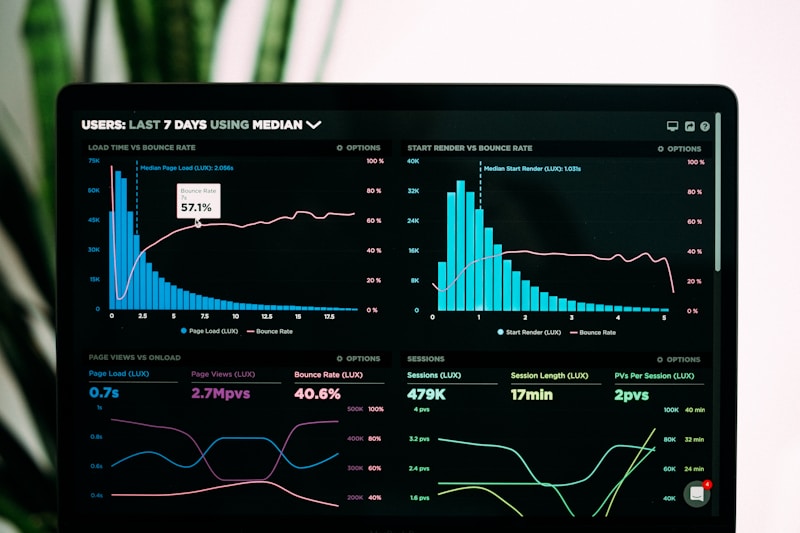
- Position 11–20 (“striking distance”): Highest-ROI target — one refresh from page one. Add 300–500 words, update year references, add an FAQ. Pair with a content gap analysis to find missing subtopics.
- Position 4–10 (page one, low): Boost click-through rate: rewrite the title and meta description, add schema, earn 2–3 quality backlinks. Small CTR gains multiply on large impression volumes.
- Position 1–3 (winning): Defend. If a competitor publishes a competing guide, refresh yours within two weeks. Rankings are rented, not owned.
- Falling fast (down 5+ in a week): Check technical issues first — noindex tags, broken pages, speed crashes. Algorithm-update annotations save hours of guesswork.
- New keywords in top 100: Google is testing your page for untargeted terms — free content ideas. Write a section or a new article for them.
The pattern: the tracker tells you where, the AI tells you why, this framework tells you what next. Businesses running this loop weekly outperform businesses publishing blindly.
⚠️ AI Rank Tracking for Small Business: 5 Costly Mistakes
- Tracking too few keywords. Ten keywords is a sample, not a campaign — track 50+ before judging the tool.
- Ignoring mobile. If 70% of your traffic is mobile but you track desktop rankings, you’re optimizing for the minority.
- Checking daily but acting never. Data without decisions is decoration — commit to the weekly routine below.
- Obsessing over one keyword. Vanity keywords swing for weeks. Judge by portfolio movement — the share of keywords in the top 10 — not one trophy term.
- Forgetting SERP features. “Position 3” with an AI Overview above you gets fewer clicks than “position 5” without one. Track feature presence, not just the number.
⏱️ AI Rank Tracking for Small Business: 20-Minute Weekly Routine
Block 20 minutes every Monday — same coffee, same checklist:
- Minutes 0–5: Open the weekly summary. Note keywords entering the top 3 (celebrate), leaving the top 10 (investigate), and competitor overtake alerts.
- Minutes 5–12: For each problem keyword, read the AI explanation and tag it: content gap, freshness issue, technical problem, or competitor move.
- Minutes 12–18: Pick ONE weekly action — the highest-traffic keyword closest to page one. Refresh it, or brief your writer.
- Minutes 18–20: Log date, keyword, action, and position-before in a spreadsheet. Review monthly — this turns “we do SEO” into “our SEO moved revenue.”

✅ Key Takeaways
- AI rank tracking for small business replaces guesswork with daily, location-accurate position data — plus AI that explains what moved and why.
- Set up once in ~90 minutes: connect Search Console, add 50–150 keywords, add competitors, configure alerts, record your baseline.
- For most small businesses, SE Ranking or Nightwatch deliver AI-grade insight under $50/month.
- The money is in positions 11–20: refreshing “striking distance” pages is 2026’s highest-ROI SEO activity.
- Run the 20-minute Monday routine — data without decisions is decoration.
❓ Frequently Asked Questions
Is AI rank tracking for small business worth it for a tiny website?
Yes — arguably more than for big sites: with 5–50 pages every movement is meaningful, and a $24–$44/month tool pays for itself with one new customer.
How does AI rank tracking for small business differ from Google Search Console?
Search Console shows average positions with a 2-day delay and zero competitor data. AI rank tracking for small business gives you daily location-specific positions, competitor comparisons, SERP feature tracking, and AI-written explanations of changes. Use both: Search Console for ground truth, the tracker for daily intelligence.
Can rank tracking hurt my SEO or get me penalized?
No. Trackers query Google from their own servers and never touch your site, so tracking is 100% safe. Avoid tools promising to “boost rankings automatically” — a different, dangerous category.
How often should rankings be checked?
Daily collection, weekly review. Daily data gives precise before-and-after measurements — but checking the dashboard daily breeds overreaction. Collect daily; act weekly.
Does rank tracking help with AI Overviews and voice search?
Modern AI rank tracking for small business platforms monitor your presence inside Google’s AI Overviews — a 2026 visibility metric Search Console doesn’t report. Nightwatch, SE Ranking, AccuRanker, and Ahrefs all track it.
Sources: Google Search Central documentation; vendor pricing pages for Nightwatch, AccuRanker, Mangools, SE Ranking, Wincher, Ahrefs, and AgencyAnalytics (checked October 2026). Pricing and features change — verify before purchasing.