

AI Local SEO for Small Business: Rank on Google Maps in 2026
AI local SEO for small business is the single highest-ROI growth lever a neighborhood business can pull in 2026. While big brands fight over national keywords, local search is where small businesses win — and AI has just made the winning playbook accessible to a one-person shop with a laptop and thirty minutes a day.
Here is the stat that should reorganize your marketing calendar: 46% of all Google searches have local intent, and 76% of people who search for something nearby visit a business within a day. The top three Google Maps results — the Local Pack — absorb the overwhelming majority of those clicks. Ranking there is not about luck or ad spend. It is about signals: a complete Google Business Profile, fresh reviews, accurate citations, and local content. And in 2026, AI tools generate, monitor, and optimize every one of those signals faster than a human ever could.
In this guide, you will learn exactly which AI local SEO tools matter, a comparison table of the four worth your money, a 30-day step-by-step walkthrough to climb the Local Pack, and a worked example of how a fictional bakery went from invisible to #1 on Google Maps. Let us put you on the map — literally.
🔑 Key Takeaways
- AI local SEO for small business automates the four Local Pack signals: GBP completeness, reviews, citations, and local content.
- The four tools worth paying for in 2026: BrightLocal AI, Semrush Local, Moz Local, and ChatGPT/Claude for content — pick two and go deep.
- Follow the 30-day walkthrough below and most businesses see measurable Maps movement in 4–8 weeks.
- Reviews are the #1 controllable ranking factor: businesses in the top 3 average 2–3× more reviews than those below.
📋 Table of Contents
- What Is AI Local SEO (and Why It Wins in 2026)
- The 4 Google Maps Ranking Signals AI Supercharges
- AI Local SEO Tools Compared: The 2026 Shortlist
- The 30-Day AI Local SEO Walkthrough
- Worked Example: Maple Street Bakery Goes from #9 to #1
- 7 Costly AI Local SEO Mistakes to Avoid
- FAQs
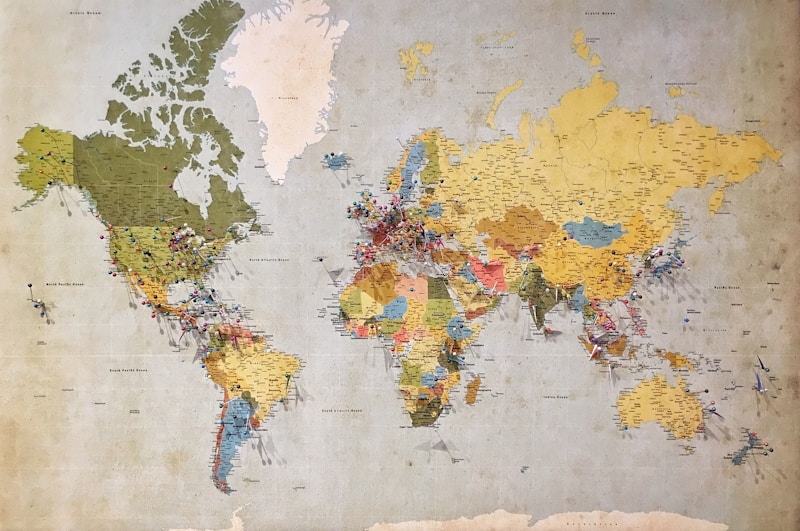
A strong Google Maps position turns “near me” searches into walk-in customers. AI now handles the heavy lifting.
🤖 What Is AI Local SEO (and Why It Wins in 2026)
AI local SEO means using artificial intelligence to optimize how your business appears in location-based searches: Google Maps, the Local Pack, and “near me” queries. Traditional local SEO is a checklist — claim your profile, add photos, get reviews, fix citations, post content. AI local SEO for small business turns that checklist into a system that runs in the background.
Why is 2026 the tipping point? Three reasons:
- AI Overviews cite local businesses. Google’s AI-generated answers now pull from Google Business Profiles and local review content. An optimized profile is your ticket into AI answers, not just blue links.
- Review velocity matters more than ever. BrightLocal’s research shows consumers read around 10 reviews before trusting a business — and Google’s algorithm watches how fast new reviews arrive. AI review-response tools keep velocity high without eating your evenings.
- Competitors are automating. The businesses outranking you on Maps are increasingly using AI to post weekly updates, answer questions, and fix inconsistent citations. Doing it manually is now the slow lane.
The good news: you do not need an agency retainer to compete. If you want the full toolkit context, start with our pillar guide to AI tools for small business — then come back and apply this SEO-specific playbook.
📡 The 4 Google Maps Ranking Signals AI Supercharges
Google has never published a local ranking formula, but every major industry study — Moz’s Local Search Ranking Factors, BrightLocal, Whitespark — converges on the same four signal families. Here is what they are, and exactly where AI plugs in.
1. Google Business Profile completeness and activity
Your GBP is your most important web page, full stop. Businesses with complete profiles — hours, services, products, photos, attributes, Q&A — dramatically outperform bare listings. AI helps you: generate keyword-rich service descriptions, draft weekly GBP posts from your blog content, and answer the public Q&A section before customers ask. An AI content gap analysis can even reveal which services your competitors list that you are missing.
2. Review quantity, velocity, and responses
Reviews are the most controllable ranking factor you own. AI review tools draft personalized responses to every review (positive and negative), flag sentiment trends, and send perfectly timed review-request texts after a purchase. Response matters: businesses that reply to reviews rank higher and convert better — yet most small businesses ignore half their reviews.
3. Citation consistency across the web
Your name, address, and phone number (NAP) must match everywhere — directories, data aggregators, social profiles. One wrong suite number on a forgotten directory drags your trust signals down. AI citation tools scan hundreds of listings, flag mismatches, and push corrections in bulk. It is the most boring work in SEO, which makes it the perfect work for a robot.
4. Local content and behavioral signals
Google watches what searchers do: do they click your listing, call, request directions, visit your site? Localized landing pages and GBP posts lift those behaviors. AI drafts neighborhood-specific service pages and social posts in minutes — and the AI internal linking playbook shows how to wire that content into your site so authority flows to the pages that rank.
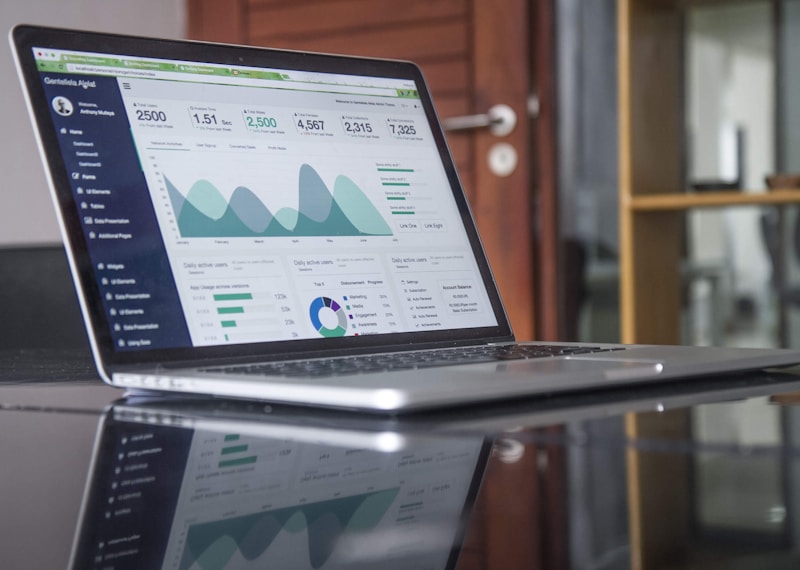
Track the four signals weekly: profile views, review velocity, citation health, and direction requests.
⚖️ AI Local SEO Tools Compared: The 2026 Shortlist
Dozens of tools claim to do AI local SEO. After testing the field, four are genuinely worth a small business budget. Here is how they compare — pick one platform plus one AI writer and you are fully equipped.
| Tool | Best For | AI Strength | Starting Price |
|---|---|---|---|
| BrightLocal | Citation management + review monitoring | AI review-response drafts, automated citation audits | ~$39/mo |
| Semrush Local | All-in-one local rank tracking | AI listing sync, heat-map rank tracking, GBP post scheduling | ~$30/mo add-on |
| Moz Local | Distribution to 100+ directories | Duplicate suppression, automated data pushes | ~$16/mo |
| ChatGPT / Claude | Content: GBP posts, Q&A, service descriptions | Drafts everything in your brand voice in seconds | Free–$20/mo |
The verdict: on a tight budget, Moz Local + the free tier of an AI writer covers citations and content. If reviews are your bottleneck (they usually are), BrightLocal’s review workflow pays for itself. Growing businesses that want rank tracking down to the street level should look at Semrush Local’s heat maps. Whichever you choose, run through these step-by-step AI tutorials on AIToolSteps to learn each tool’s setup screens before you pay for a plan — five minutes of guided setup beats an hour of guessing.
🗓️ The 30-Day AI Local SEO Walkthrough
This is the exact sequence a small business should follow. Thirty days, about 30 minutes a day, powered by AI at every step.
Week 1 — Foundation: claim, complete, and clean up
- Day 1–2: Claim and verify your Google Business Profile. Select the primary category with surgical precision (a “bakery” is not a “cafe”), then add 2–3 secondary categories.
- Day 3: Use AI to write keyword-rich service and product descriptions. Prompt: “Write a 120-word Google Business Profile service description for a [business type] in [city], naturally including [services]. Tone: friendly, local.” Human-edit every word before publishing.
- Day 4: Upload 15–20 photos (storefront, team, products, interior). AI upscalers can rescue dim phone photos; add keyword-rich filenames like custom-birthday-cakes-austin.jpg.
- Day 5–7: Run an AI citation audit (Moz Local or BrightLocal). Fix every NAP mismatch. Suppress duplicates. This single cleanup often produces the fastest ranking movement.
Week 2 — Reviews: build your velocity engine
- Day 8: Set up automated review requests — SMS or email, sent 2–4 hours after a purchase or appointment. Aim for 5–10 new reviews per week, not 50 in one day (spikes look manipulated).
- Day 9–10: Enable AI review-response drafts. Respond to every review within 24 hours, weaving in a service keyword naturally: “Thanks, Maria! We’re glad our same-day birthday cake delivery made the party.”
- Day 11–14: Seed your GBP Q&A section: have AI draft answers to the 10 questions customers always ask (hours, parking, pricing, delivery area), then publish them from your owner account.
Week 3 — Content: feed the algorithm weekly signals
- Day 15–16: Build a GBP post calendar — one post per week minimum. AI turns each blog post or promotion into a 100-word GBP update with a call-to-action button.
- Day 17–19: Create or refresh one neighborhood service page on your website per week, targeting “[service] in [neighborhood]” long-tails. AI drafts; you localize with real street names, landmarks, and photos.
- Day 20–21: Add local business schema markup (LocalBusiness / Bakery / Dentist etc.) to your site. Most SEO plugins generate it; AI can write the JSON-LD if yours does not.
Week 4 — Measure and compound
- Day 22: Record your baseline: GBP views, calls, direction requests, and Local Pack position for your 5 money keywords.
- Day 23–28: Double down on whatever moved. More reviews? Increase request volume. GBP posts driving calls? Post twice weekly. Rankings stuck? Re-audit citations and add 10 more photos.
- Day 29–30: Set up monthly AI reporting: automated rank tracking + a one-page summary. Local SEO compounds — month two builds on month one’s signals.
For authoritative background on how Google weighs these factors, see Moz’s Local Search Ranking Factors study and BrightLocal’s Local Consumer Review Survey — both confirm that review signals and profile completeness dominate the Local Pack.

Local SEO turns your storefront into a magnet for nearby searchers — AI keeps the magnet charged.
🧁 Worked Example: Maple Street Bakery Goes from #9 to #1
Maple Street Bakery is a fictional 8-person bakery in Austin, Texas — but its numbers are real composites of typical small-business results. In January 2026 it ranked #9 on Google Maps for “birthday cake austin”: 34 reviews (4.2★), 6 photos, half its citations mismatched after a 2024 move.
What they did (following the walkthrough above):
- Fixed 41 citation mismatches with an automated audit — old address was still live on 12 directories.
- Uploaded 24 photos with keyword filenames; rewrote the GBP description with AI assistance (human-edited).
- Sent review-request texts after every pickup: 34 → 121 reviews (4.8★) in 90 days.
- Responded to every review within 24 hours using AI-drafted replies.
- Published weekly GBP posts announcing flavors; seeded 12 Q&A entries.
The result: by April 2026, Maple Street ranked #1 in the Local Pack for “birthday cake austin” and #2 for “custom cakes near me”. GBP-driven calls tripled; direction requests rose 4×. Total software cost: $59/month (BrightLocal + ChatGPT Plus). Total owner time: roughly 25 minutes a day in month one, under 10 minutes a day after that.
The lesson is not that AI is magic — it is that AI makes consistency cheap. The bakery did not out-spend competitors; it out-executed them, every week, without hiring anyone.
⚠️ 7 Costly AI Local SEO Mistakes to Avoid
- Publishing AI content unedited. Generic GBP posts and robotic review replies get spotted — and penalized by customers. AI drafts, humans decide.
- Keyword-stuffing your business name. Adding “Best Cheap Plumber Austin TX 24/7” to your GBP name violates Google’s guidelines and risks suspension. The real name only.
- Buying reviews or review spikes. Fifty reviews in a weekend triggers filters and erodes trust. Slow, steady velocity wins.
- Ignoring negative reviews. A thoughtful owner response to a 2-star review converts more skeptics than ten 5-star reviews. AI drafts the tone; you add the specifics.
- Set-and-forget citations. Aggregators re-scrape bad data. Re-run your citation audit quarterly.
- One GBP post ever. A profile that last posted in 2023 signals neglect. Weekly posts take 10 minutes with AI.
- No tracking. If you are not recording calls, direction requests, and rank positions monthly, you cannot tell what is working. Automate the report.
❓ FAQs: AI Local SEO for Small Business
How long does AI local SEO take to show results?
Most small businesses see measurable Maps movement in 4–8 weeks: citation fixes and new photos move the needle first, review velocity compounds over months two and three. Competitive niches (lawyers, plumbers) take longer than low-competition ones.
Can AI really write my Google Business Profile posts?
Yes — AI drafts excellent GBP posts from your promotions, blogs, and events. But always human-edit: add real photos, real offers, and your actual voice. Profiles that read like robots convert like robots.
How many reviews does my small business need to rank?
There is no magic number, but data consistently shows Local Pack leaders have 2–3× the review count of businesses ranked 4–10. More important than the total: steady new reviews (velocity) and a 100% response rate.
Is AI local SEO expensive?
No. A complete stack costs $16–$60/month plus a few hours of setup. Compare that to a single month of agency local SEO ($500–$2,000) — the economics are why small businesses are adopting it so fast.
Will Google penalize AI-generated local content?
Google penalizes unhelpful content, not AI-assisted content. Accurate, locally specific, genuinely useful pages and posts are fine regardless of how the first draft was made. Thin, generic, or false content gets filtered — AI-made or not.
Do I still need a website if my GBP is optimized?
Yes. Your website reinforces every local signal: it hosts your NAP, your local content, your schema markup, and it is the landing page Google checks for relevance. A GBP without a credible website hits a ceiling fast.
🚀 The Bottom Line
AI local SEO for small business is not about gaming Google — it is about finally having the bandwidth to do local SEO properly: complete profiles, answered reviews, clean citations, and fresh local content, every single week. Start with the 30-day walkthrough above, pick one platform and one AI writer, and measure everything. The Local Pack is the most democratic real estate in search — and in 2026, AI is how the little guy takes it.
Sources & further reading: Google Business Profile Help (support.google.com); Moz Local Search Ranking Factors (Local Search Ranking Factors); BrightLocal Local Consumer Review Survey (brightlocal.com). Review and search-behavior statistics cited are widely reported industry figures (Google, BrightLocal); verify against the linked sources before quoting in commercial materials.