

Every missed call is a missed customer. For a small business, the phone ringing while you’re with another client, on a job site, or simply closed for the day is one of the most expensive sounds in the world. An AI phone answering service for small business solves this problem around the clock: an intelligent virtual receptionist that answers every call in seconds, greets callers by name, books appointments, takes messages, and routes urgent calls to you — all for a fraction of the cost of a full-time receptionist.
In 2026, AI voice technology has crossed a threshold. Today’s AI receptionists hold natural, human-like conversations, understand context, and integrate with the calendars and CRMs small businesses already use. Call-tracking industry studies estimate that as many as 62% of calls to small businesses go unanswered, and research on lead response times has repeatedly shown that answering within the first minute can multiply conversion rates. The gap between businesses that answer and businesses that don’t has never been wider — or easier to close.
This guide explains what an AI phone answering service for small business does, how the technology works, what the best options cost in 2026, and exactly how to set one up in an afternoon. Whether you run a dental clinic, a plumbing company, a law firm, or an online store, you’ll finish this article knowing whether an AI receptionist is right for you.
Key Takeaways
- An AI phone answering service for small business is a virtual receptionist that answers calls 24/7 using natural-sounding AI voice technology.
- Most plans cost between $50 and $400/month — far less than a full-time receptionist’s salary.
- The best AI phone answering service for small business in 2026 combines natural conversation, calendar booking, CRM integration, and spam filtering.
- Businesses that answer every call capture leads competitors lose: most unanswered callers never call back.
- Setup takes under an hour in most cases, with no new phone number required.
📋 Table of Contents
- What Is an AI Phone Answering Service for Small Business?
- Why Missed Calls Are Quietly Killing Small Business Revenue
- How AI Phone Answering Services Actually Work
- Best AI Phone Answering Service for Small Business: 5 Top Picks in 2026
- Pricing: What an AI Phone Answering Service Costs in 2026
- Worked Example: The True Cost of a Missed Call vs. an AI Receptionist
- How to Set Up Your AI Phone Answering Service in 7 Steps
- AI Phone Answering vs. Hiring a Human Receptionist
- Features That Matter Most for Small Businesses
- Common Concerns: Will Customers Know It’s AI?
- FAQ: AI Phone Answering Services in 2026
📞 What Is an AI Phone Answering Service for Small Business?
An AI phone answering service for small business is a cloud-based virtual receptionist powered by conversational AI. When someone calls your business number, the AI answers instantly — before the third ring — and handles the conversation just like a trained receptionist would. It can:
- Greet callers professionally with a custom script in your brand’s voice.
- Answer common questions about your hours, location, pricing, and services.
- Book appointments directly into your calendar (Google Calendar, Outlook, or booking software).
- Qualify leads by asking the right questions and capturing contact details.
- Take detailed messages and send them to you by text or email instantly.
- Transfer urgent calls to you or a team member based on rules you define.
- Block spam and robocalls so you only hear from real customers.
Unlike the robotic phone trees of the past, a modern AI phone answering service for small business uses large language models and natural voice synthesis to hold fluid, back-and-forth conversations. Callers can interrupt, ask follow-ups, and change topics — the AI keeps up. It sounds like a friendly, capable receptionist who happens to be available 24/7.
For owners already using AI tools for small business across marketing and operations, an AI receptionist is the natural next step — it brings the same automation leverage to the front door of the business.
Why Missed Calls Are Quietly Killing Small Business Revenue
Consider what happens when a potential customer calls and nobody answers. Industry call-tracking studies have found that a large share of calls to small businesses — in some analyses over 60% — go unanswered during or after business hours. And here’s the painful part: the overwhelming majority of those callers do not leave a voicemail. They hang up and call the next business on their list.
The math is sobering:
- Speed wins the lead. Widely cited sales research has found that contacting a lead within one minute of their inquiry can raise conversion rates by several hundred percent compared with waiting even 30 minutes. A call answered hours later converts nearly as poorly.
- Voicemail is a dead end. Most callers will not leave a message — they’d rather call a competitor. Every unanswered ring is a customer handed to someone else.
- After-hours demand is real. A meaningful share of service inquiries arrive evenings, weekends, and holidays. Without coverage, that demand evaporates.
An AI phone answering service for small business turns this leak into an asset. Every call gets answered in seconds — whether it’s Tuesday at noon or Sunday at midnight. For businesses investing in AI lead generation, plugging the missed-call leak is often the single highest-ROI improvement they can make.
How AI Phone Answering Services Actually Work
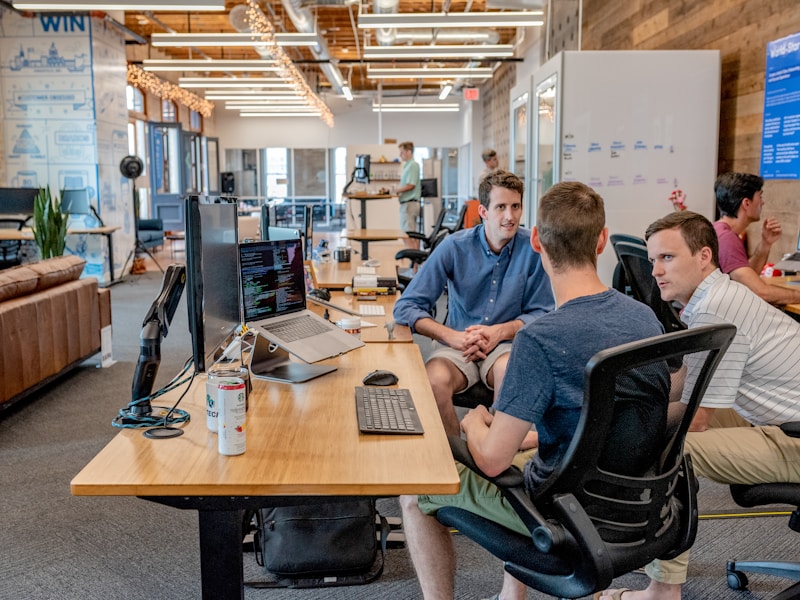
Modern AI receptionists handle calls, bookings, and follow-ups without human intervention.
Under the hood, an AI phone answering service for small business combines three technologies that matured dramatically in the last two years:
- Speech recognition. The AI transcribes the caller’s speech in real time, with accuracy that now rivals human transcription.
- Conversational AI. A large language model understands intent, remembers context from earlier in the call, and generates natural responses — not canned phrases. It can be trained on your business’s FAQs, service menu, pricing, and policies.
- Voice synthesis. Neural text-to-speech produces warm, human-sounding voices. You can usually choose the voice, tone, and even speaking pace to match your brand.
The call flow: a customer dials your existing business number. The AI answers within seconds, follows your greeting script, then books, answers, messages, or transfers based on the conversation. Afterwards, you get a transcript and summary by text or email, with details synced to your CRM.
Most providers integrate with the software small businesses already run — Google Workspace, Microsoft 365, HubSpot, Salesforce, popular booking platforms, and tools like Zapier. If you already use AI automation tools to connect your apps, an AI receptionist slots into that stack naturally.
Best AI Phone Answering Service for Small Business: 5 Top Picks in 2026
Not all AI receptionists are equal. Here are the five strongest options for small businesses in 2026, compared on what matters most: conversation quality, integrations, and value.
| Tool | Best For | Starting Price | Standout Feature |
|---|---|---|---|
| Smith.ai | Hybrid AI + human backup | ~$285/month | Human receptionists take over when AI isn’t enough |
| AnswerAmerica-style AI receptionists | Budget 24/7 coverage | ~$50–$150/month | Simple setup, pay-per-call plans available |
| Curious Thing / AI voice agents | Outbound + inbound campaigns | ~$100–$300/month | Proactive follow-up and appointment reminders |
| Rosie (AI receptionist) | Appointment-heavy businesses | ~$350–$500/month | Deep calendar and booking-platform integration |
| Google Business Messages AI / carrier AI | Local service businesses | Varies | Tight integration with Google Business Profile |
Pricing changes often, so check current plans — but a capable AI phone answering service for small business costs roughly what a few hours of a human receptionist would, while working around the clock. For a deeper orientation to the broader landscape of business AI, the step-by-step AI tutorials over at AIToolSteps walk through dozens of tools in plain language, which pairs well with this guide’s shortlist.
💰 Pricing: What an AI Phone Answering Service Costs in 2026
Most plans fall into three tiers:
- Starter ($50–$150/month): basic answering and message taking. Best for solopreneurs with modest call volume.
- Professional ($150–$350/month): 24/7 answering, appointment booking, CRM integration, and spam filtering. The sweet spot for most small businesses.
- Enterprise/custom ($350–$1,000+/month): high call volumes, multiple locations, advanced integrations, and dedicated support.
Watch for these cost factors when comparing plans: per-minute or per-call overage fees, setup or onboarding fees, charges for each additional phone number or location, and whether transcripts and recordings are included or billed extra. The cheapest sticker price isn’t always the cheapest bill — a plan with generous included minutes often beats a low base price with aggressive overages.
📊 Worked Example: The True Cost of a Missed Call vs. an AI Receptionist
Let’s make this concrete with a realistic small business — a plumbing company with two vans.
- Average job value: $450
- Calls per week: 60
- Calls missed (owner is on jobs): 18 per week (30%)
- Callers who become customers when answered: roughly 1 in 4
That means about 4–5 paying jobs per week — roughly $2,000 in revenue — are lost to missed calls. Over a month, that’s around $8,000 in lost revenue. Even if you dispute the exact percentages, the order of magnitude is what matters: missed calls cost real money, every week.
Now compare: a professional-tier AI phone answering service for small business at $200/month answers all 18 missed calls. If it converts even half of them at the same rate, that’s 2 extra jobs per week — about $3,600/month in recovered revenue for a $200 investment. That’s an 18-to-1 return before counting the appointments booked after hours, the spam calls filtered out, and the professional image a never-missed call projects.
This is the calculation every small business should run: multiply your average job value by the calls you currently miss, then compare it with a $150–$350 monthly plan. For most service businesses, the AI pays for itself many times over.
🛠️ How to Set Up Your AI Phone Answering Service in 7 Steps
Getting started is simpler than most owners expect. Here’s the typical setup process:
- Pick your provider and plan. Use the comparison above and your call volume to choose. Most offer free trials or demos — take the demo and call the AI yourself to judge the voice quality.
- Connect your business number. You can forward your existing number to the service or port it. Call forwarding usually takes minutes; porting can take a few days.
- Write your greeting script. Keep it short and warm: business name, a friendly greeting, and the one thing you want every caller to know. Example: “Thanks for calling Brightline Plumbing — how can I help you today?”
- Load your business knowledge. Upload your FAQs, service list, pricing ranges, hours, and service areas. The AI answers from this — the better your inputs, the smarter it sounds.
- Connect your calendar and CRM. Link Google Calendar or Outlook so the AI can book real appointments, and connect your CRM so every lead lands in your pipeline automatically.
- Set your call rules. Decide what the AI handles alone (bookings, FAQs, messages) and when it should transfer to you (emergencies, VIP clients, specific keywords).
- Test, then go live. Call the number yourself, have friends call with tricky questions, review the transcripts, and tune the script. Most businesses go live within a day.
Start in “message-taking plus booking” mode and review every transcript for the first week — you’ll spot FAQ gaps fast, and once filled, the AI handles nearly everything alone.
AI Phone Answering vs. Hiring a Human Receptionist
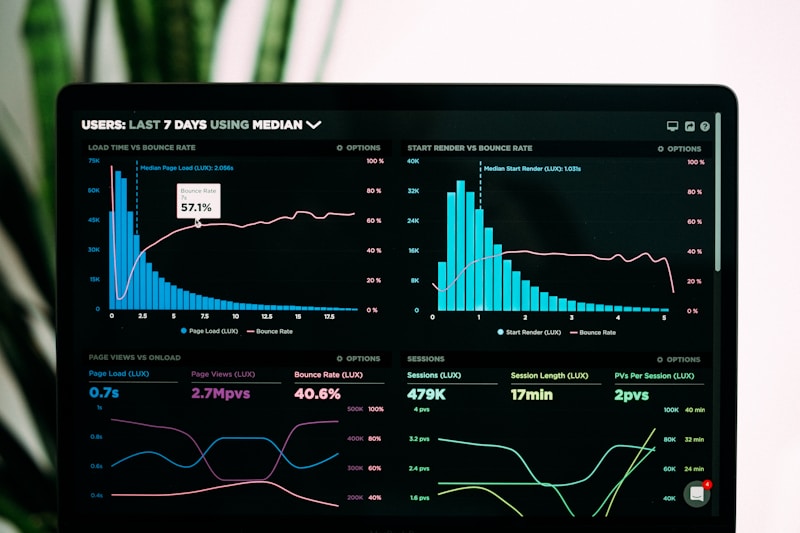
Call analytics dashboards show every conversation, booking, and missed-call save in real time.
Many businesses run an AI receptionist as the always-on front line with a human handling complex cases. The comparison:
| Factor | AI Phone Answering Service | Human Receptionist |
|---|---|---|
| Monthly cost | $50–$400 | $2,500–$4,000+ (salary, taxes, benefits) |
| Availability | 24/7/365, answers in seconds | Business hours, sick days, turnover |
| Consistency | Same quality on call #1 and call #1,000 | Varies with mood, training, workload |
| Complex judgment | Limited — transfers tricky cases | Excellent — nuance, empathy, negotiation |
| Scalability | Handles 10 or 1,000 simultaneous calls | One call at a time per person |
| Record-keeping | Every call transcribed and logged | Depends on the individual |
The winning play: let the AI phone answering service for small business catch everything and escalate the exceptions to you — 24/7 coverage at roughly a tenth of the cost of a hire.
✨ Features That Matter Most for Small Businesses
Prioritize these capabilities over flashy extras:
- Natural conversation quality. Test it yourself — call the demo line, interrupt it, ask an odd question. If it sounds robotic or gets confused, move on.
- Real calendar booking. The AI should book, reschedule, and cancel appointments in your actual calendar — not just “take a message about” appointments.
- CRM integration. Every call should create or update a contact record automatically, with the transcript attached.
- Spam and robocall filtering. Small businesses get hammered by spam calls; good filtering alone can save an hour a week.
- Transcripts and summaries. You should get a readable summary of every call within seconds, plus full transcripts for the details.
Common Concerns: Will Customers Know It’s AI?

Owners review transcripts and summaries to keep quality high as the AI learns.
The two questions every owner asks:
“Will callers be annoyed it’s a robot?” In 2026, the honest answer is: most callers can’t tell, and the ones who can generally don’t mind — because what callers care about is getting helped fast. A natural-sounding AI that answers in three seconds and books the appointment beats an eighth-ring pickup after a 20-minute callback delay. Many businesses simply say “our virtual receptionist” if asked; note that some jurisdictions have disclosure rules for AI calls — check your local regulations.
“What if the AI makes a mistake?” Occasionally, usually by misunderstanding an unusual request. That’s why call rules and human escalation exist: the AI transfers (rather than guesses) when unsure, and transcript reviews catch issues early.
❓ FAQ: AI Phone Answering Services in 2026
How much does an AI phone answering service for small business cost?
Most plans range from $50 to $400 per month depending on call volume and features. Starter plans suit solopreneurs; professional plans ($150–$350/month) with 24/7 answering and calendar booking fit most small businesses. Watch overage fees — that’s where cheap plans get expensive.
Can an AI receptionist really book appointments?
Yes. Modern AI receptionists integrate with Google Calendar, Outlook, and popular booking platforms to check availability and book, reschedule, or cancel appointments in real time during the call — then sends confirmations automatically.
Do I need a new phone number?
No. Almost every provider lets you forward your existing business number to the service, so customers keep calling the number they know. Porting the number to the provider is also an option if you prefer.
What happens when the AI can’t handle a call?
The AI transfers urgent or complex calls to you or a team member, or takes a detailed message and alerts you immediately. Many providers also offer hybrid plans with a human receptionist as backup.
Is an AI phone answering service better than a human receptionist?
For 24/7 coverage, consistency, and cost, AI wins. For complex judgment and deep empathy, humans still win. Most small businesses get the best of both: AI as the front line, humans for the exceptions.
How long does setup take?
Most businesses go live within a day. Connecting your number, writing a greeting script, loading FAQs, and linking your calendar typically takes under an hour.
The Bottom Line
An AI phone answering service for small business is one of the highest-leverage investments a small business can make in 2026. For the cost of a modest software subscription, you get a receptionist that never sleeps, never misses a call, books appointments while you work, and hands every lead to your pipeline with a transcript attached. The businesses answering every call are quietly taking customers from the ones that aren’t — and the fix takes an afternoon to set up.
Start with a free trial, call the AI yourself, and run the missed-call math above. If the numbers look anything like the plumbing example, the decision makes itself.
Sources: pricing ranges reflect advertised small-business plans from major AI receptionist providers as of late 2026; call-answer and lead-response statistics are drawn from widely cited industry call-tracking studies and sales research. This article is an independent guide and is not sponsored by any provider mentioned.